Navigation:
Index
Splash Page |

 Two Goats and a Donkey! Two Goats and a Donkey!
On The 8th Day of Halloween
Thursday, October 8, 2026
Modern Paganism — Part II: Wicca, Druidry, Heathenry, and the Growth of Modern Pagan Traditions
As modern Paganism developed during the twentieth century, it did not emerge as a single organized religion with one theology, sacred text, or governing authority. Instead, numerous traditions appeared, each approaching the pre-Christian past in different ways. Some attempted to reconstruct ancient religions from historical evidence, while others created new spiritual systems inspired by mythology, folklore, ceremonial magic, and the natural world. Among the most influential traditions were Wicca, modern Druidry, and Heathenry, although many additional forms of Paganism eventually developed alongside them.
Wicca became perhaps the most publicly recognizable form of modern Paganism. Emerging openly in Britain during the 1950s, it was strongly associated with Gerald Gardner, whose books introduced the idea of a surviving witch religion to a wider audience. Early Wicca was an initiatory mystery religion generally practiced within small groups known as covens. Its rituals incorporated ceremonial magic, seasonal celebrations, reverence for divine masculine and feminine powers, and magical practices performed within a consecrated ritual circle.
Central to Wiccan religious life is the seasonal cycle commonly called the Wheel of the Year. It consists of eight festivals, or Sabbats: Samhain, Yule, Imbolc, Ostara, Beltane, Litha, Lughnasadh, and Mabon. This particular eightfold system is modern, combining traditional Gaelic seasonal festivals with celebrations associated with the solstices and equinoxes. Together, they create a ritual calendar through which practitioners observe the changing relationship between darkness and light, growth and decline, fertility, harvest, death, and renewal.
Samhain became especially significant within Wicca. Celebrated around October 31 and November 1, it is often regarded as a time for remembering ancestors and contemplating death, transformation, and the mysterious boundary between the living and the dead. Beltane, positioned opposite Samhain on the Wheel of the Year, celebrates fertility, vitality, and the approaching summer. The remaining festivals similarly provide spiritual meaning to seasonal changes.
Wiccan theology varies considerably. Some practitioners worship a Goddess and a God as distinct divine beings. Others understand them as manifestations of a greater divine reality. Still others honor numerous gods and goddesses drawn from historical pantheons. This theological flexibility became increasingly characteristic as Wicca spread beyond its original initiatory traditions.
Wicca itself also diversified. Gardnerian Wicca was followed by Alexandrian Wicca and other initiatory traditions. Eventually, books made forms of Wiccan-inspired spirituality available to people who did not belong to covens. Solitary practice became increasingly common, particularly in the United States. By the late twentieth century, the word Wicca could describe a wide spectrum of practices ranging from traditional initiatory religions to highly individualized forms of nature-centered witchcraft.
Modern Druidry developed along a different path. Inspired by the ancient Druids described in classical writings and later Celtic literature, modern Druids generally acknowledge that the original religious system of the ancient Druids cannot be completely reconstructed. The historical Druids left no surviving religious scriptures of their own, and much of what is known about them comes from outside observers, archaeology, and later Celtic literature.
Consequently, modern Druidry frequently emphasizes inspiration rather than exact restoration. Nature occupies a central position. Forests, rivers, mountains, springs, and other features of the landscape may be treated as spiritually significant. Trees possess particular symbolism, with the oak traditionally holding an especially prominent place in modern Druidic imagination.
Poetry and storytelling are also important. Modern Druidry often draws inspiration from the traditional roles of druids, bards, and seers within Celtic societies. The bard becomes more than an entertainer: poetry, music, storytelling, and artistic creativity can become spiritual practices through which individuals explore their relationship with nature, ancestry, and the sacred.
Druidry is remarkably diverse in theology. Some Druids are polytheists who worship Celtic gods and goddesses. Others approach divinity through pantheism, believing that the divine permeates the natural universe. Some identify with animism, regarding the world as inhabited by numerous spiritual beings or presences. Others combine Druidry with Christianity or other religious philosophies. This diversity illustrates one of the defining characteristics of modern Paganism: religious identity is often based more upon shared practices and relationships with the sacred than upon universal agreement about theology.
Heathenry represents another major branch of the Pagan revival. Often called Germanic or Norse Paganism, Heathenry draws inspiration from the pre-Christian religions of Scandinavia and other Germanic-speaking peoples. Practitioners may honor deities such as Odin, Thor, Freyja, Freyr, Frigg, Tyr, and Njord, although beliefs and devotional practices differ considerably.
Compared with many eclectic forms of Paganism, Heathenry often places greater emphasis upon surviving historical sources. The Poetic Edda, Prose Edda, Icelandic sagas, archaeology, inscriptions, and historical scholarship provide important resources. Yet Heathens also recognize that these materials cannot provide a complete handbook for ancient religion. Reconstruction therefore requires interpretation.
Ancestors frequently occupy an important place in Heathen practice. Family, community, hospitality, reciprocity, and the relationships connecting people across generations may carry religious significance. Ritual offerings, sometimes called blót, may involve presenting food, drink, or other gifts to gods, ancestors, or spiritual beings. Communal drinking rituals and formal expressions of gratitude or remembrance may likewise strengthen relationships between participants and the sacred powers they honor.
Alongside these larger movements arose reconstructionist traditions devoted to other ancient cultures. Hellenic polytheists sought to revive religious practices associated with ancient Greece, honoring deities such as Zeus, Athena, Apollo, Artemis, Aphrodite, and Dionysus. Roman reconstructionists explored the religious traditions of ancient Rome. Kemetic practitioners looked toward the religion of ancient Egypt, while Celtic reconstructionists attempted to build contemporary religious practice from historical and folkloric evidence relating to Celtic-speaking cultures.
Reconstructionists generally distinguish their approach from eclectic Paganism. Rather than freely combining gods and rituals from numerous cultures, they tend to emphasize historical context. Ancient languages, archaeological discoveries, surviving literature, calendars, traditional offerings, and historical religious structures may all become subjects of careful study.
Eclectic Paganism takes a more individualized approach. An eclectic practitioner might draw inspiration from several pantheons, modern witchcraft, meditation, folk traditions, environmental spirituality, or personal religious experiences. Critics sometimes question whether practices taken from different cultures can be meaningfully combined, while supporters emphasize personal spiritual freedom and the continuing evolution of religion.
These differences have produced ongoing conversations within Pagan communities about authenticity, cultural appropriation, historical accuracy, and religious innovation. What does it mean to revive a religion whose original practitioners disappeared centuries ago? How much can legitimately be reconstructed from incomplete evidence? When does reconstruction become invention? Modern Paganism continually confronts these questions.
Yet diversity has also contributed to its resilience. Paganism has no central authority capable of determining which interpretation is universally correct. A solitary Wiccan, a Celtic reconstructionist, a devotional polytheist, a Druid environmentalist, and a Norse Heathen may possess dramatically different beliefs while nevertheless recognizing one another as participants in the broader Pagan religious landscape.
What connects them is not necessarily a common theology but a shared willingness to seek sacred meaning outside conventional religious structures. For many, that meaning is discovered through ancient mythology, seasonal ritual, relationships with gods and ancestors, reverence for the Earth, or direct personal experience of the sacred.
By the end of the twentieth century, these once-small revival movements had become an international religious phenomenon. Books, festivals, organizations, and eventually the internet allowed isolated practitioners to find one another and exchange ideas across enormous distances. Paganism became increasingly visible and increasingly diverse.
The result was something unusual in modern religious history: ancient gods and mythologies had returned, but within entirely new social worlds. The traditions that emerged were neither replicas of ancient religions nor merely exercises in historical imagination. They became living spiritual paths shaped simultaneously by surviving fragments of the past and the needs of people in the present.
In this way, Wicca, Druidry, Heathenry, reconstructionism, and eclectic Paganism demonstrate the central tension — and creative power — of the Pagan revival. Modern Pagans inherit no single unbroken road into antiquity. Instead, they work with scattered paths of mythology, folklore, archaeology, history, and spiritual experience, using them to build new relationships with very old ideas.
The eighth day is gone and done, get ready for the ninth day and Part 3!
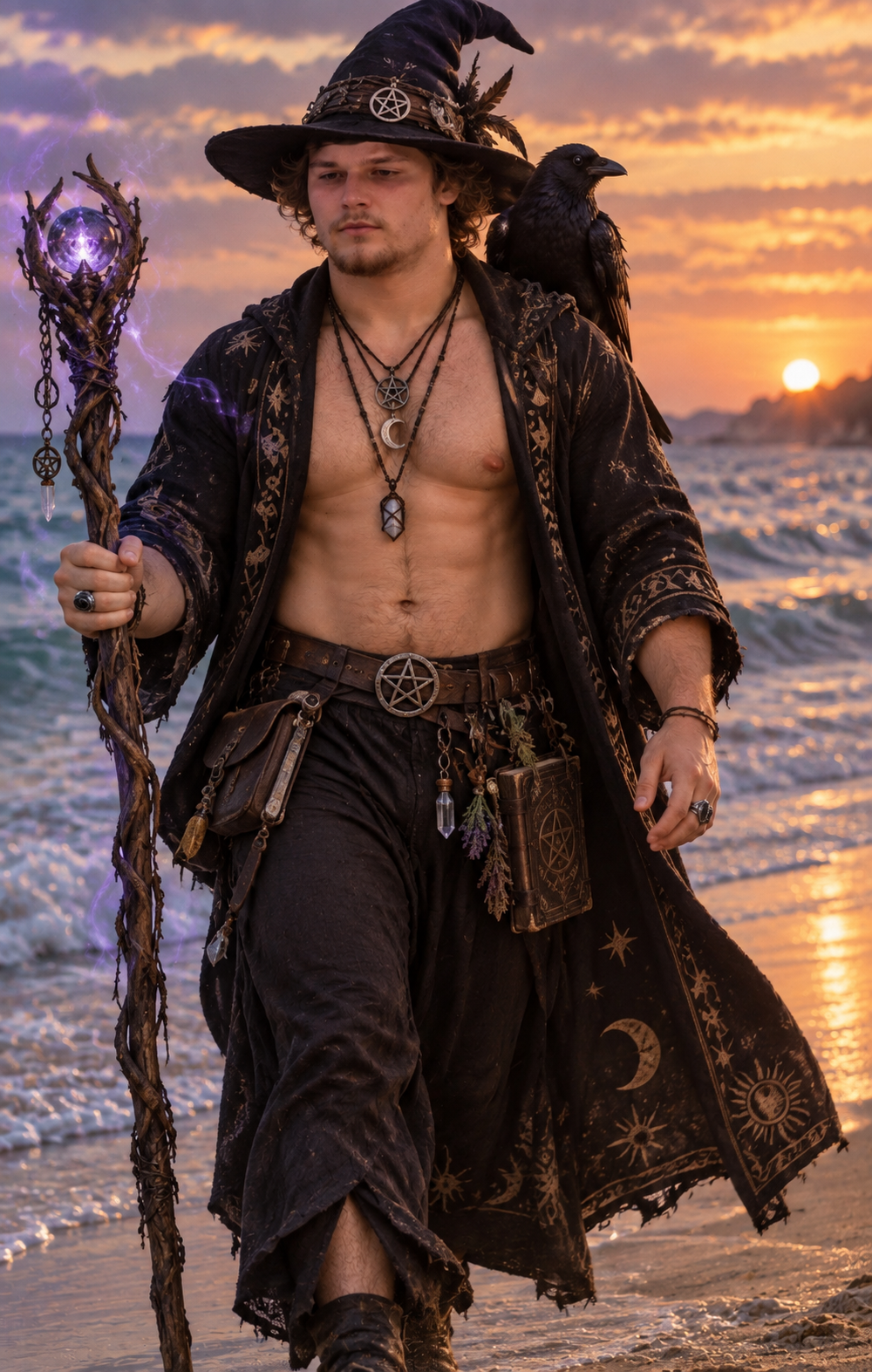
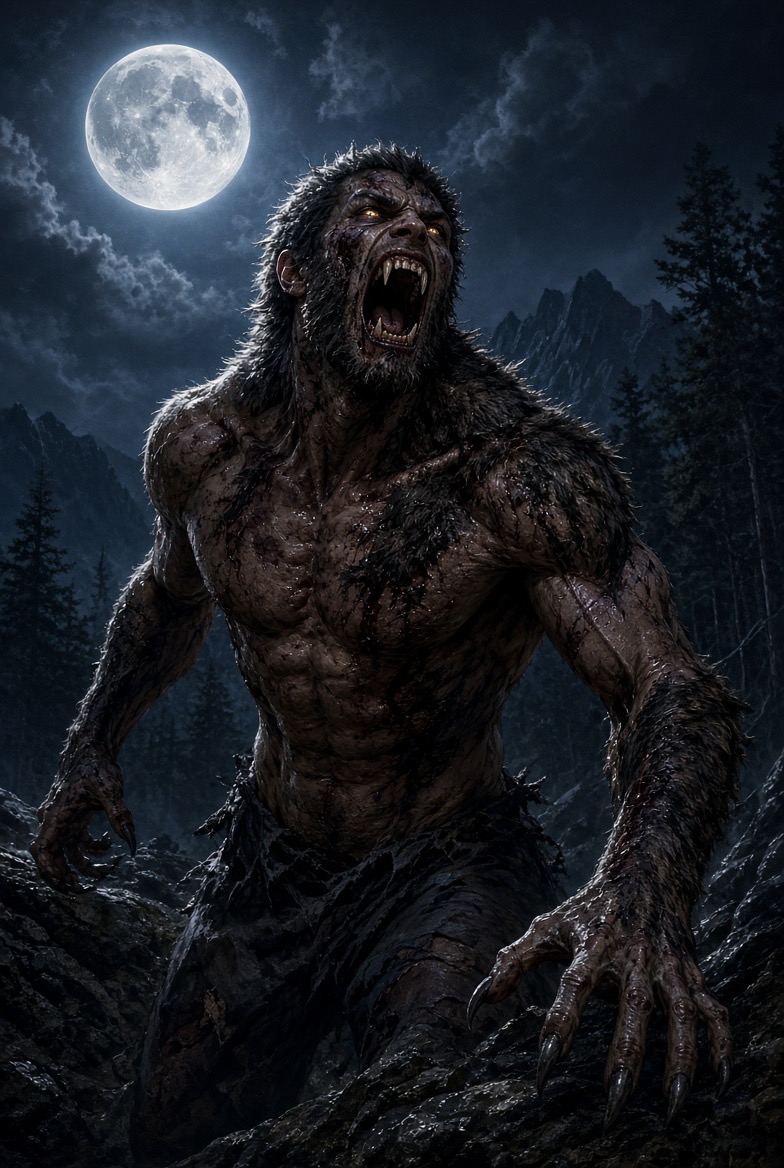
The images below are all AI-generated by me with ChatGPT, Grok, and Google Gemini on my iPhone. Enjoy!

The 31 Days of Halloween! Click on the day number you want! 01 | 02 | 03 | 04 | 05 | 06 | 07 | 08 | 09 | 10 | 11 | 12 | 13 | 14 | 15 | 16 | 17 | 18 | 19 | 20 | 21 | 22 | 23 | 24 | 25 | 26 | 27 | 28 | 29 | 30 | 31
George
|