 Two Goats and a Donkey! Two Goats and a Donkey!
On The 23rd Day of Halloween
Friday, October 23, 2026
The Enigma of 23
Today marks 30 years since my dad passed away. How in the world 3 decades managed to pass by, I've no idea. Just one month ago marked 20 years since Steve and I started dating, and it was also the day his dad died. The number 23 has taken on some significance with me as a result of all of this, so I decided to explore how the number 23 relates to Halloween and to the supernatural in general.
 The Number 23: Occult Symbolism, the 23 Enigma, and Its Place in Halloween Folklore The Number 23: Occult Symbolism, the 23 Enigma, and Its Place in Halloween Folklore
Numbers have always possessed a peculiar power over the human imagination. They measure ordinary things—years, distances, quantities, hours—yet certain numbers repeatedly escape their practical functions and acquire symbolic identities of their own. Seven suggests completeness or sacred order. Three appears throughout religion, mythology, and folklore. Thirteen has become synonymous with bad luck in much of Western culture. Among the stranger members of this numerical mythology is the number 23.
Unlike thirteen, 23 does not possess a straightforward reputation for misfortune. Nor does it belong to ancient Halloween or Samhain tradition in any clearly documented way. Its reputation is considerably more mysterious and much more modern. Twenty-three has become associated with coincidence, synchronicity, hidden patterns, chaos, conspiracy, transformation, and the unsettling suspicion that apparently unrelated events may somehow be connected.
This collection of ideas is commonly known as the 23 enigma: the belief or observation that the number 23 seems to appear with unusual frequency in significant, strange, or improbable circumstances.
Whether those appearances reveal anything beyond the human tendency to recognize patterns is another question entirely. Yet that uncertainty is precisely what makes 23 such an effective occult and supernatural symbol. It occupies a territory somewhere between mathematics and mythology, between coincidence and meaning.
And although it cannot legitimately be called an ancient Samhain number, its modern symbolism fits remarkably well within the mysterious landscape of Halloween.
The Human Desire to Find Meaning in Numbers
Numerical symbolism is far older than the modern fascination with 23. Ancient civilizations regularly attached philosophical, religious, and cosmological meaning to numbers. The Pythagorean tradition of ancient Greece, for example, treated numbers as fundamental principles underlying reality itself. Religious traditions throughout the world have likewise employed particular numbers repeatedly in ritual, scripture, architecture, calendars, and mythology.
Numbers possess several qualities that make them especially attractive as symbols. They appear objective and universal. The number five remains five regardless of language. A triangle always has three sides. The lunar cycle continues whether humans observe it or not.
This apparent objectivity can make numerical coincidences seem particularly significant.
If a person repeatedly encounters the same word, the repetition may easily be dismissed. If the same number repeatedly appears in dates, addresses, ages, times, and historical events, however, it can begin to feel as though some hidden mathematical pattern is emerging.
Psychology offers explanations for this phenomenon. Human beings are exceptionally skilled at recognizing patterns, including patterns that arise accidentally. Once our attention becomes focused upon a particular number, we begin noticing occurrences that previously would have passed without comment.
Twenty-three is particularly effective because it is common enough to appear frequently but uncommon enough to attract attention once someone begins looking for it.
Thus begins the 23 enigma.
William S. Burroughs and the Birth of the 23 Enigma
The modern mythology surrounding 23 is strongly associated with American writer William S. Burroughs, one of the major figures of the Beat movement.
Burroughs recounted a story involving a ship captain named Clark, who allegedly told him that he had sailed for twenty-three years without an accident. According to Burroughs's account, the ship was involved in a disastrous accident that same day. Burroughs then supposedly heard a radio report concerning an airplane crash involving a pilot who was also named Clark and whose flight was associated with the number 23.
Whatever the precise historical details behind the story, the coincidence fascinated Burroughs.
He began collecting examples involving the number.
This is an important moment in the development of 23 as a modern occult symbol. The number was no longer merely a quantity. It had become something to watch for.
Once someone begins watching for 23, it appears almost everywhere.
Dates contain it. Addresses contain it. Historical events can be manipulated mathematically to produce it. Ages, times, measurements, and page numbers provide additional examples.
The process becomes self-reinforcing.
Every new occurrence makes the previous occurrences seem more significant.
Eventually, the observer may begin asking the central question of the 23 enigma:
Is this merely coincidence, or is there actually a pattern?
The inability to answer that question definitively gives the phenomenon its power.
Robert Anton Wilson and the Expansion of the Myth
The mythology of 23 was expanded dramatically by writers Robert Anton Wilson and Robert Shea, particularly through The Illuminatus! Trilogy, first published in the 1970s.
The novels deliberately blur conspiracy theory, philosophy, mysticism, political satire, occultism, and absurdist humor. Within this strange fictional universe, numbers—especially five and twenty-three—recur repeatedly.
Wilson became fascinated with the human tendency to construct what he sometimes described as “reality tunnels”: frameworks through which people interpret experience. Once a person adopts a particular framework, evidence supporting it suddenly seems to appear everywhere.
Twenty-three provided an ideal demonstration.
Tell someone that 23 is mysteriously significant and that person may begin seeing it constantly.
The clock reads 11:23.
A hotel room is number 23.
A significant event occurs on the twenty-third.
A receipt totals $23.
The examples accumulate until the number begins to seem almost alive.
The phenomenon demonstrates something profound about human perception. We do not merely observe reality passively. We select, categorize, emphasize, and interpret what we experience.
The 23 enigma therefore became more than a superstition. It became an experiment in perception.
Twenty-Three and Discordianism
Another major influence upon the mystical reputation of 23 was Discordianism, a modern religious and philosophical movement centered upon Eris, the Greek goddess of discord.
Discordianism emerged during the twentieth century and deliberately combines religion, parody, philosophy, humor, absurdity, and genuine spiritual speculation. Its foundational text, *Principia Discordia*, celebrates disorder and challenges the assumption that reality must conform to neat human categories.
Within Discordian symbolism, the number five possesses special importance.
Twenty-three naturally becomes significant because:
2 + 3 = 5.
This simple arithmetic relationship helped connect the 23 enigma with Discordian fascination with five.
The combination was extremely influential in countercultural circles. Twenty-three increasingly became a kind of numerical signal for chaos, hidden connections, unexpected coincidences, and disruptions in ordinary reality.
That symbolism differs substantially from traditional superstition surrounding thirteen.
Thirteen says: something unlucky may happen.
Twenty-three says: something strange may be happening already.
That distinction helps explain its appeal within occult and supernatural storytelling.
Twenty-Three and the Symbolism of Five
The reduction of 23 to five also connects it indirectly with much older forms of symbolism.
Five has long carried important associations in Western esoteric traditions. The five-pointed star or pentagram is among the world's most recognizable magical symbols. Depending upon historical context, the pentagram has represented protection, harmony, humanity, the elements, or spiritual principles.
The human body itself can be represented through five projecting points: two arms, two legs, and the head. Five can consequently symbolize the human being or the microcosm.
Some later esoteric systems also speak of five elements—earth, air, fire, water, and spirit.
Because 2 + 3 equals 5, modern numerological interpretation can treat 23 as a concealed expression of this symbolism.
It is important, however, to distinguish modern interpretation from historical origin. There is no need to imagine an ancient secret society deliberately encoding all of these meanings into 23. Symbolism develops precisely because later generations continually discover or create new relationships among older ideas.
Twenty-three became meaningful partly because people decided to make it meaningful.
That does not make its cultural symbolism unreal. It simply makes the symbolism historical rather than supernatural.
The Twenty-Three Pairs of Human Chromosomes
One of the most intriguing modern coincidences surrounding the number involves human biology.
A typical human cell contains 23 pairs of chromosomes, for a total of 46.
Naturally, this discovery occurred long after ancient systems of numerology developed. It therefore cannot explain historical mystical beliefs concerning the number.
Nevertheless, it has become irresistible material for modern numerological speculation.
Twenty-three can now be associated symbolically with human identity itself. Each parent normally contributes twenty-three chromosomes to the formation of a new human being. The number can therefore be poetically connected with inheritance, ancestry, identity, generation, and life.
Again, the scientific fact does not demonstrate occult significance.
The symbolism comes afterward.
But this is precisely how mythology frequently grows. A real phenomenon becomes incorporated into a larger network of meanings.
Is Twenty-Three an Ancient Celtic Number?
When discussing 23 in connection with Halloween, an important distinction must be made.
There is no reliable historical evidence that 23 possessed special significance at Samhain.
Ancient Celtic and later Gaelic traditions certainly contained numerical symbolism. Three, for example, appears frequently in Celtic literary traditions, and triplicity is strikingly common in mythology, storytelling, and artistic representation.
But 23 does not emerge from the surviving evidence as a sacred Samhain number.
There is likewise no evidence that ancient Celtic priests secretly organized Samhain rituals around twenty-three participants, twenty-three fires, twenty-three days, or similar claims sometimes encountered in modern pseudo-historical writing.
Such claims should be treated skeptically unless supported by credible historical evidence.
The relationship between 23 and Halloween is therefore modern and symbolic rather than ancient and historical.
Yet that relationship is surprisingly appropriate.
Samhain and the Idea of Liminality
Samhain was fundamentally a seasonal threshold.
Traditionally associated with the beginning of November, it marked the transition toward winter and the darker portion of the year. Agricultural activity changed, livestock were brought from summer grazing, harvest work concluded, and communities prepared for the difficult winter months.
Medieval Irish literature repeatedly uses Samhain as a setting for supernatural events.
The ordinary boundaries of reality seem unusually flexible in these stories. Heroes encounter beings from the Otherworld. Mounds open. Strange visitors appear. Journeys cross between familiar and supernatural landscapes.
This quality is often described as liminality — the condition of existing at a boundary or threshold.
Twenty-three possesses a strangely compatible modern symbolism.
The 23 enigma asks whether something lies beneath ordinary reality.
A coincidence occurs.
Then another.
Then another.
At what point does coincidence become pattern?
That question places the observer upon an intellectual threshold between randomness and meaning.
This is why 23 fits Halloween so effectively despite having no demonstrable ancient connection with Samhain.
Both involve uncertainty about boundaries.
Twenty-Three and Halloween
Halloween is filled with things that exist between categories.
A ghost is between the living and the dead.
A vampire is neither completely alive nor completely dead.
A werewolf exists between human and animal.
A mask places its wearer between one identity and another.
A jack-o'-lantern places living flame inside harvested vegetation carved into the imitation of a human face.
Twilight exists between daylight and night.
Autumn itself stands between summer and winter.
Halloween thrives upon ambiguity.
Twenty-three contributes another form of ambiguity: the boundary between coincidence and design.
Imagine encountering the number once during Halloween. It means nothing.
Then it appears again.
And again.
A clock stops at 11:23. A mysterious house bears the number 23. A photograph was taken on the twenty-third. A newspaper clipping contains the same number. Someone died at twenty-three.
Suddenly the number becomes frightening—not because 23 itself is threatening, but because repetition implies intention.
Someone, or something, seems to be leaving a message.
That is the essence of the 23 enigma as a horror device.
Twenty-Three Versus Thirteen
Comparing 23 with Halloween's better-known number, thirteen, reveals why the two produce different emotional effects.
Thirteen carries centuries of accumulated superstition. Friday the 13th, thirteen people at a table, and buildings omitting a thirteenth floor all reinforce its reputation.
Thirteen has effectively become cultural shorthand for bad luck.
Twenty-three is more subtle.
It suggests hidden order.
If thirteen appears on a door in a horror story, the audience expects danger.
If 23 appears repeatedly throughout the story, the audience expects an explanation.
That makes 23 particularly effective for psychological horror, occult mysteries, conspiracy stories, and supernatural narratives.
It encourages the audience to participate.
Once viewers have noticed the number, they begin searching for it.
The audience itself becomes part of the enigma.
Coincidence, Synchronicity, and the Supernatural
The fascination with 23 also resembles the broader concept of synchronicity, famously developed by psychologist Carl Jung to describe meaningful coincidences that appear connected despite lacking an obvious conventional causal relationship.
The 23 enigma should not simply be equated with Jung's theory, but the two ideas occupy similar imaginative territory.
Both ask whether coincidence can possess meaning.
Halloween is particularly hospitable to such questions because it temporarily invites people to imagine that ordinary explanations might not be sufficient.
The noise upstairs might not be the house settling.
The movement outside might not be the wind.
The figure in the photograph might not be a trick of light.
And perhaps seeing 23 repeatedly is not coincidence.
Halloween gives us permission to entertain the possibility.
The Number at the Threshold
Twenty-three therefore occupies a curious position within modern occult culture.
It is not an ancient sacred number of Samhain.
It was not responsible for the date of Halloween.
There is no evidence that Celtic religious specialists regarded it as the key to the Otherworld.
Its reputation instead developed largely through twentieth-century literature, counterculture, Discordianism, numerology, and the human fascination with coincidence.
Yet symbols do not need to be ancient to become powerful.
Twenty-three has acquired a distinctive modern identity because it represents something Halloween understands extremely well: the suspicion that the ordinary world may contain hidden doors.
Samhain marked a seasonal threshold.
Halloween became a cultural threshold.
Twenty-three represents a perceptual threshold.
On one side lies coincidence.
On the other lies meaning.
The fascinating part is the narrow space between them.
Perhaps that is why 23 feels so different from traditionally unlucky numbers. It does not threaten us directly. It invites us to notice it.
Once noticed, it asks us to look again.
Then it appears somewhere else.
And somewhere else.
Eventually the question is no longer simply why the number keeps appearing.
The question becomes whether it was always there and we simply never noticed it before.
That uncertainty is the true occult power of twenty-three.
Not a curse.
Not a prophecy.
Not an ancient Samhain secret.
A pattern.
Or perhaps only the appearance of one.
And on Halloween, when masks conceal familiar faces, lanterns glow against the darkness, stories allow the dead to walk among the living, and an ancient seasonal threshold becomes a modern night of mystery, there may be no more appropriate number than one that leaves us wondering whether coincidence is really coincidence at all.
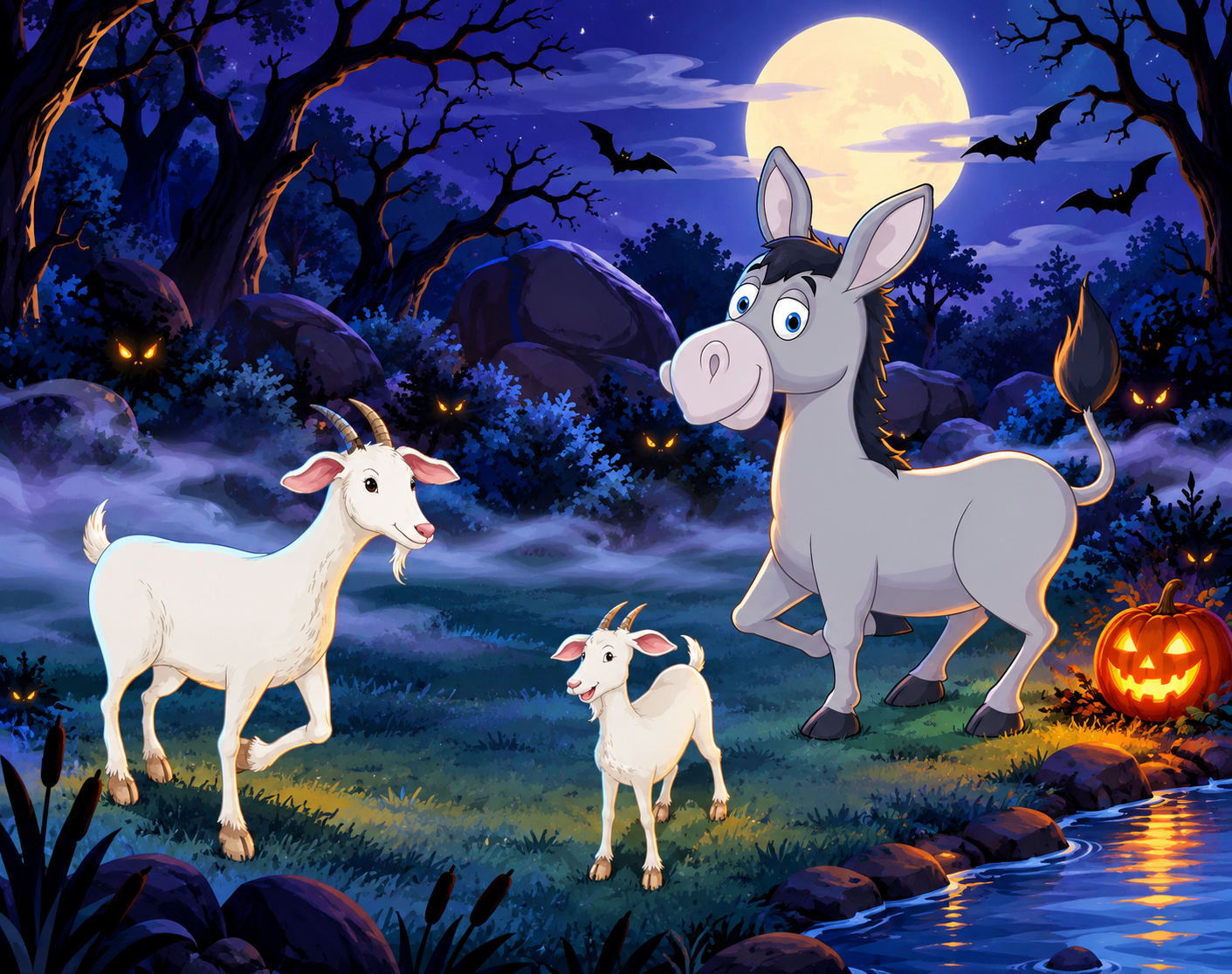
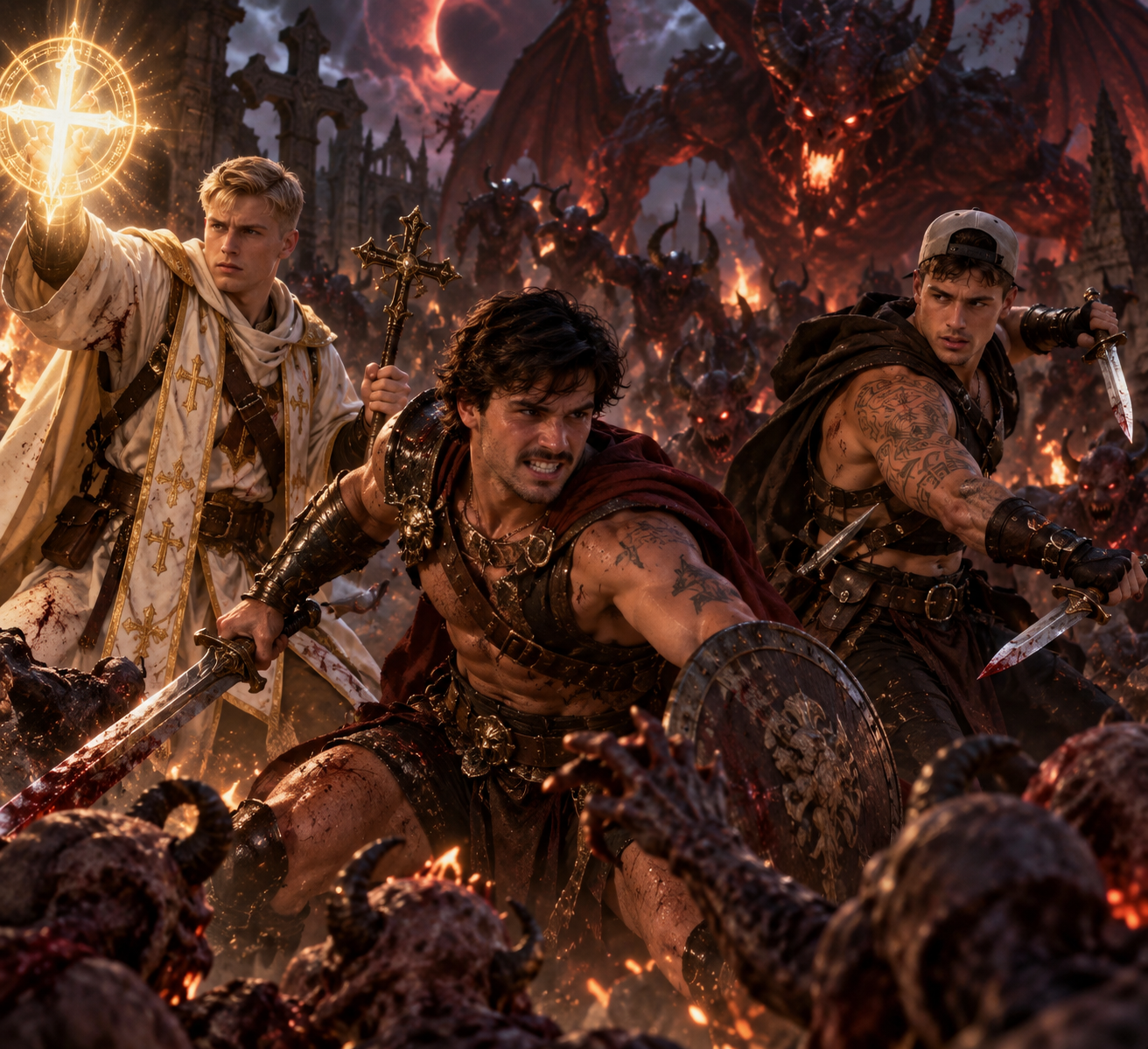
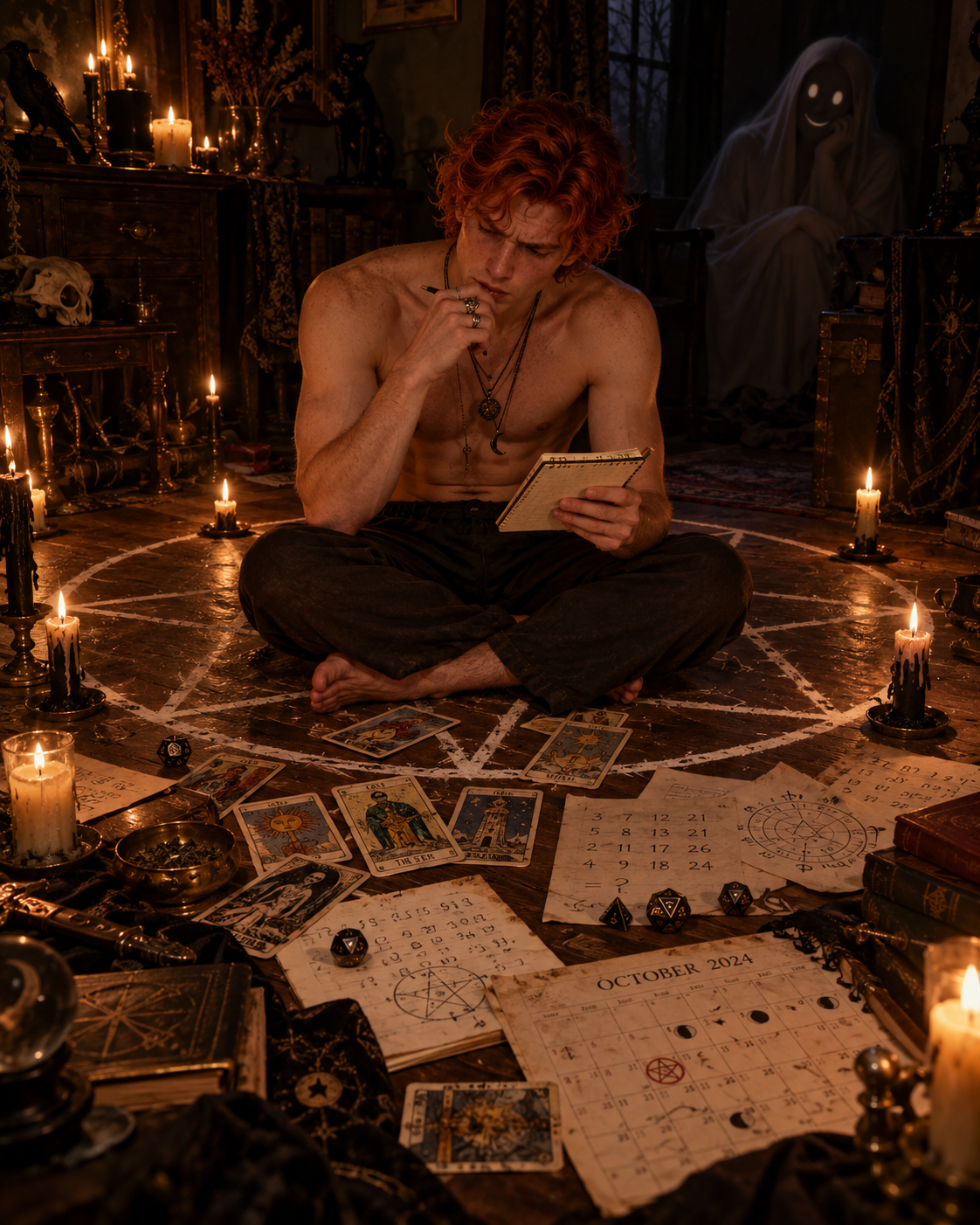
The images below are all AI-generated by me with ChatGPT, Grok, and Google Gemini on my iPhone. Enjoy!

The 31 Days of Halloween! Click on the day number you want! 01 | 02 | 03 | 04 | 05 | 06 | 07 | 08 | 09 | 10 | 11 | 12 | 13 | 14 | 15 | 16 | 17 | 18 | 19 | 20 | 21 | 22 | 23 | 24 | 25 | 26 | 27 | 28 | 29 | 30 | 31
George
|