Navigation:
Index
Splash Page |

 Two Goats and a Donkey! Two Goats and a Donkey!

On The 19th Day of Halloween
Monday, October 19, 2026
How Did the Modern Work Week Evolve and How Did Celtic Peoples Organize Time
The seven-day week seems so natural to modern life that it is easy to imagine it stretching unchanged into the distant past. Monday follows Sunday, Friday ends the working week, and Saturday and Sunday form the weekend. Yet the ancient Celtic peoples of Ireland, Britain, and continental Europe did not originally organize their lives according to the familiar week that governs modern society. Their understanding of time was shaped much more strongly by nights, lunar months, agricultural seasons, and recurring festivals. The eventual arrival of the seven-day week represented a profound change, produced by Roman influence, Christianity, and the gradual integration of Celtic-speaking societies into the wider European world. Samhain did not create the week, but the festival provides an especially revealing example of how the older Celtic conception of time differed from our own.
Our knowledge of Celtic timekeeping is incomplete because the pre-Christian Celts left relatively little written explanation of their calendrical practices. Nevertheless, classical accounts, early Irish literature, and archaeological discoveries provide important clues. Julius Caesar, writing about the Gauls in the first century B.C., observed that they calculated periods of time by nights rather than days. According to Caesar, birthdays and the beginnings of months and years were reckoned so that the night preceded the day.
This concept survived remarkably well in later European language. English expressions such as “fortnight,” originally fourteen nights, preserve the old practice of counting nights. Similar patterns existed among Germanic peoples, so reckoning a period from evening or night was certainly not exclusively Celtic. Nevertheless, the evidence suggests that darkness held an important position in Celtic conceptions of calendrical time.
The Coligny Calendar, discovered in France in 1897, provides our most extraordinary surviving evidence of an ancient Celtic calendar. Dating from the Roman period but written in the Gaulish language, the bronze calendar reveals an elaborate system of months arranged around lunar cycles while periodically correcting the calendar to remain aligned with the solar year. Rather than presenting a society with a primitive understanding of time, Coligny demonstrates considerable astronomical and mathematical sophistication.
What it does not reveal is a familiar seven-day week governing ordinary Celtic life.
The modern week has different origins. The seven-day cycle developed in the ancient Near East and became especially important through Jewish observance of the Sabbath. A separate but eventually interconnected tradition associated seven days with the seven visible celestial bodies recognized in ancient astronomy: the Sun, Moon, Mars, Mercury, Jupiter, Venus, and Saturn. This planetary week became increasingly popular throughout the Roman world during the first centuries of the Common Era.
As Roman influence spread through Gaul and Britain, Celtic populations encountered this system. The Romans called the days dies Solis, dies Lunae, dies Martis, dies Mercurii, dies Iovis, dies Veneris, and dies Saturni. Germanic peoples later adapted many of these names by substituting roughly comparable gods from their own religious traditions. Mars became Tiw, Mercury became Woden, Jupiter became Thor, and Venus was replaced by Frīg. This produced the ancestors of the English Tuesday, Wednesday, Thursday, and Friday. Saturday retained Saturn, while Sunday and Monday retained the Sun and Moon.
Ireland followed a somewhat different course. Unlike Britain and Gaul, Ireland was never incorporated into the Roman Empire. The seven-day week therefore became firmly embedded in Irish culture particularly through Christianity rather than direct Roman administration.
The Christianization of Ireland, beginning especially during the fifth century, transformed Gaelic timekeeping. Christian communities required a repeating weekly cycle because Christian worship centered upon Sunday, the Lord's Day. Wednesdays and Fridays also became associated with fasting and abstinence. These practices became so deeply rooted that they influenced the Gaelic names of several weekdays.
Modern Irish Dé Domhnaigh, Sunday, derives from the concept of the Lord's Day. Wednesday, Dé Céadaoin, reflects the “first fast,” while Friday, Dé hAoine, became the principal fast day. Thursday, Déardaoin, developed in relation to its position between the two fast days. Saturday, Dé Sathairn, reflects the Sabbath tradition. The Gaelic week therefore became a linguistic record of Christian religious practice.
Where, then, does Samhain fit into this transformation?
Samhain belonged to an older and fundamentally different way of organizing time. Traditionally observed around the beginning of November, Samhain was one of the major seasonal festivals of the Gaelic year, alongside Imbolc, Beltane, and Lughnasadh. Rather than marking a position within a repeating seven-day cycle, Samhain marked a major transition in the annual cycle.
It signaled the movement into the darker portion of the year. Livestock were brought back from summer pastures, communities prepared for winter, and agricultural activity entered a new phase. Medieval Irish literature also portrays Samhain as a time of assemblies, feasting, supernatural encounters, and the crossing of boundaries between ordinary and otherworldly existence.
Samhain therefore illustrates how older Celtic time could be understood qualitatively rather than merely numerically. A Tuesday is essentially meaningful because of its position within a seven-day sequence. Samhain was meaningful because it represented a threshold. It divided seasons and activities and, in surviving literature, frequently became a moment when normal boundaries were temporarily weakened.
It is sometimes claimed that Samhain was the “Celtic New Year.” This description should be used cautiously. Samhain clearly marked an important seasonal beginning, and some Celtic calendrical evidence suggests that the darker portion of a cycle could precede the lighter portion. However, surviving ancient sources do not straightforwardly declare Samhain to be a universal Celtic New Year's Day in the modern sense. The phrase is largely a later interpretation of evidence concerning Celtic seasonal organization.
Likewise, there is no historical evidence that Samhain directly influenced the creation of the seven-day week or determined which day the week should begin. The week and Samhain represent two different systems of organizing time: one is a continuously repeating seven-day cycle, while the other belongs to an annual seasonal cycle.
Yet Samhain may be said to have influenced the experience of the week indirectly. Christianity did not simply erase the older seasonal calendar. Instead, Christian weekly observances and older annual traditions existed side by side. Over centuries, the Christian calendar absorbed, displaced, reinterpreted, or simply coexisted with many established seasonal customs.
Samhain survived particularly strongly because its seasonal position remained meaningful regardless of which weekday happened to fall upon October 31 or November 1. The Christian feasts of All Saints and All Souls became established at this same point in the calendar, while later folk traditions produced the complex celebration now called Halloween. Scholars continue to debate the precise degree to which individual Halloween customs descend directly from Samhain, so it is safer to speak of historical interaction and continuity than to claim that Halloween is simply Samhain renamed.
Eventually the seven-day week became universal throughout the Celtic-speaking regions. Medieval monasteries rang bells according to daily and weekly schedules. Markets, courts, religious services, and agricultural obligations increasingly operated within both weekly and annual calendars. Industrialization strengthened the week still further. The distinction between working days and Sunday became increasingly important, and modern labor movements eventually helped establish the two-day weekend.
Today, the week governs employment, schools, transportation, commerce, entertainment, and digital calendars. Ancient seasonal time has been overlaid by hours, minutes, appointments, deadlines, and standardized dates.
Yet the older system has never completely disappeared.
Every autumn, Halloween returns regardless of what day of the week October 31 occupies. Seasonal festivals continue to interrupt the endless repetition of Monday through Sunday and remind communities that time can be experienced as a cycle of seasons as well as a sequence of numbered days.
That may be Samhain's most interesting relationship with the modern week. Samhain did not give us seven days, nor did it determine their names. Instead, it represents an older layer of time beneath the week. The modern calendar asks, “What day is it?” The seasonal calendar of the ancient Celtic world was more concerned with another question: “What time of the year have we entered?”
Modern life ultimately contains both systems. We move through Monday, Tuesday, Wednesday, and the rest of the seven-day cycle, but simultaneously through winter and summer, darkness and light, planting and harvest, beginnings and endings. Beneath the rigid structure of our modern week survives something of the older Celtic awareness that time is not merely counted. It is also experienced—and at Samhain, above perhaps all other surviving Celtic seasonal thresholds, one cycle closes as another begins.
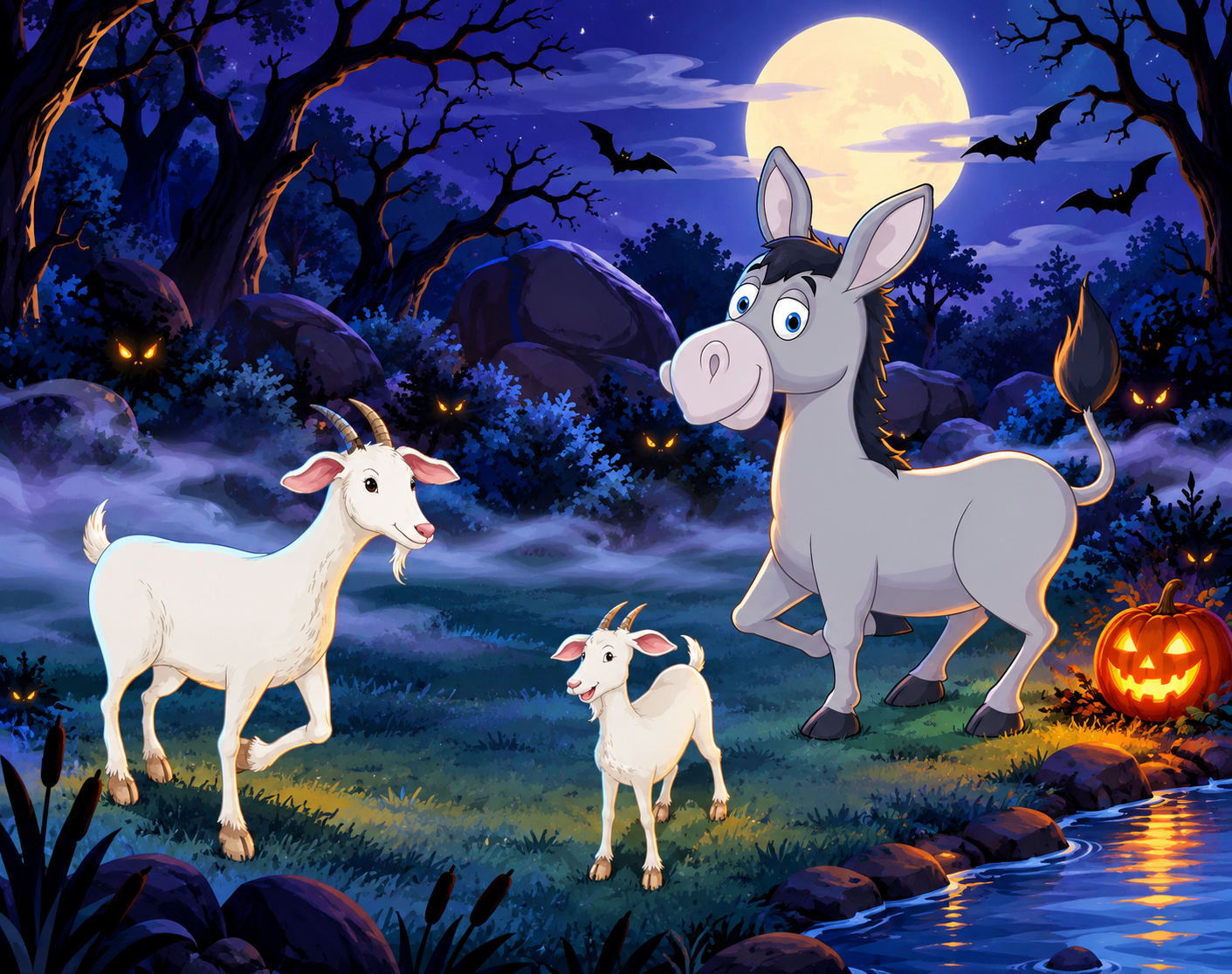
The images below are all AI-generated by me with ChatGPT, Grok, and Google Gemini on my iPhone. Enjoy!

The 31 Days of Halloween! Click on the day number you want! 01 | 02 | 03 | 04 | 05 | 06 | 07 | 08 | 09 | 10 | 11 | 12 | 13 | 14 | 15 | 16 | 17 | 18 | 19 | 20 | 21 | 22 | 23 | 24 | 25 | 26 | 27 | 28 | 29 | 30 | 31
George
|