 Two Goats and a Donkey! Two Goats and a Donkey!
On The 21st Day of Halloween
Wednesday, October 21, 2026
The Samhain Bonfire
Of all the images associated with the ancient Gaelic festival of Samhain, few are as powerful as the bonfire blazing against the darkness of an autumn night. Fire seems almost inseparable from our modern imagination of Celtic seasonal celebrations: flames rising from a hilltop, communities gathered around them, the harvest completed and the long winter approaching. Yet the history of the Samhain bonfire is more complicated than romantic images sometimes suggest. Much of what is known about Samhain fire customs comes from medieval literature, later Irish and Scottish folklore, and traditions recorded centuries after the conversion of Gaelic societies to Christianity. Nevertheless, fire became deeply associated with the season, and its symbolism perfectly expresses the central meaning of Samhain: the passage from one condition into another.
Samhain, traditionally beginning around the first of November, was one of the major seasonal festivals of the Gaelic year. Together with Imbolc, Beltane, and Lughnasadh, it marked an important transition within an agricultural society. Samhain occurred as harvest activities were concluding, livestock were returning from summer pastures, daylight was rapidly diminishing, and communities were preparing for winter.
Fire was especially meaningful within such a world. Before electric lighting, a winter night was genuinely dark. The hearth provided warmth, cooked food, illuminated the home, and protected people from the cold. To lose one's household fire during winter could be a serious matter. Fire therefore represented far more than illumination. It meant survival.
Against the growing darkness of the Samhain season, the bonfire naturally became a potent symbol of communal life.
One of the places most famously associated with Samhain fires is the Hill of Ward, or Tlachtga, in County Meath, Ireland. Medieval Irish tradition connects Tlachtga with important Samhain gatherings, and archaeological investigation has confirmed that the site experienced repeated episodes of burning and ceremonial activity over many centuries. Precisely what occurred there in pre-Christian times remains a matter of scholarly investigation, however, and later accounts should not automatically be treated as eyewitness descriptions of ancient Celtic ritual.
Tradition nevertheless developed that a great fire was kindled at Tlachtga at Samhain. Later writers sometimes described other fires as being extinguished and relit from this central flame. This produces a compelling image: an entire landscape descending briefly into darkness before new fires spread outward from a sacred center.
Whether this happened universally in ancient Ireland cannot be established with certainty. The symbolism attached to the story, however, is extraordinary.
Extinguishing a fire represents an ending. Relighting it represents beginning again.
This idea fits naturally with Samhain's position at a seasonal threshold. The productive warmth of summer had ended. Fields had yielded their crops. Leaves were dying and falling. Animals were being brought into winter quarters. The old agricultural cycle was closing, while another waited beyond the darkness.
The bonfire could therefore symbolize renewal as much as destruction.
Fire possesses this double nature. It destroys, but it also purifies. It consumes dead vegetation while creating ash that can enrich the soil. It can devastate a landscape, yet controlled fire can also prepare land for new growth. A flame itself exists only through continuous consumption: something must disappear for the light to remain.
That paradox makes fire particularly appropriate for Samhain.
Samhain itself stood between states. It marked the transition between the lighter and darker portions of the year. Medieval Irish literature frequently places extraordinary supernatural events at Samhain, making it a time when boundaries between ordinary reality and the Otherworld seemed unusually permeable. Fire standing in darkness becomes an almost perfect representation of that liminality.
The bonfire was also communal.
A household hearth belongs to a family, but a bonfire belongs to everyone gathered around it. People standing around a great outdoor fire share its warmth and light. Faces appear from the surrounding darkness, stories are exchanged, food and drink may be shared, and the community becomes physically gathered around a single center.
This social dimension should not be overlooked. Samhain was not simply a mysterious religious ceremony concerned with spirits. Medieval sources describe Samhain as a time of assemblies and feasting as well as supernatural happenings. The beginning of winter provided a natural occasion for communities to gather after the year's agricultural work.
The fire transformed that gathering into something visible.
From a distance, a bonfire on a hill could be seen across a wide landscape. In a world without streetlights or illuminated cities, such a fire would have been spectacular. It announced human presence against the surrounding darkness.
Fire also became associated with protection.
Later Gaelic folklore contains numerous customs in which fire, smoke, or flame possessed protective qualities. Livestock were economically essential, and seasonal transitions could involve moving animals between grazing areas and winter quarters. At Beltane, particularly strong evidence survives for cattle being driven between fires or exposed to smoke for protection and good fortune.
Similar protective interpretations are sometimes extended to Samhain fires, although the evidence is less straightforward. Modern descriptions frequently combine practices from different Celtic festivals and present them all as ancient Samhain customs. Historical caution is therefore necessary.
Still, the symbolic connection between fire and protection is understandable. The bonfire establishes a circle of light within darkness. Within that illuminated space, people can see one another and see what approaches. Outside it lies the unknown.
This relationship between the known and unknown is fundamental to Samhain.
The supernatural dimension of the festival appears repeatedly in medieval Irish stories. Samhain could be a time when inhabitants of the Otherworld emerged, when heroes encountered supernatural beings, and when strange events disrupted ordinary reality. Later Irish and Scottish folklore similarly associated the season with fairies, spirits, divination, and dangerous supernatural forces.
The bonfire consequently acquired another symbolic role: human light confronting supernatural darkness.
This should not necessarily be interpreted as a simple battle between good and evil. Pre-Christian Celtic conceptions of the Otherworld were far more complicated than the later Christian opposition between heaven and hell. Otherworldly beings could be dangerous, helpful, beautiful, terrifying, or morally ambiguous.
Likewise, darkness itself was not necessarily evil.
It was simply the unseen.
Fire created a temporary human space within it.
The relationship between the Samhain bonfire and the dead is similarly complicated. Modern accounts frequently claim that ancient Celts lit Samhain fires specifically to guide ancestral spirits home. While this is an evocative idea, direct evidence for such a universal ancient practice is lacking. Later Halloween and All Souls traditions certainly connected fire, candles, and the season with remembrance of the dead, and these customs may have interacted with older seasonal beliefs.
What can be said more safely is that Samhain became a period strongly associated with supernatural crossings and that later Christian observances placed extraordinary emphasis upon the dead at almost exactly the same point in the calendar.
Fire naturally became part of this symbolic landscape.
A candle burning for someone who has died is both light and memory. The person is absent, yet the flame represents continued remembrance. In this sense, the fire stands between presence and absence just as Samhain stands between seasons.
Christianity profoundly changed Gaelic society, but it did not erase the importance of seasonal fire. Customs evolved, acquired new interpretations, and sometimes became associated with Christian holy days. Halloween itself developed within this complicated mixture of Gaelic seasonal customs, Christian observances surrounding All Saints and All Souls, and later folk traditions.
Bonfires remained part of Halloween celebrations in Ireland and parts of Britain well into modern times. In some communities, Halloween bonfires became occasions for gathering, games, celebration, and youthful mischief rather than explicitly sacred ceremonies.
The meaning changed, but the fire remained.
The bonfire also found a smaller descendant in one of Halloween's most famous symbols: the jack-o'-lantern.
The connection should not be exaggerated into a direct line of descent, but symbolically the similarity is striking. A great communal fire once illuminated the autumn darkness; later, small lanterns carved from turnips and eventually pumpkins carried individual flames into that same darkness.
The scale changed from hilltop to doorstep.
The symbolism remained remarkably compatible.
Light is surrounded by darkness.
This is perhaps the most enduring meaning of the Samhain fire. It represents humanity responding to seasonal change not by denying darkness but by entering it with a flame.
The people gathered around such a fire knew winter was coming. The bonfire could not prevent the cold, restore the harvested crops, or lengthen the shortening days. What it could do was create warmth, visibility, community, and continuity.
That gives the Samhain bonfire a symbolism that remains understandable even in the modern world.
It is an ending fire because the agricultural year is closing.
It is a beginning fire because another cycle is opening.
It is a protective fire because light creates safety within darkness.
It is a communal fire because people gather around it together.
It is a transformative fire because everything placed within it changes.
And it is a threshold fire because Samhain itself stands upon a threshold.
Perhaps that is why the image remains so compelling. Imagine the autumn landscape after sunset: fields emptied by harvest, trees losing their leaves, cold settling over the ground, and darkness stretching beyond the settlement. Then, against that darkness, a flame rises.
People gather around it.
Behind them lies the year that has been. Before them waits the winter that is coming.
And between the two burns the Samhain fire—brief, brilliant, and alive—marking the ancient human determination to carry light across the threshold into darkness.
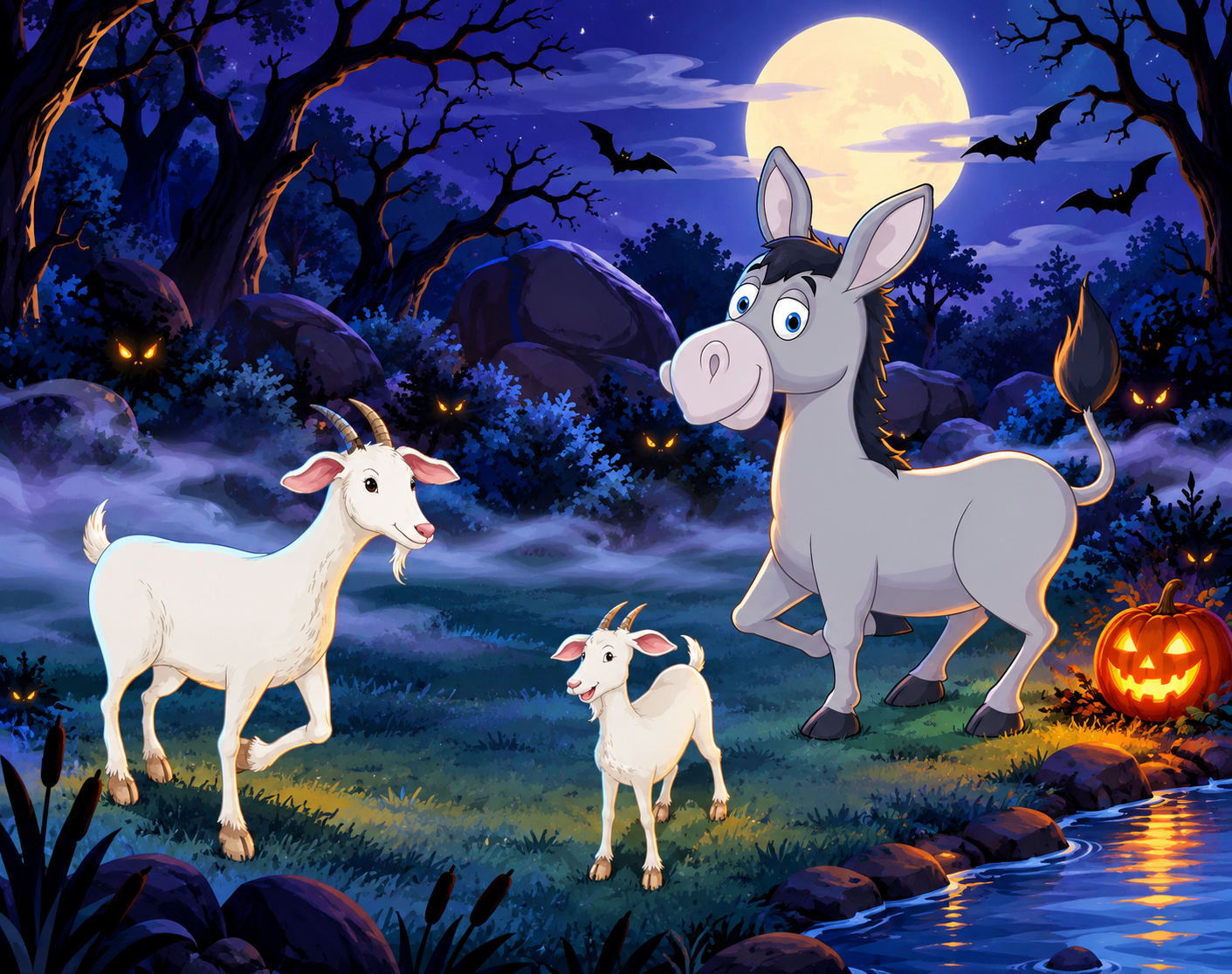
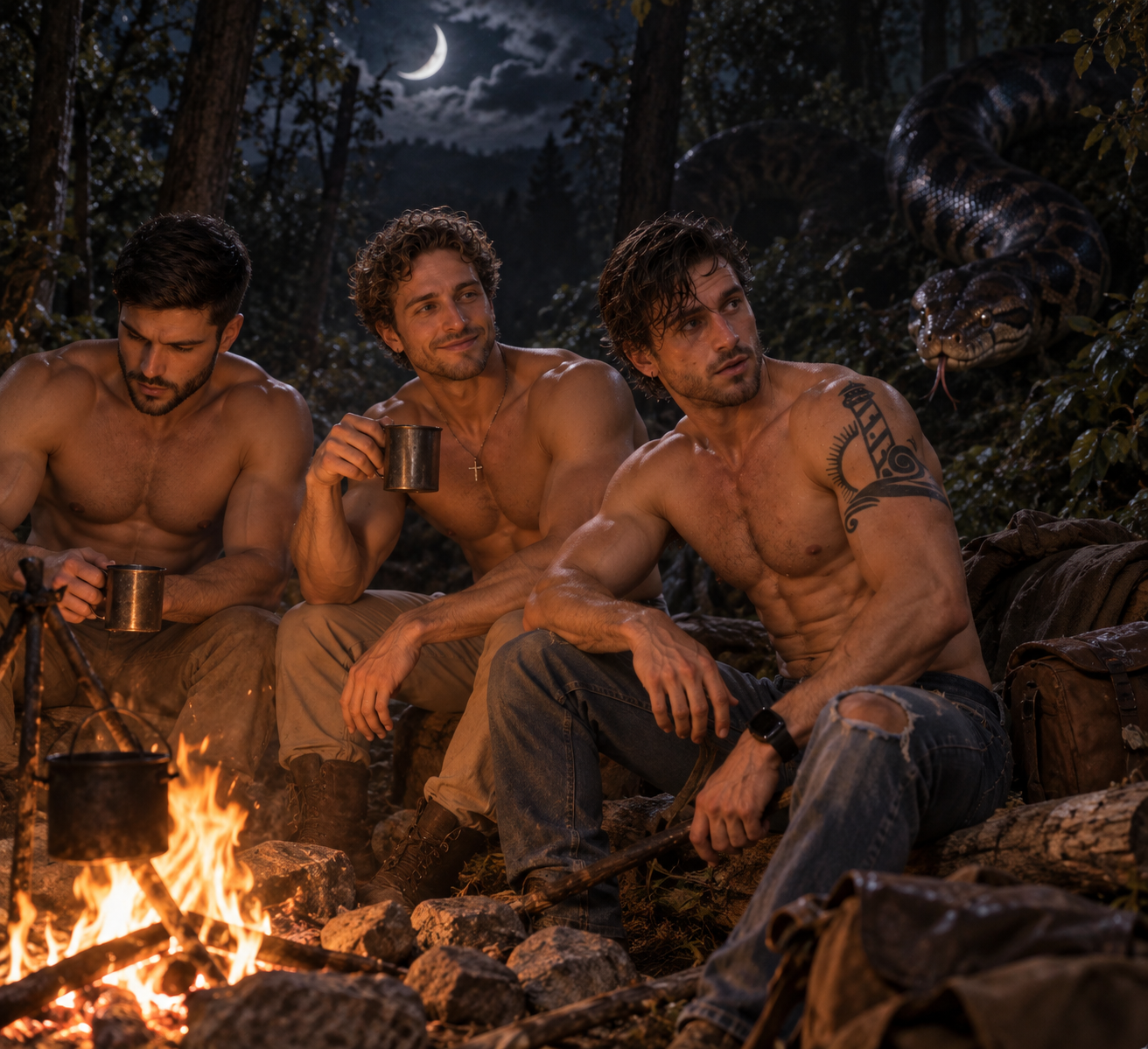
The images below are all AI-generated by me with ChatGPT, Grok, and Google Gemini on my iPhone. Enjoy!

The 31 Days of Halloween! Click on the day number you want! 01 | 02 | 03 | 04 | 05 | 06 | 07 | 08 | 09 | 10 | 11 | 12 | 13 | 14 | 15 | 16 | 17 | 18 | 19 | 20 | 21 | 22 | 23 | 24 | 25 | 26 | 27 | 28 | 29 | 30 | 31
George
|