Navigation:
Index
Splash Page |

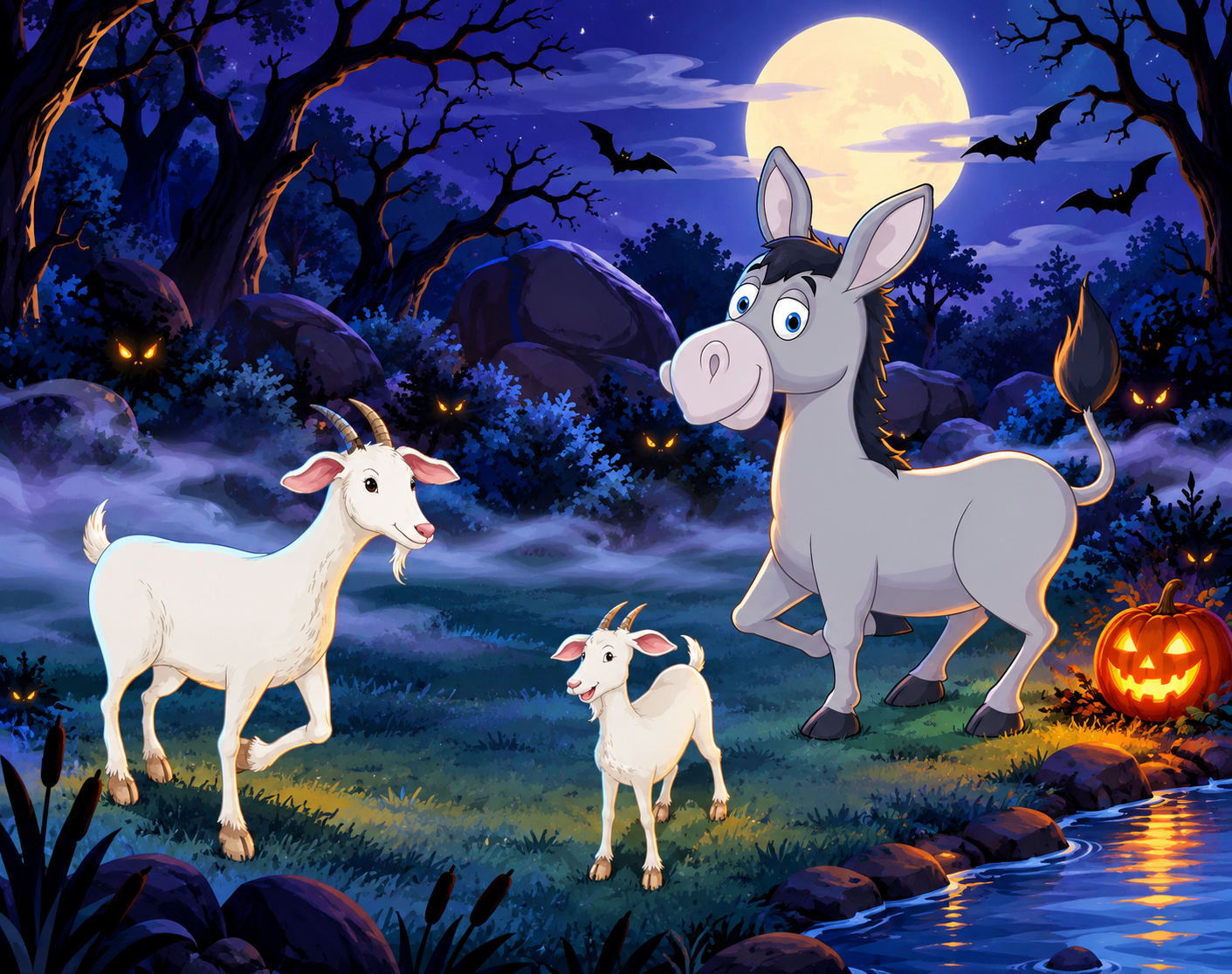
 Two Goats and a Donkey! Two Goats and a Donkey!

On The 14th Day of Halloween
Wednesday, October 14, 2026
Origins of Wednesday
The English word Wednesday carries the name of one of the most important gods of the Germanic world, while its Gaelic equivalents preserve a very different tradition. Like Tuesday, the names reveal how Roman, Germanic, Celtic, and later Christian influences combined to create the weekday terminology still used today.
The English Wednesday comes from Old English Wōdnesdæg, meaning “Woden’s Day.” Woden, better known by his Old Norse name Odin, was associated with wisdom, magic, prophecy, poetry, warfare, and the dead. When Germanic peoples adopted the Roman seven-day planetary week, Woden was identified with the Roman god Mercury. The Romans called Wednesday dies Mercurii, or “day of Mercury.” Germanic speakers substituted Woden for Mercury, producing Wōdnesdæg, which gradually developed into modern Wednesday.
The Gaelic names, however, followed a different path. In modern Irish, Wednesday is Dé Céadaoin, while Scottish Gaelic uses Diciadain. These names do not preserve Mercury or a native Celtic deity. Instead, they reflect early Christian terminology. Irish Céadaoin derives from an older expression referring to the “first fast,” traditionally understood as the first weekly fasting day, Wednesday. Friday became the other important fast day.
This Christian terminology became established in Gaelic partly because Ireland was never incorporated into the Roman Empire. Consequently, the Roman planetary names did not replace native terminology as completely as they did elsewhere. When Christianity became firmly established in Ireland beginning in the fifth century, the Church exerted enormous influence over the organization and naming of the week.
Nevertheless, Wednesday still has intriguing connections with the older Celtic religious world. The Roman Mercury was frequently associated with Celtic gods during the Roman occupation of Gaul and Britain. Julius Caesar described Mercury as particularly important among the Gauls, although the deity he called “Mercury” was almost certainly a Celtic god interpreted through Roman eyes. The Gaulish god Lugus is sometimes compared with Mercury because of associations involving skill, knowledge, and craftsmanship, although scholars caution against treating the two as simply identical.
Wednesday therefore illustrates several overlapping European traditions. English preserves Woden, the Germanic counterpart chosen for Mercury, while Gaelic preserves an early Christian practice of weekly fasting. Behind both traditions lies an older world in which Celtic, Roman, and Germanic peoples understood gods and sacred time in different ways. The humble name of Wednesday thus carries echoes of pagan mythology, Roman cultural influence, Celtic tradition, and the transformation of Ireland through early Christianity.
And fare thee well, Wednesday, the fourteenth day! Thursday will soon be upon us!
The images below are all AI-generated by me with ChatGPT, Grok, and Google Gemini on my iPhone. Enjoy!

The 31 Days of Halloween! Click on the day number you want! 01 | 02 | 03 | 04 | 05 | 06 | 07 | 08 | 09 | 10 | 11 | 12 | 13 | 14 | 15 | 16 | 17 | 18 | 19 | 20 | 21 | 22 | 23 | 24 | 25 | 26 | 27 | 28 | 29 | 30 | 31
George
|