Navigation:
Index
Splash Page |

 Two Goats and a Donkey! Two Goats and a Donkey!
On The 29th Day of Halloween
Thursday, October 29, 2026
Halloween and Homoerotic Horror: Forbidden Love, Queer Desire, and the Gay Male Imagination
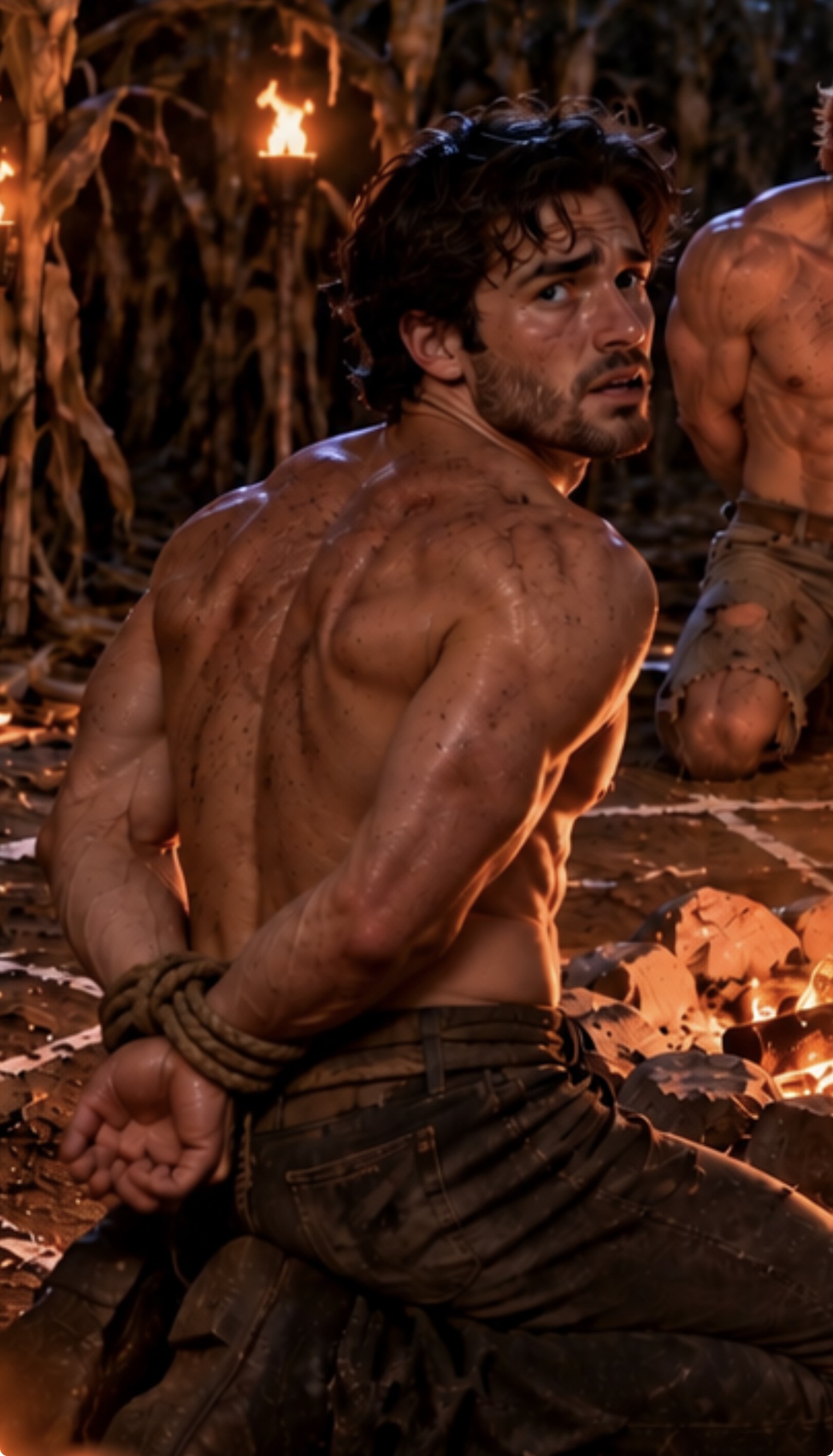 Halloween has always been a holiday of boundaries. It belongs to the border between autumn and winter, daylight and darkness, the ordinary and the supernatural, the living and the dead. Masks allow one identity to conceal another. Costumes permit transformation. Ghosts return from places they are not supposed to leave. Vampires occupy the border between life and death. Werewolves move between man and beast. Haunted houses place the familiar domestic world beside the possibility that another reality exists within it. For gay men, especially across periods in which same-sex desire was criminalized, condemned, hidden, or forced into coded expression, these themes have possessed an additional resonance. Halloween and horror have repeatedly created imaginative spaces in which forbidden love can be disguised as danger, same-sex desire can appear as supernatural fascination, and the outsider can become not merely frightening but beautiful. Halloween has always been a holiday of boundaries. It belongs to the border between autumn and winter, daylight and darkness, the ordinary and the supernatural, the living and the dead. Masks allow one identity to conceal another. Costumes permit transformation. Ghosts return from places they are not supposed to leave. Vampires occupy the border between life and death. Werewolves move between man and beast. Haunted houses place the familiar domestic world beside the possibility that another reality exists within it. For gay men, especially across periods in which same-sex desire was criminalized, condemned, hidden, or forced into coded expression, these themes have possessed an additional resonance. Halloween and horror have repeatedly created imaginative spaces in which forbidden love can be disguised as danger, same-sex desire can appear as supernatural fascination, and the outsider can become not merely frightening but beautiful.
There is no single tradition called “gay Halloween horror” stretching intact from antiquity to the present. Nor should every vampire, monster, intense male friendship, or Gothic villain be retroactively declared homosexual. Modern sexual identities do not map perfectly onto earlier societies, and literary symbolism is rarely reducible to one meaning. Yet the history of horror contains a remarkably persistent vocabulary of secrecy, forbidden intimacy, bodily transformation, double lives, persecution, outsider communities, dangerous attraction, and desire that cannot be openly named. Those themes have allowed generations of gay male readers, viewers, writers, artists, and performers to recognize possibilities within horror that mainstream culture often refused to express directly.
Halloween intensifies these possibilities because it is the one major American celebration that expects transformation. For most of the year, social life asks people to be recognizable. Halloween invites them to wear another face. For people historically required to hide their actual desires, the irony is powerful: the night of disguise could sometimes become the night on which one could reveal something true.
The Gothic Closet
Long before cinema created its famous monsters, Gothic literature established many of the emotional structures that would later make horror receptive to queer interpretation. Eighteenth- and nineteenth-century Gothic stories were filled with locked rooms, concealed histories, secret passages, forbidden manuscripts, double identities, family shame, midnight encounters, and desires that threatened the social order. The genre repeatedly asked what respectable society was trying to keep hidden.
This architecture of secrecy has obvious parallels with the later metaphor of the closet. A closet is literally an enclosed space within a respectable home where things are stored out of sight. In modern LGBTQ+ language, it became the place where forbidden identity was hidden from public knowledge. Gothic fiction similarly depended upon respectable surfaces concealing unsettling realities. A grand house might contain a prisoner. A noble family might conceal a crime. A gentleman might possess a second life. A beautiful person might hide corruption, supernatural hunger, or socially forbidden desire.
For gay male readers living in periods when homosexual acts could lead to disgrace, imprisonment, dismissal, blackmail, or family rejection, this language of secrecy could be intensely familiar. The Gothic hero who feared discovery, the aristocrat with a hidden appetite, the stranger who recognized another outsider across a crowded room, and the monster forced to live at night could all become suggestive figures even when the text never explicitly described homosexual love.
The point is not that Gothic fiction was secretly “about” gay men. Rather, Gothic conventions created a remarkably useful symbolic language for experiences that could not safely be stated.
Forbidden Love and the Horror of Recognition
Forbidden love stories depend upon a contradiction: the beloved is both desired and dangerous. The danger may come from society, religion, family, law, class, race, supernatural difference, or the lovers themselves. Gay male history contains countless real versions of this structure. For long periods, a man could experience love while understanding that acknowledging it might destroy his reputation, livelihood, freedom, or safety.
Horror transforms that social danger into supernatural metaphor. The beautiful stranger may literally be dangerous. A kiss may carry death. Desire may cause physical transformation. A secret meeting may occur in a cemetery, castle, alleyway, or darkened room. The beloved may belong to another world.
This is one reason the vampire became such an important figure in queer interpretation. The vampire does not merely attack. He seduces. He recognizes something within another person, approaches intimately, crosses bodily boundaries, and offers transformation into a hidden community that exists outside ordinary human society. The vampire's victim may fear him while simultaneously wanting to follow him.
For a gay male audience, especially one familiar with secrecy and social prohibition, the metaphor can be unusually potent. The terror is not simply that the forbidden person may desire you. The terror is that you may desire him back.
The Vampire and Male Desire
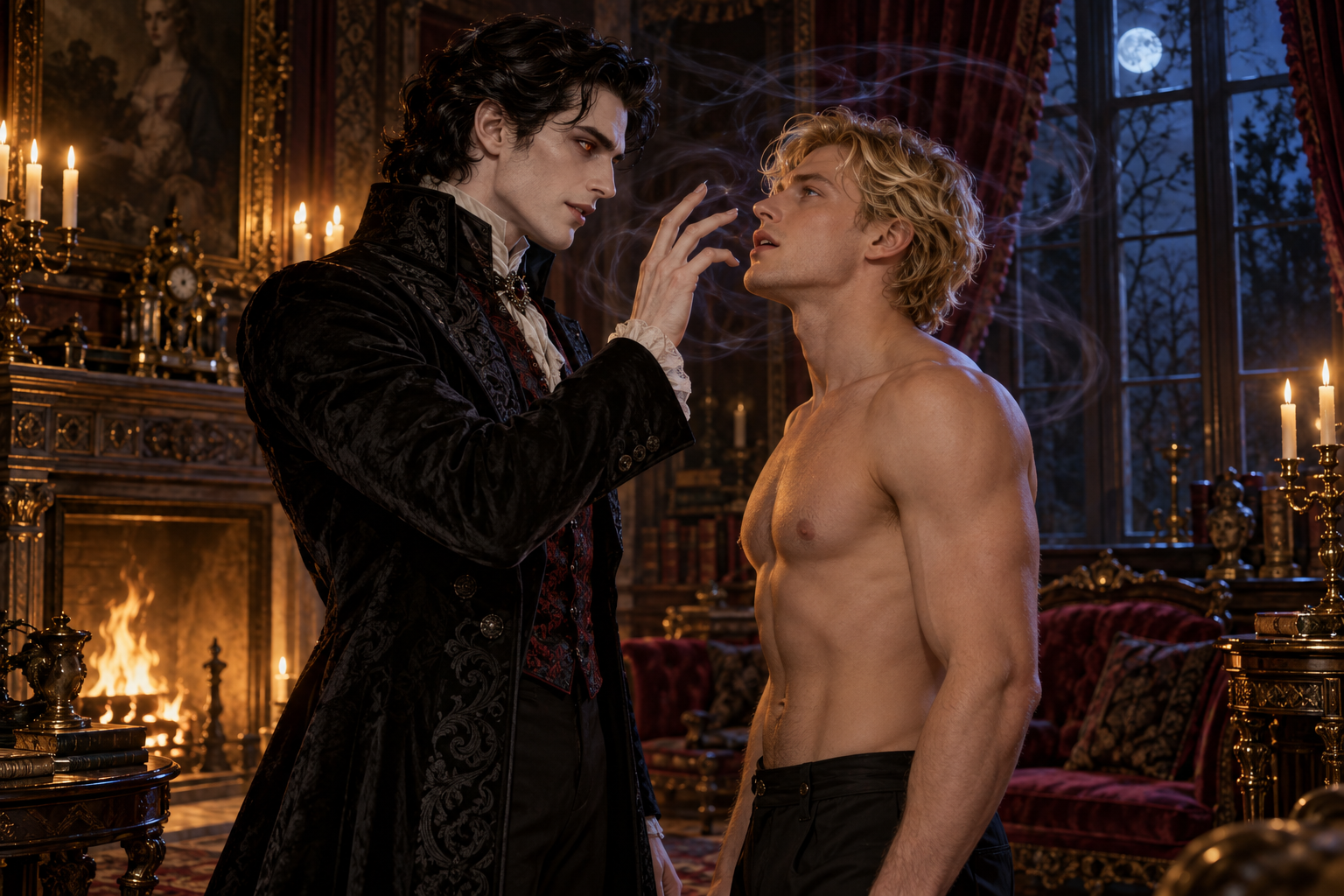 Vampires have never possessed one fixed sexuality. Folkloric vampires were often more corpse-like and frightening than the elegant seducers of later fiction. Nineteenth-century literature gradually transformed the vampire into a figure of erotic menace, and cinema intensified that transformation. The vampire became beautiful, aristocratic, mysterious, nocturnal, and intimate. Vampires have never possessed one fixed sexuality. Folkloric vampires were often more corpse-like and frightening than the elegant seducers of later fiction. Nineteenth-century literature gradually transformed the vampire into a figure of erotic menace, and cinema intensified that transformation. The vampire became beautiful, aristocratic, mysterious, nocturnal, and intimate.
Bram Stoker's Dracula is primarily organized around heterosexual threat, particularly Count Dracula's predation upon women and the male heroes' efforts to protect them. It would be misleading to describe the novel simply as a gay text. Yet Dracula also participates in a Gothic world saturated with anxieties about male intimacy, bodily penetration, blood exchange, secrecy, and forbidden desire. The vampire's ability to cross conventional boundaries made him especially available for later queer reinterpretation.
Later vampire fiction made the connection much more direct. Anne Rice's Interview with the Vampire, published in 1976, transformed vampire relationships by giving the undead elaborate emotional lives, chosen families, intense male bonds, jealousy, abandonment, and long-term partnerships that often carried unmistakably queer resonance. Louis and Lestat create a household together, raise Claudia together, fight like lovers, separate, remember one another, and remain emotionally bound across extraordinary lengths of time. The language is not reducible to a conventional heterosexual family model, and generations of gay readers recognized themselves within the emotional architecture of these relationships.
The vampire's immortality adds another dimension to forbidden love. Human society changes, laws change, generations pass, but the vampire remains. A gay male vampire can therefore become a fantasy of desire surviving persecution. He may witness centuries in which the same love is called sin, crime, sickness, scandal, liberation, identity, and eventually marriage. The monster outlives the morality that condemned him.
Halloween embraces the vampire because he is elegant enough to desire and frightening enough to remain dangerous. For gay male horror, that combination is especially powerful. The vampire can embody the fantasy of meeting another man who recognizes one's hidden nature immediately and offers entry into another world.
The Beautiful Monster
One of the deepest changes in modern horror has been the transformation of the monster from something merely repulsive into something desirable. Traditional monsters often represented bodily difference, corruption, disease, death, or violation. Modern horror increasingly asks audiences to identify with the monster rather than simply flee from it.
This shift has obvious relevance to gay male culture. Queer people have repeatedly been described by hostile societies using the language of abnormality, corruption, predation, sickness, unnaturalness, or monstrosity. One response to such condemnation has been assimilation: insist that gay people are ordinary human beings who deserve ordinary rights. Another response has been reclamation: if society calls us monsters, perhaps the monster itself can become beautiful.
Horror makes this possible. The vampire's fangs become seductive. The werewolf's body becomes powerful. The demon becomes charismatic. The ghost becomes lonely rather than frightening. The creature banished from society becomes sympathetic precisely because society rejected him.
For gay men, the beautiful monster can therefore represent a refusal of shame. He does not become acceptable by becoming less strange. He becomes desirable while remaining strange.
Halloween celebrates exactly this reversal. Things normally associated with fear become decorations. Skeletons smile from porches. Devils become costumes. Vampires become romantic figures. Monsters dance at parties. The outsider temporarily becomes the guest of honor.
Frankenstein and the Rejected Creation
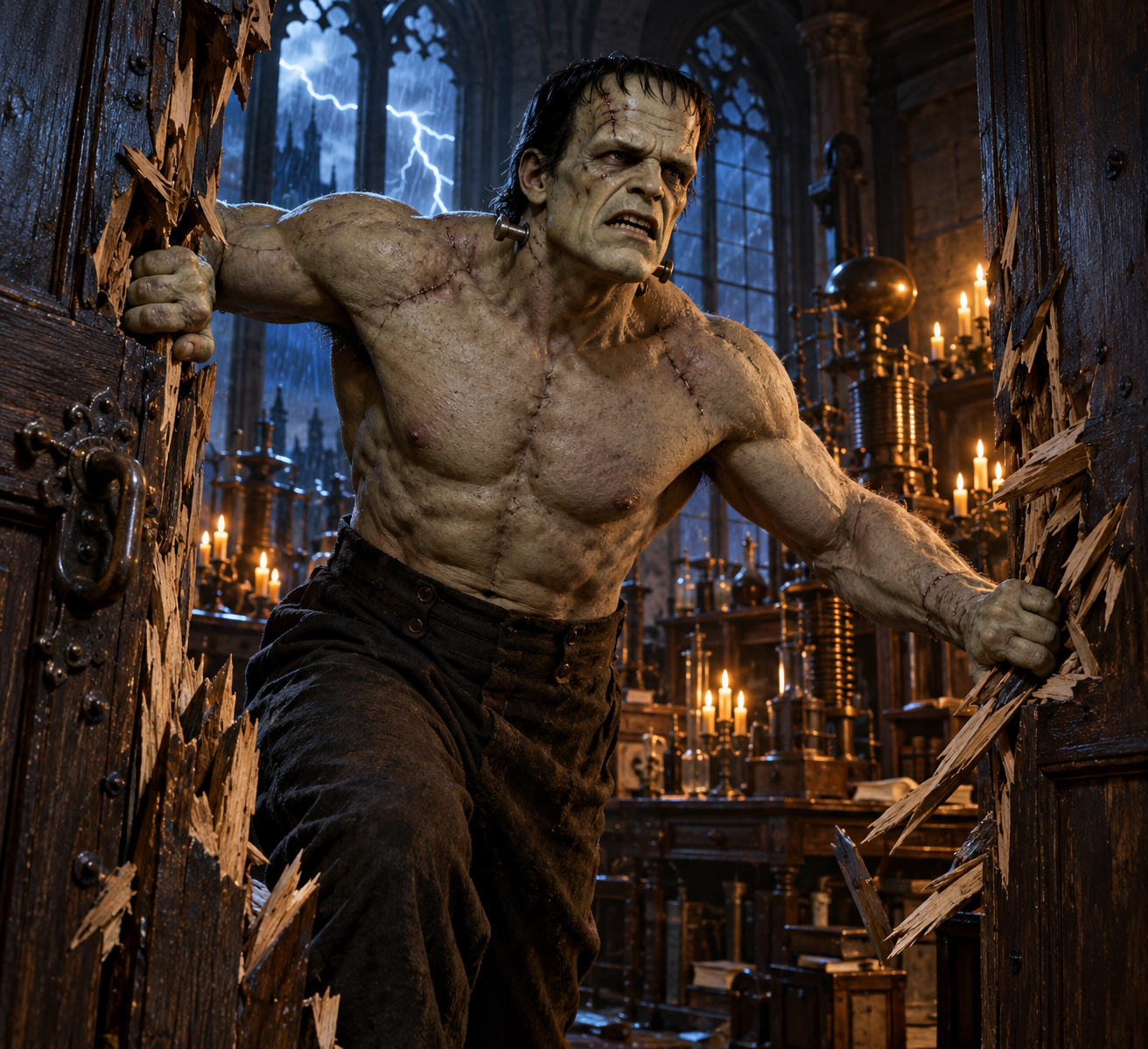 Mary Shelley's Frankenstein is another foundational horror text that has attracted queer interpretation, although again it should not be reduced to a single sexual reading. The novel concerns creation, abandonment, responsibility, isolation, and the devastating consequences of refusing companionship to a being capable of love. Mary Shelley's Frankenstein is another foundational horror text that has attracted queer interpretation, although again it should not be reduced to a single sexual reading. The novel concerns creation, abandonment, responsibility, isolation, and the devastating consequences of refusing companionship to a being capable of love.
The Creature's tragedy is not simply that he looks frightening. It is that he understands human affection and desperately wants to participate in it. He watches families, learns language, reads literature, and recognizes his own exclusion. His request to Victor is fundamentally relational: he asks not for wealth or power but for a companion who will not recoil from him.
This longing has made the Creature meaningful to many marginalized readers. For gay men, his experience can resonate with the fear of being seen as fundamentally unacceptable by the society whose affection one desires. The tragedy lies in the contradiction between inner humanity and external judgment.
Later films often simplified Frankenstein's Creature into an iconic Halloween monster, but the original emotional core survives beneath the green makeup and neck bolts. The monster asks a question familiar to forbidden love: what happens when a person capable of tenderness is told that no legitimate object of love exists for him?
In queer readings, that question can become devastating. The Creature is not destroyed because he lacks the capacity for love. He is destroyed partly because others refuse to imagine a world in which his love could be allowed.
The Double Life: Jekyll, Hyde, and the Divided Man
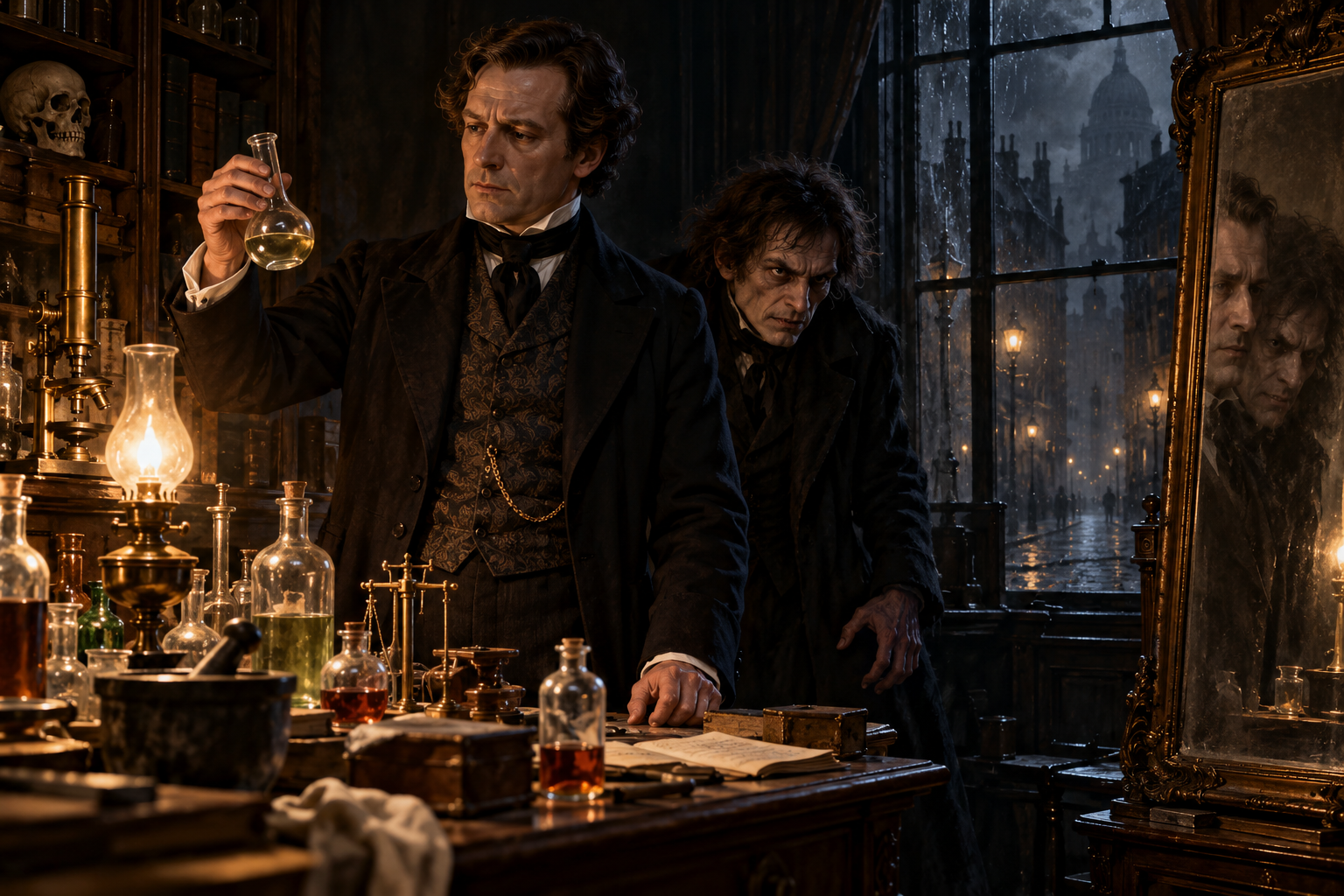 Robert Louis Stevenson's Strange Case of Dr Jekyll and Mr Hyde became another enduring metaphor for hidden identity. Dr. Jekyll is respectable, controlled, socially accepted, and publicly admired. Hyde represents appetites Jekyll refuses to integrate into his respectable identity. The horror comes from division: one man attempts to separate socially approved selfhood from forbidden desire. Robert Louis Stevenson's Strange Case of Dr Jekyll and Mr Hyde became another enduring metaphor for hidden identity. Dr. Jekyll is respectable, controlled, socially accepted, and publicly admired. Hyde represents appetites Jekyll refuses to integrate into his respectable identity. The horror comes from division: one man attempts to separate socially approved selfhood from forbidden desire.
The story is not explicitly homosexual, and Hyde's unspecified crimes should not simply be equated with homosexuality. Yet the structure of the double life carried obvious significance in a culture where men could be forced to maintain respectable public identities while pursuing forbidden desires in secret. Late-Victorian anxieties about scandal, blackmail, urban nightlife, and concealed vice made the story especially potent.
For closeted gay men, the Jekyll-and-Hyde structure could resemble the exhausting division between public and private selves. One identity went to work, family dinners, church, and respectable social events. Another visited bars, private parties, cruising grounds, or secret lovers. Discovery could collapse both worlds.
Halloween reverses this anxiety. Instead of fearing the emergence of the hidden self, the holiday invites it. The costume becomes a socially approved double identity. For one night, becoming someone else is not suspicious. It is expected.
This is one reason Halloween has historically offered such unusual freedom to people whose ordinary lives required careful self-presentation. It turns the Gothic double life into a festival.
Oscar Wilde and the Horror of the Secret Self
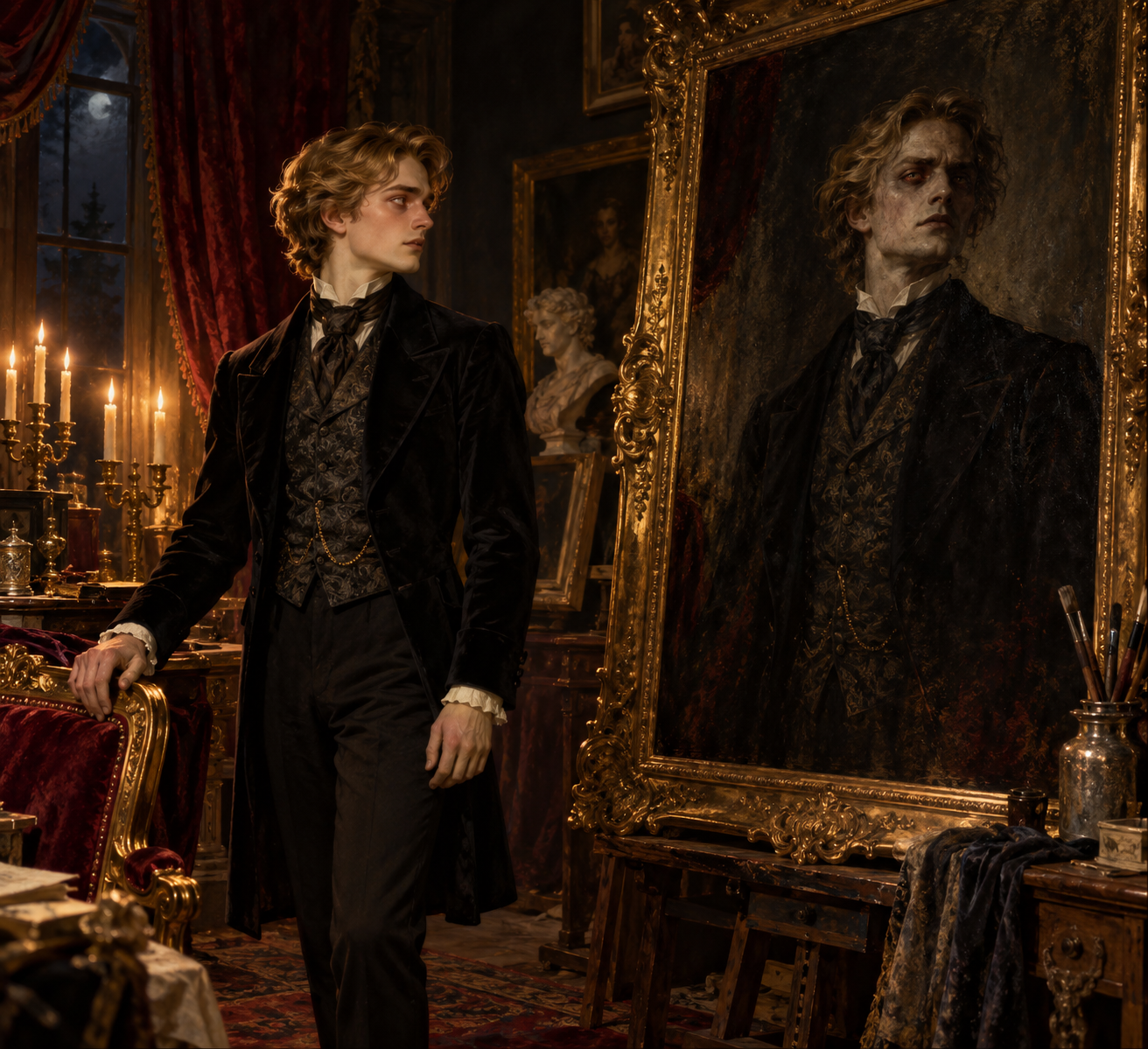 No discussion of forbidden male desire and Gothic literature can ignore Oscar Wilde's The Picture of Dorian Gray. The novel is not conventionally a Halloween story, but its influence upon queer Gothic culture is enormous. Beauty, secrecy, moral panic, male fascination, forbidden influence, and hidden corruption all converge around Dorian's double existence. No discussion of forbidden male desire and Gothic literature can ignore Oscar Wilde's The Picture of Dorian Gray. The novel is not conventionally a Halloween story, but its influence upon queer Gothic culture is enormous. Beauty, secrecy, moral panic, male fascination, forbidden influence, and hidden corruption all converge around Dorian's double existence.
The novel emerged from a society in which male homosexual acts were criminalized, and Wilde's own trials in 1895 would turn private correspondence and same-sex relationships into public evidence against him. The cultural association between secrecy and male desire therefore became tragically literal in Wilde's life.
Dorian's portrait functions like the locked room of the closet. The visible man remains beautiful and socially acceptable while the hidden image records everything society must not see. The greater the distance between public appearance and private reality, the more terrible the secret becomes.
For a gay male reader, the tragedy can be read not merely as hidden sin but as the destructive cost of dividing the self into acceptable surface and forbidden interior. The portrait becomes frightening because it contains everything that cannot be acknowledged.
Halloween provides the inverse fantasy: what if hidden identity could be displayed rather than concealed? What if transformation were not evidence against you but the reason everyone gathered?
Werewolves and the Fear of Transformation
The werewolf represents another kind of queer metaphor. Unlike the vampire, who often knows what he is and may even take pride in it, the werewolf frequently fears transformation. He may live as an ordinary man until an internal force changes his body, appetites, and behavior.
Historically, this has made the werewolf useful for stories about repressed impulses, adolescence, masculinity, sexuality, rage, and bodily change. In a gay male context, the transformation can echo the fear that forbidden desire will become visible no matter how carefully it is suppressed. The closeted man may believe that discipline will preserve the identity expected of him. Then attraction appears. The body responds before the respectable mind can deny it. Suddenly the hidden self feels uncontrollable. Of course, gay desire is not a disease or violent compulsion, and responsible queer interpretation should not reproduce the prejudiced idea that homosexuality is monstrous. The useful metaphor lies not in the werewolf's violence but in the conflict between imposed identity and embodied truth. Modern queer retellings can reverse the old structure. Instead of treating transformation as damnation, the story can ask whether the character's real tragedy is his hatred of the wolf. What if wholeness becomes possible only when he stops treating part of himself as a monster?
The werewolf then becomes a figure not of homosexual danger but of self-acceptance.
The Male Body in Horror
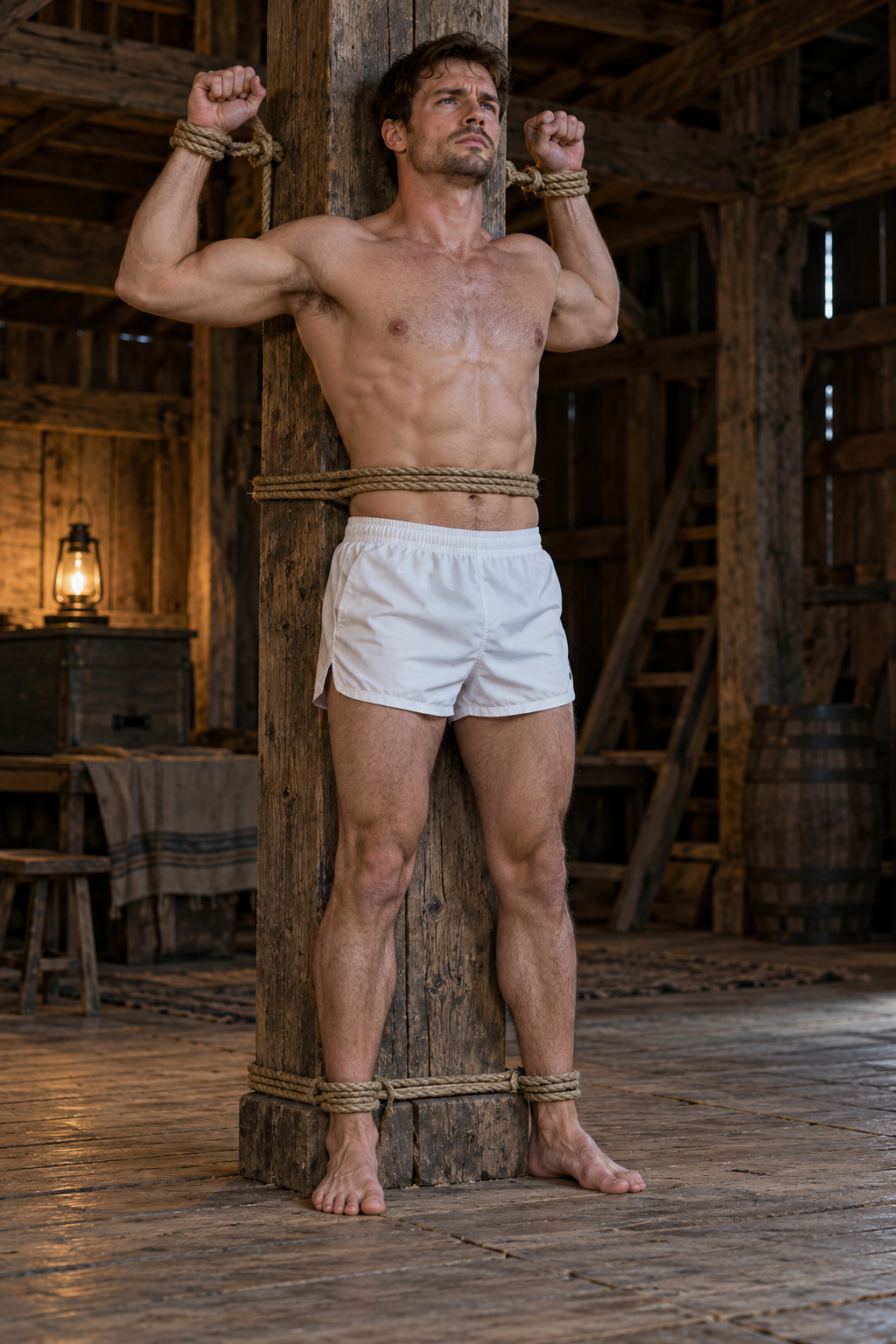 Horror has always been intensely interested in bodies. Bodies are transformed, wounded, possessed, resurrected, duplicated, consumed, exposed, and reconstructed. For gay male audiences, this visual emphasis creates a complicated relationship between fear and attraction. Horror has always been intensely interested in bodies. Bodies are transformed, wounded, possessed, resurrected, duplicated, consumed, exposed, and reconstructed. For gay male audiences, this visual emphasis creates a complicated relationship between fear and attraction.
The masculine body in horror can be both threatened object and object of desire. The shirtless victim fleeing a monster, the athletic hero confronting supernatural danger, the vampire displaying ageless beauty, the werewolf becoming physically powerful, or the possessed man whose familiar body becomes strange can all carry homoerotic possibilities independent of the official romantic plot.
For decades, mainstream film and television often permitted male bodies to be displayed in genres where explicit gay desire was not welcome. Horror therefore offered a kind of visual loophole. A male body could be watched because it was supposedly in danger. Intense physical contact between men could occur because they were fighting. A man could stare at another man because he suspected him of being a monster. The narrative supplied heterosexual justification for images capable of producing other meanings.
Queer audiences became skilled at reading such gaps.
This is not unique to horror. Action films, sword-and-sandal epics, wrestling, superhero stories, and sports culture have similarly produced intensely homoerotic images without necessarily naming them as such. Horror adds vulnerability to the masculine body, and vulnerability can make desire more emotionally complicated.
The Slasher and the Forbidden Gaze
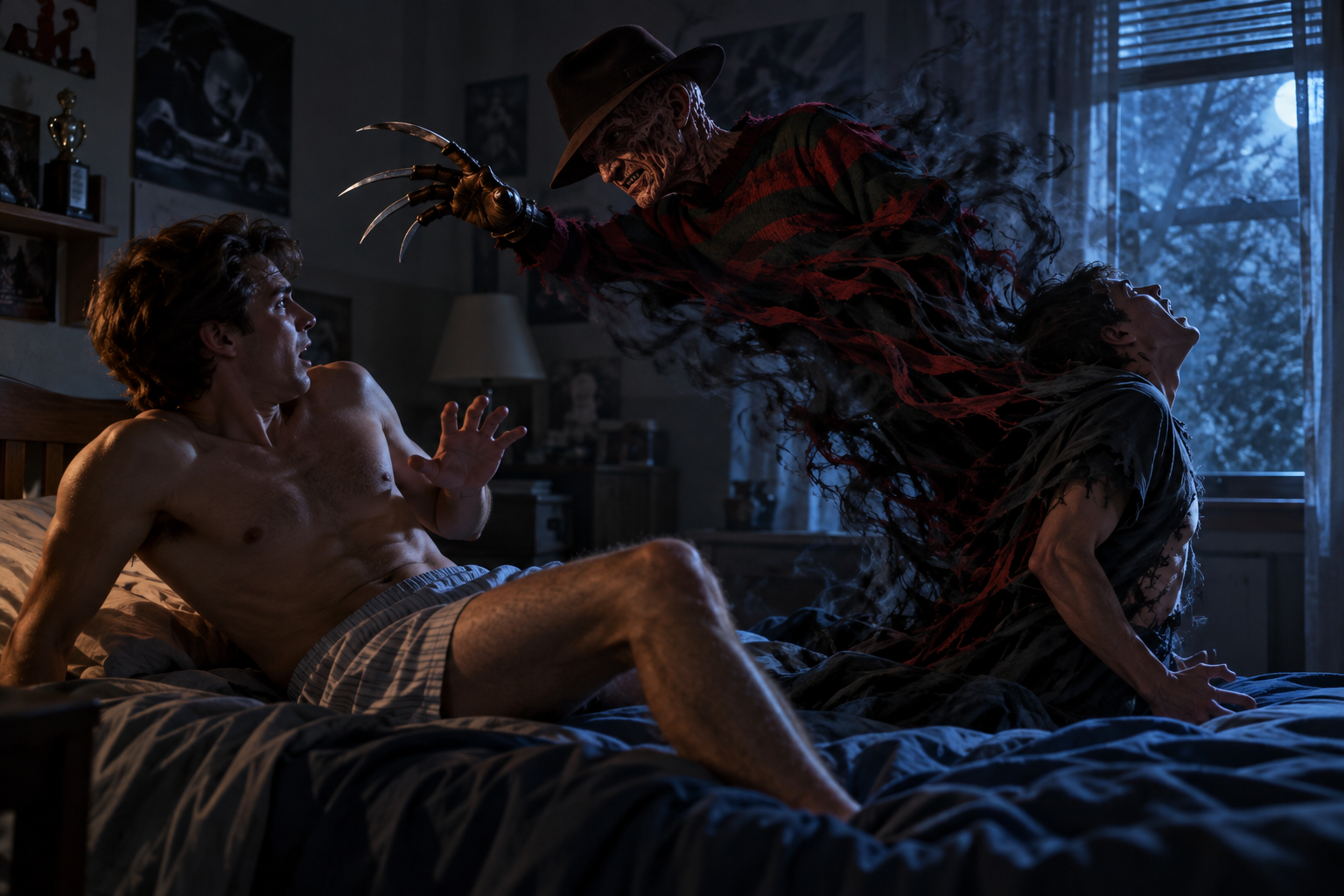 The slasher film seems at first less compatible with romantic queer interpretation. Its structure often revolves around pursuit, punishment, and violent death rather than supernatural seduction. Yet even slashers have produced important gay male readings. The slasher film seems at first less compatible with romantic queer interpretation. Its structure often revolves around pursuit, punishment, and violent death rather than supernatural seduction. Yet even slashers have produced important gay male readings.
A famous example is A Nightmare on Elm Street 2: Freddy's Revenge from 1985. Over time, the film developed a reputation for unusually strong gay subtext, particularly through its focus on male bodies, locker-room imagery, leather-bar aesthetics, anxieties about possession, and the protagonist's fear that something hidden inside him is trying to emerge. Actor Mark Patton later openly discussed the film's queer legacy and his own experience as a gay actor during the AIDS era.
Whether every element was consciously intended as homosexual allegory is less important than the fact that gay audiences recognized a pattern the mainstream initially treated uneasily. The film demonstrates how horror can encode the fear of forbidden male desire as literal possession: something inside the protagonist threatens to reveal itself.
From a modern perspective, that structure can be reclaimed. The problem is not desire itself. The horror lies in a culture that teaches the person experiencing it to interpret self-recognition as invasion.
Halloween screenings of cult horror films have helped turn such works from sources of anxiety into communal queer texts. What might once have been watched alone and understood secretly can now be celebrated publicly.
Camp: When Horror Learns to Wink
Gay male culture's relationship with horror is not limited to earnest identification. It also includes camp.
Camp delights in exaggeration, theatricality, artificiality, melodrama, glamour, and excess. Horror provides an endless supply. Dracula's cape is excessive. The haunted mansion is excessive. The witch's laugh is excessive. The mad scientist's laboratory is excessive. The screaming heroine, thunderstorm, candelabra, cobweb, full moon, and organ music all announce themselves dramatically. Halloween magnifies this aesthetic. A tasteful amount of horror decoration is almost a contradiction in terms. The holiday rewards excess.
Gay male camp can therefore transform horror from something that threatens outsiders into something outsiders control. The monster becomes fabulous. The villain receives the best costume. The vampire knows how to make an entrance. The witch understands accessories. Death itself becomes theatrical.
The Rocky Horror Picture Show is perhaps the clearest example of horror, camp, sexuality, gender play, and queer audience participation becoming inseparable. Although it is not strictly a Halloween film, its midnight-screening culture and outrageous aesthetic have made it a natural part of Halloween tradition. Its great cultural reversal is simple: the strange household is more exciting than the respectable world outside it.
For queer audiences, that reversal can feel liberating. The castle is full of outsiders, but inside the castle the outsiders are the norm.
Forbidden Love in the Haunted House
The haunted house offers another useful metaphor for gay male forbidden love. A house usually symbolizes domestic safety, family, inheritance, and social legitimacy. A haunted house corrupts that ideal. Something unresolved lives inside the structure.
Historically, gay male relationships were often excluded from conventional domestic narratives. Marriage was unavailable. Shared homes could be described publicly through euphemisms. Long-term partners might be treated legally as strangers. Family photographs, wills, hospital visitation, inheritance, and housing could all become sites where the legitimacy of a relationship was questioned.
The haunted house can therefore be read as a powerful queer space. It contains a relationship or history official society refuses to acknowledge. The dead lover remains. The secret room remains locked. The portrait remains on the wall. The past will not disappear simply because respectable society refuses to speak its name.
A gay Gothic romance can turn haunting into fidelity. The ghost returns because love outlived the structures that denied it. A man waits decades for the lover who was taken from him. Two men separated by family, law, violence, or death find one another again after ordinary time has ended.
In such stories, horror and romance become nearly indistinguishable. The frightening question — what if the dead return? — becomes a romantic one: what if death itself cannot enforce separation?
The Ghost Lover
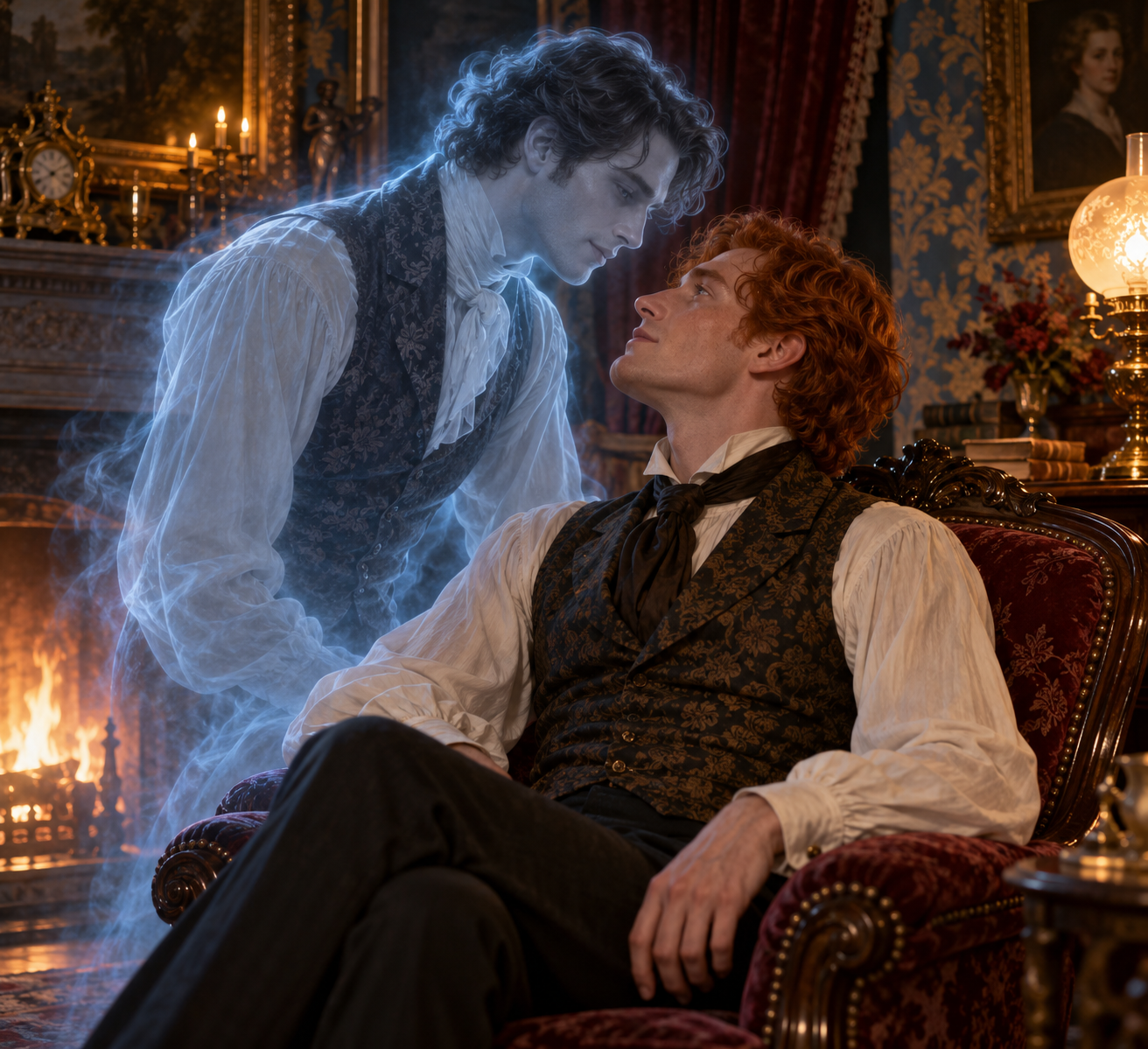 Ghost stories have always understood that love can be stronger than burial. Lovers return to unfinished relationships, keep promises made before death, revisit familiar rooms, and appear at anniversaries or places of emotional significance. Ghost stories have always understood that love can be stronger than burial. Lovers return to unfinished relationships, keep promises made before death, revisit familiar rooms, and appear at anniversaries or places of emotional significance.
From a gay male perspective, the ghost lover carries particular poignancy because so many historical relationships disappeared from official records. Letters were destroyed. Families denied partnerships. Obituaries omitted lovers. Friends were described as roommates. In some cases, the surviving partner was excluded from funerals or family decisions.
Horror can imaginatively repair that erasure. The dead man returns not as a shameful secret but as undeniable presence. A ghost story can therefore become a form of queer historical fantasy. The lover whom society attempted to erase literally refuses to vanish. Halloween, with its traditional fascination with returning spirits, becomes the perfect symbolic night for such a story. The veil between worlds opens, and a love denied recognition in life receives one night in which concealment is impossible.
The Monster as the Forbidden Beloved
Forbidden romance often asks the protagonist to choose between society and the beloved. Horror heightens the conflict by making the beloved genuinely other: vampire, demon, ghost, werewolf, immortal, creature, or something without a human name.
For gay male storytelling, this creates a powerful metaphorical question. If everyone around you insists the person you love is unnatural, how do you decide whether they are protecting you or merely enforcing their own definition of normality? Traditional horror often answered conservatively. The monster had to die so that ordinary society could be restored. The heterosexual couple survived, daylight returned, and the threatening outsider was destroyed. Queer horror can reverse the ending. Perhaps the monster is not the threat. Perhaps the village with torches is. Perhaps the vampire is dangerous but honest, while respectable society is hypocritical. Perhaps the werewolf is capable of love. Perhaps two men run away together rather than returning to the community that condemned them. Perhaps the haunted castle becomes home. This reversal transforms forbidden love from a cautionary tale into a challenge to the authority defining what counts as monstrous.
The AIDS Era and the Horror of Desire
Any discussion of gay male horror in the late twentieth century must acknowledge the AIDS epidemic. During the 1980s and early 1990s, gay men experienced enormous loss while public discourse frequently associated male-male sexuality with disease, contamination, fear, and death. This created an extraordinarily painful overlap with traditional horror imagery. Blood, bodily fluids, infection, hidden illness, transformation, and death were already central horror motifs. Suddenly these metaphors existed alongside a real epidemic devastating gay communities. Some horror from the period consciously or unconsciously absorbed these anxieties. Yet queer communities also reclaimed Halloween and horror as spaces of resilience. Costume parties, drag events, nightlife, and benefit events allowed celebration to coexist with mourning. The holiday's traditional transformation of death into spectacle acquired a much more serious emotional undertone.
For gay men living amid the epidemic, forbidden love could no longer be treated merely as Gothic fantasy. Love itself was being publicly described as dangerous. Partners cared for one another through illness while some families, governments, religious leaders, and media voices responded with stigma or indifference. Against that background, queer horror's monsters could become unexpectedly compassionate. The vampire who understands blood, the immortal who watches lovers die, the ghost who refuses disappearance, and the outsider community protecting its own could all acquire new meanings. Halloween's darkness did not erase grief. It gave grief costumes, music, community, and somewhere to go.
Halloween Night and the Freedom of Disguise
The real-world relationship between Halloween and gay male culture is essential to this discussion. For generations, costume parties and Halloween nightlife provided opportunities for gender experimentation, drag, flamboyance, and public behavior that might attract greater scrutiny at other times. A man could wear makeup because it was Halloween. He could dress extravagantly because it was Halloween. Two men could appear in paired costumes because it was Halloween. Gay bars could turn already theatrical spaces into elaborate worlds of disguise. The holiday created plausible deniability.
That phrase may sound mundane, but historically it could matter greatly. A costume could allow someone to test a version of himself before he was prepared to name it. A masked party could make it easier to enter a gay venue for the first time. A man could flirt under cover of character. Desire could be both real and pretend until the person experiencing it decided which one it was. This produces a beautiful paradox. Halloween's disguise can create honesty. Behind the mask, the wearer may finally stop performing the identity expected of him.
Forbidden Love Without the Tragic Ending
For much of modern literary and cinematic history, gay male love stories frequently ended in separation, punishment, madness, violence, suicide, or death. Some of this reflected censorship. Some reflected prevailing prejudice. Some reflected the genuine dangers queer people faced. Whatever the reason, generations of audiences learned to expect that male-male desire would carry a cost.
Horror was particularly suited to this tragic structure because death already belonged to the genre. The gay-coded villain could be destroyed. The forbidden bond could end catastrophically. Desire could be framed as something that summoned punishment.
Contemporary queer horror increasingly asks what happens if the lovers survive. This is more radical than it may first appear.
A gay vampire romance in which the men remain together changes the traditional moral structure of the vampire tale. A werewolf who finds a male partner willing to accept his transformations changes the meaning of monstrosity. A ghost story in which love brings peace rather than punishment changes the relationship between queerness and death. The lovers do not need to become ordinary. They simply need to be allowed a future. That shift is central to modern queer Gothic storytelling. Forbidden love becomes less about proving that society's prohibition is inevitable and more about asking who gave society the authority to forbid it.
Halloween as a Queer Romantic Holiday
Halloween is rarely described as a romantic holiday in the way Valentine's Day is, yet for gay male imagination it possesses unusual romantic potential. Valentine's Day traditionally emphasizes public couplehood, flowers, dinners, marriage, and socially recognized romance. Historically, gay men were often excluded from those rituals or forced to participate invisibly.
Halloween offers another model.
The lovers can meet at night. They can wear masks. They can become creatures together. They can walk through a cemetery, enter a haunted attraction, watch horror films, attend a costume party, or disappear into a crowd where everyone is transformed. Instead of red roses, there are black roses. Instead of candlelit restaurants, there are candlelit crypts. Instead of cherubs, there are bats. The imagery is darker, but darkness can create privacy. Halloween romance allows love to be strange without treating strangeness as failure. For gay male couples and queer communities, this has contributed to Halloween's special cultural appeal. The holiday does not demand conventional masculinity, conventional romance, conventional beauty, or conventional family structure. It rewards invention.
Love at the Threshold
The most useful concept connecting Halloween, horror, and gay forbidden love may ultimately be liminality: existence at a threshold. Halloween is liminal because it occupies the border between seasons and symbolically between worlds. Monsters are liminal because they cross categories. Vampires are alive and dead. Werewolves are man and animal. Ghosts are present and absent. Masks are self and other. Historically, gay men were often forced into similarly unstable social positions. A relationship could be deeply committed yet legally nonexistent. A man could be known intimately by one circle and entirely unknown by another. Someone could live openly in one neighborhood and cautiously around family or work. Love could be real while society insisted it was illegitimate.
Horror understands this condition instinctively. Its creatures live between definitions. That is why queer audiences have so often found themselves among the monsters. Not because gay men are monstrous, but because monsters reveal how unstable the category of “normal” really is.
When the Monster Looks Back
The most interesting queer horror does not merely ask us to sympathize with the monster. It changes who is doing the looking. Traditional horror frequently presents the monster through the frightened gaze of ordinary society. The villagers see Frankenstein's Creature. The humans see the vampire. The town sees the werewolf.
Queer horror allows the monster to look back.
From his perspective, perhaps the humans are terrifying. They enforce conformity, punish desire, burn homes, destroy relationships, and call violence righteousness. The gay male viewer may recognize this reversal immediately. History contains many situations in which institutions claiming to defend morality caused tremendous suffering to people whose primary offense was loving differently. Forbidden-love horror can therefore relocate fear. The question stops being “Why would a man love the monster?” and becomes “Why is everyone so determined to prevent them from loving each other?” Once that question is asked, the entire story changes.
The Final Transformation
Halloween and homoerotic horror meet most powerfully in the image of transformation. A man enters the night as one thing and returns as another. Perhaps he has been bitten. Perhaps he has fallen in love. Perhaps those are the same event. Traditional horror warns that forbidden contact changes a person permanently. The vampire's bite transforms the victim. The werewolf's wound spreads the curse. The haunted place follows the visitor home. Queer romance can take the same structure and remove the assumption that transformation is automatically corruption.
Love changes people too.
A man who has spent his life hiding may become visible because another man sees him clearly. Someone taught to fear his desires may discover that intimacy does not destroy him. Someone who believed himself alone may discover an entire community of people who understand the supposedly forbidden thing within him. In that sense, the old horror language becomes unexpectedly romantic. The bite becomes awakening. The haunted house becomes home. The monster becomes beloved. The night becomes freedom.
Where Forbidden Love Becomes Possible
The relationship between Halloween, homoerotic horror, and gay male forbidden love is therefore not based upon one monster, one story, or one historical tradition. It emerges from a shared vocabulary. All three are concerned with boundaries. All three understand secrecy. All three recognize the power of transformation. All three ask what happens when something excluded from daylight refuses to remain hidden. For centuries, Western horror imagined dangerous things emerging at night. Gay history adds a different possibility: perhaps the night was dangerous because it was the only place some people could live honestly. The vampire leaves the coffin after sunset because daylight belongs to another world. The closeted man leaves his respectable public identity behind when he enters the bar, the private party, the theater, the club, or the home of the person he loves. Both move between worlds. Both understand that being recognized by the wrong person may carry consequences. Yet Halloween temporarily overturns the arrangement.
On Halloween night, everyone enters the darkness. Everyone disguises themselves. Everyone becomes strange. The outsider is no longer alone. This may explain why queer culture has repeatedly embraced the holiday with such intensity. Halloween does not ask the strange person to become normal. It asks the normal world to become strange. For gay male forbidden love, that reversal is profoundly romantic. The lovers no longer need to leave the haunted castle. They can remain there together. The vampire does not need to become human. The werewolf does not need to destroy the animal within himself. The ghost does not need to disappear before morning. The monster does not need forgiveness for existing.
And the man who loves him does not need to be rescued.
Perhaps the greatest transformation in modern queer horror is therefore not the transformation of the monster at all. It is the transformation of the story. For generations, the conventional ending restored order. The monster died, the forbidden desire ended, and respectable society survived. A gay male Gothic romance can imagine another ending. The torches disappear into the distance. The village gates close. Dawn begins to touch the horizon, but somewhere beyond the road stands an old house surrounded by autumn trees. Two men remain inside. Perhaps one is human and one is not. Perhaps neither is entirely human anymore. Perhaps the world outside still considers their love impossible.
It no longer matters.
The door closes. The monster is not defeated. The lovers are not separated. And for once, forbidden love is permitted to survive the night.
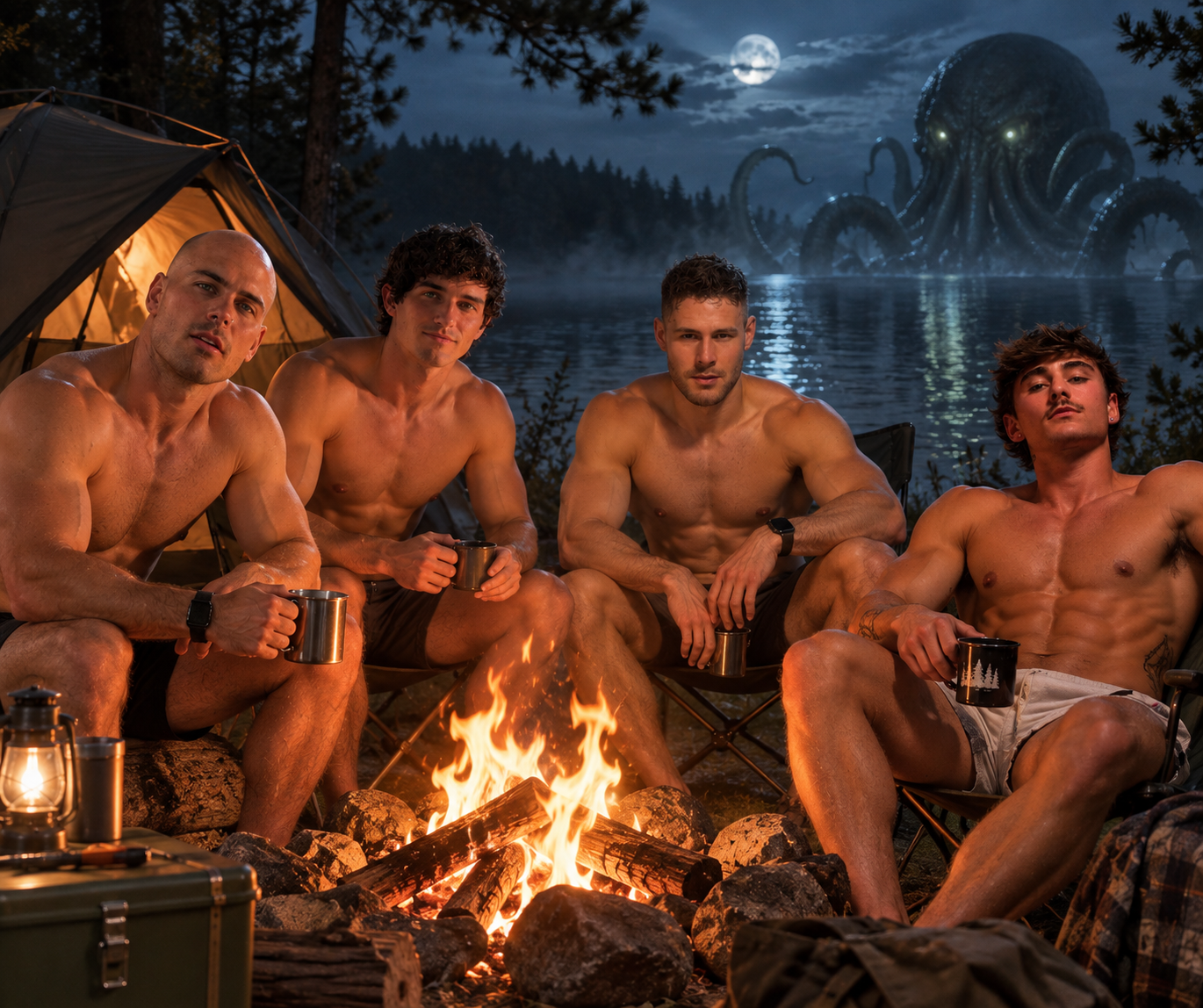
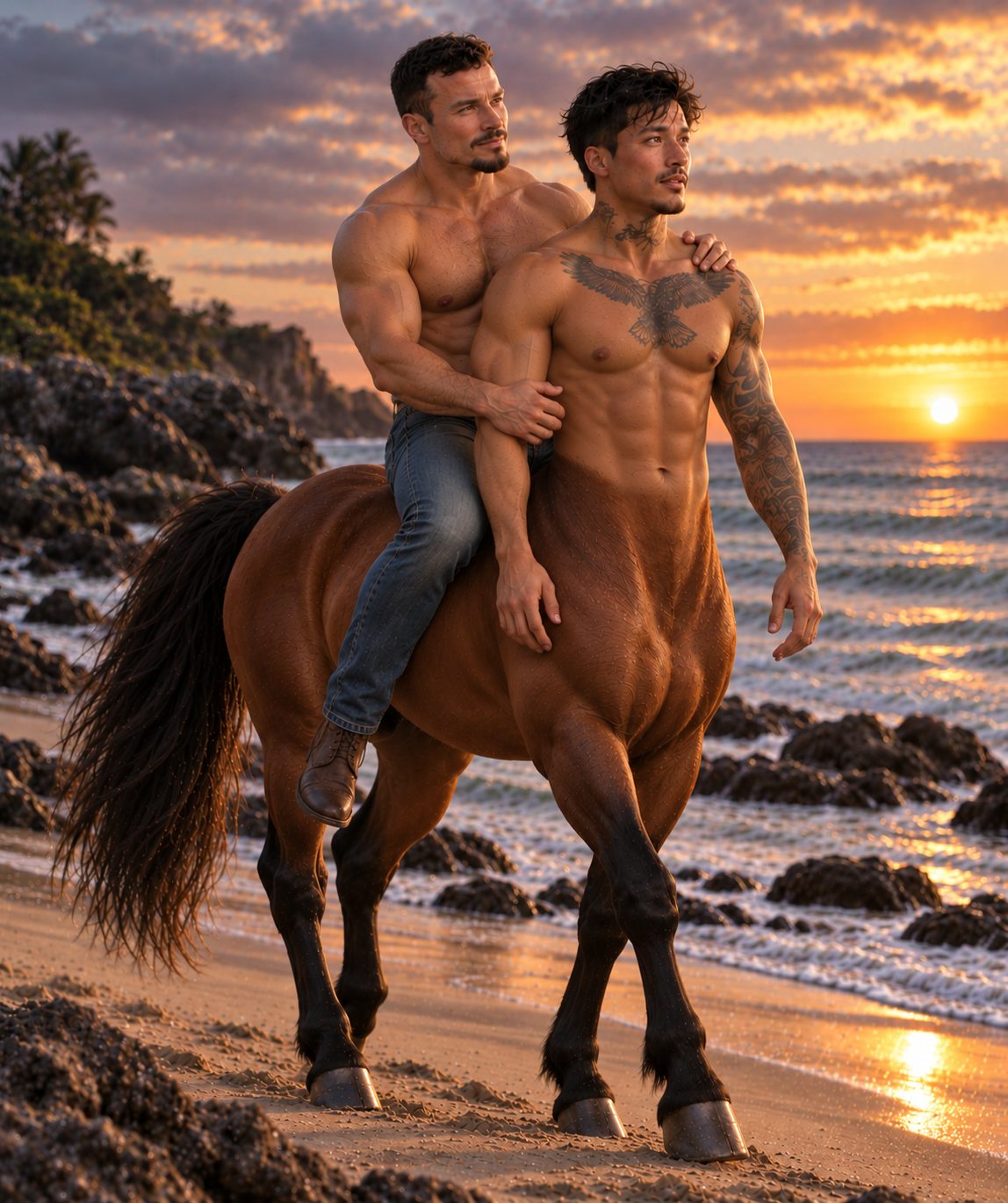
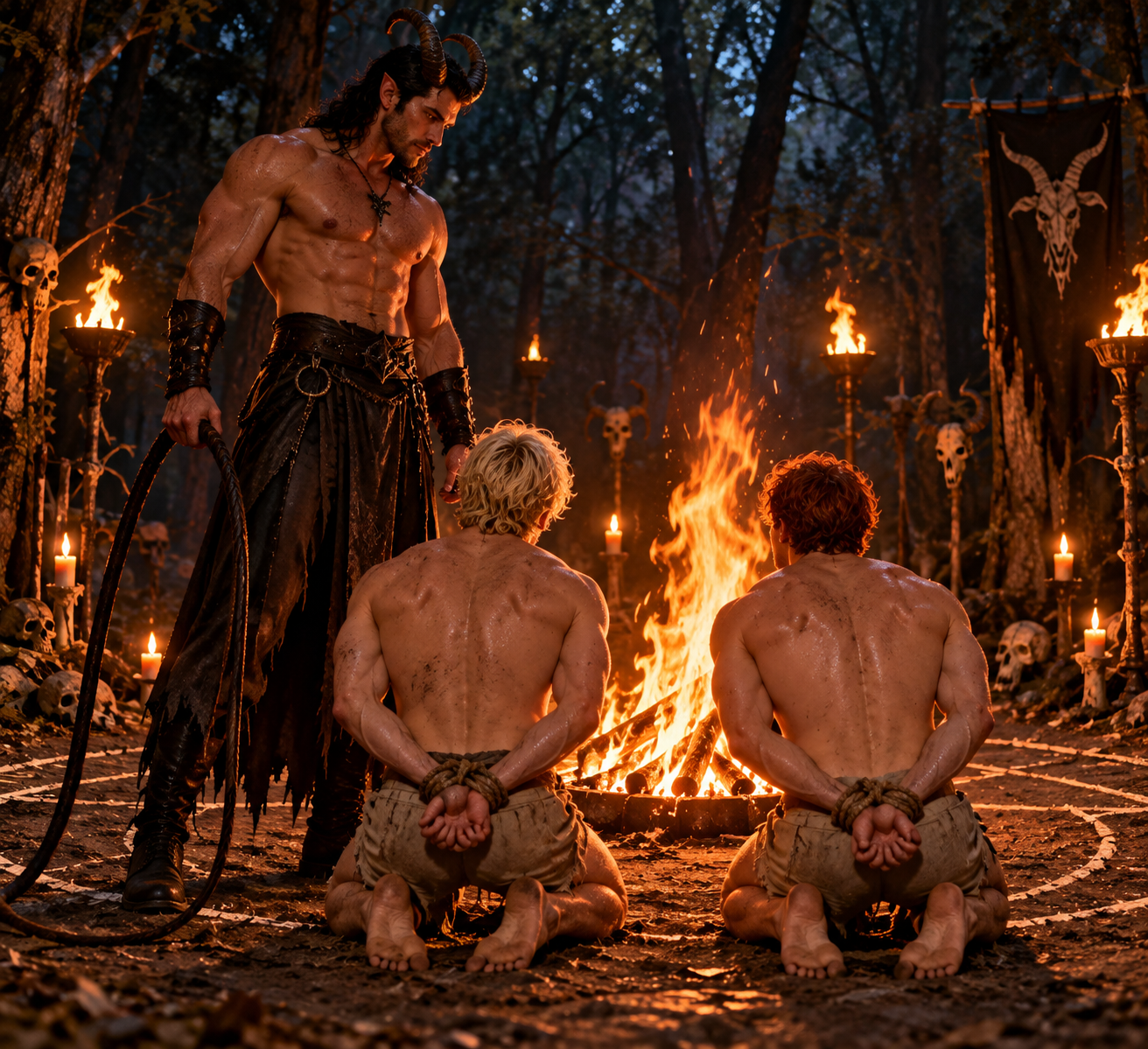
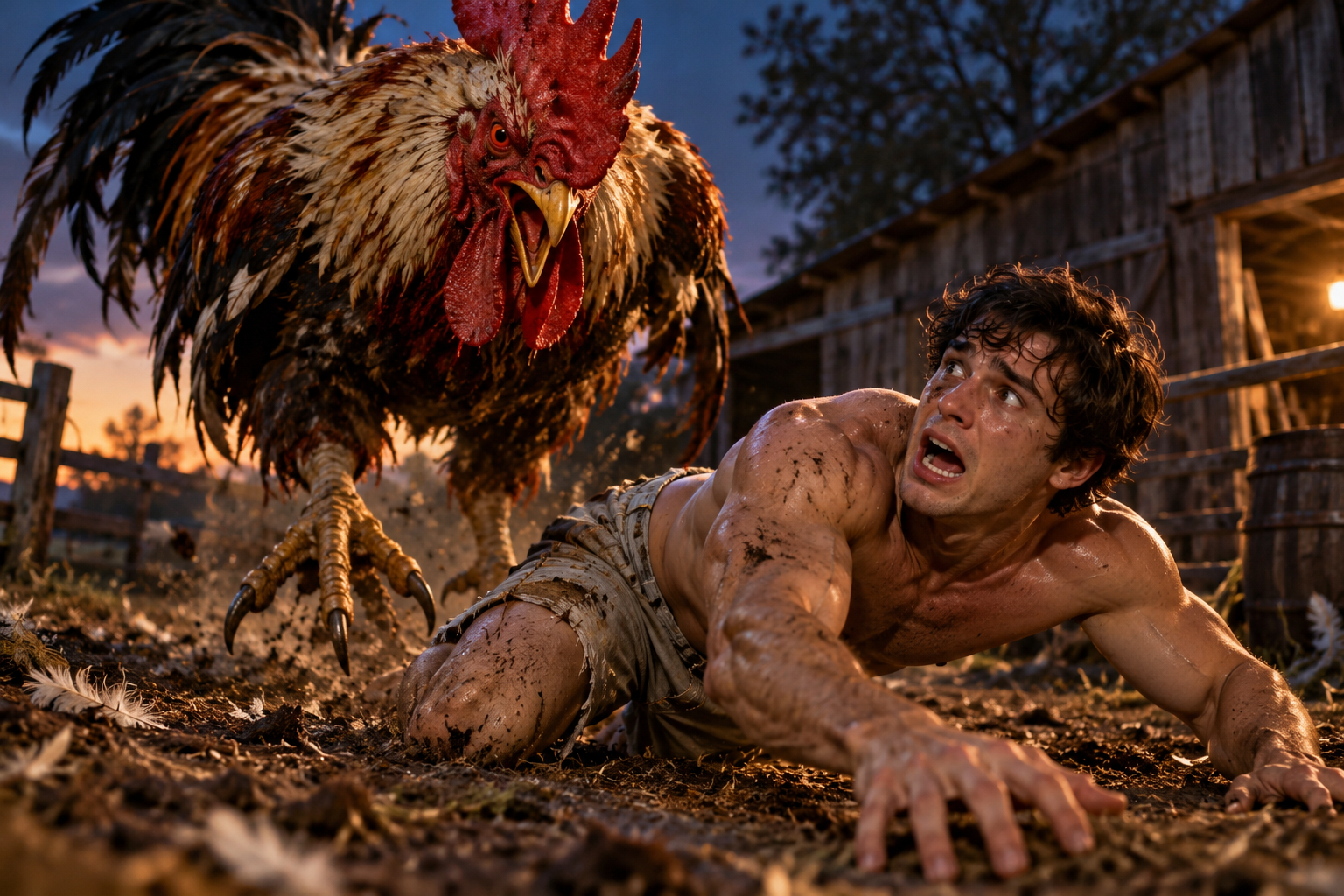
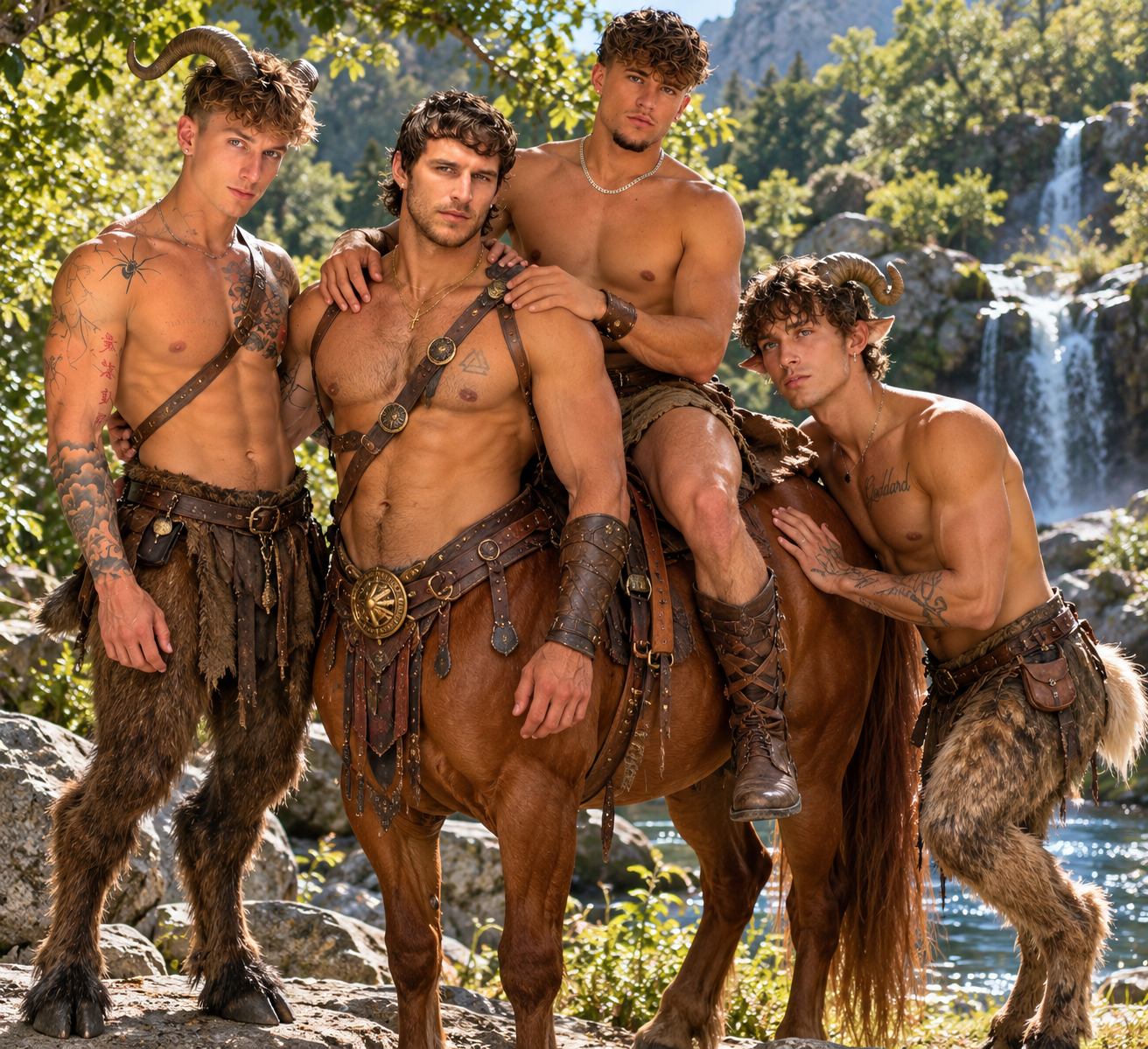
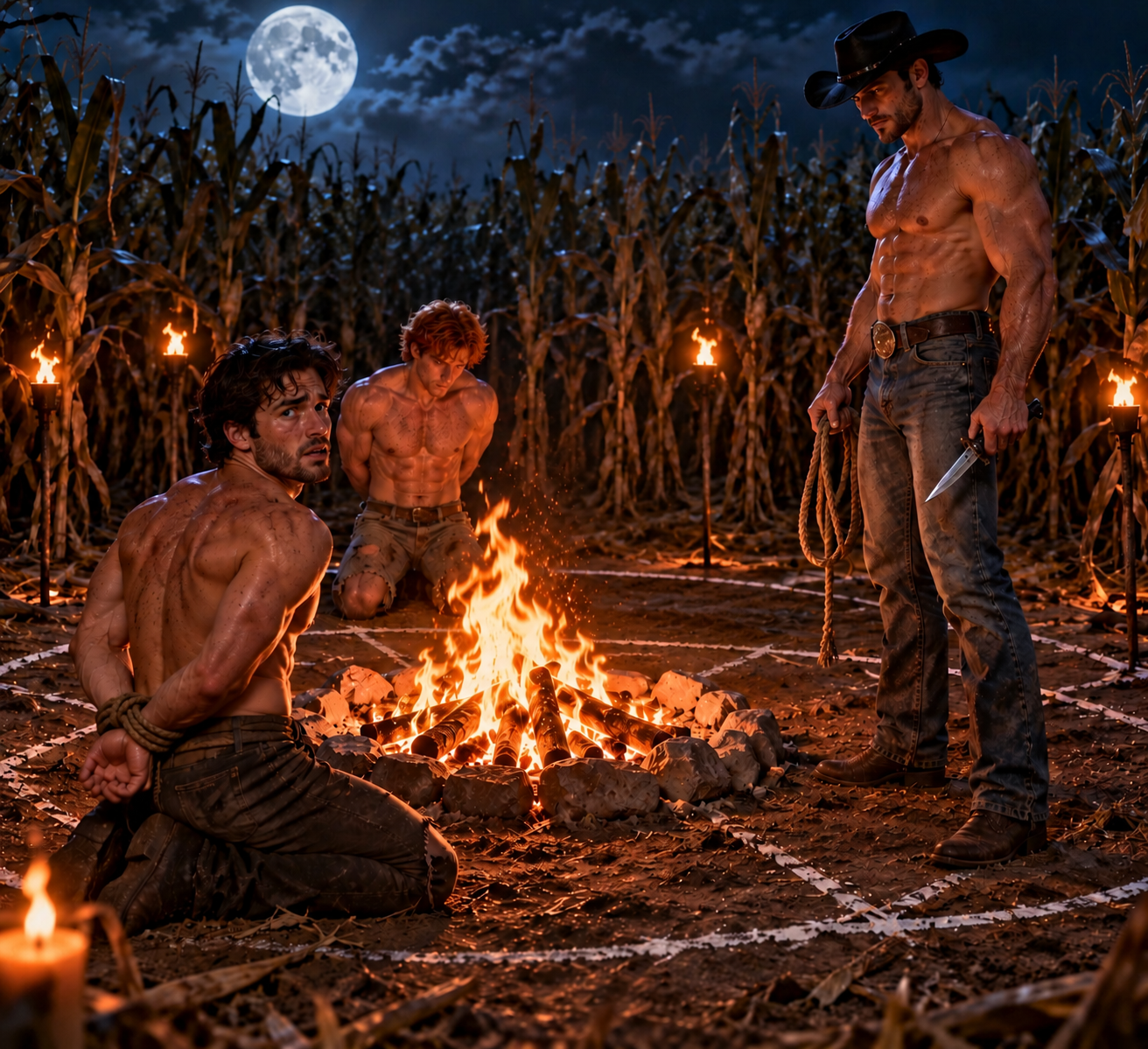
The images below are all AI-generated by me with ChatGPT, Grok, and Google Gemini on my iPhone. Enjoy!

The 31 Days of Halloween! Click on the day number you want! 01 | 02 | 03 | 04 | 05 | 06 | 07 | 08 | 09 | 10 | 11 | 12 | 13 | 14 | 15 | 16 | 17 | 18 | 19 | 20 | 21 | 22 | 23 | 24 | 25 | 26 | 27 | 28 | 29 | 30 | 31
George
|