 Two Goats and a Donkey! Two Goats and a Donkey!
On The 20th Day of Halloween
Tuesday, October 20, 2026
Halloween Symbols
Few celebrations possess a collection of symbols as immediately recognizable as Halloween. Pumpkins glow from porches, black cats appear in windows, witches ride across decorations on broomsticks, skeletons dance among gravestones, and ghosts wander beneath a full moon. Bats, spiders, apples, candles, masks, cauldrons, ravens, and autumn leaves complete the familiar landscape. These images are often described collectively as “ancient Celtic” symbols inherited from Samhain, but their histories are far more complicated. Some have meaningful connections with Gaelic seasonal traditions, while others entered Halloween through medieval Christianity, early modern folklore, nineteenth-century literature, or modern popular culture.
Understanding Halloween symbolism therefore requires looking at the celebration not as the survival of a single ancient festival, but as a gathering place where many traditions accumulated over centuries. At the center of that history stands Samhain, the Gaelic festival marking the transition into the darker portion of the year.
Samhain: The Symbolism of the Threshold
Samhain was one of the principal seasonal festivals of the Gaelic calendar, alongside Imbolc, Beltane, and Lughnasadh. Traditionally associated with the beginning of November, Samhain marked a profound seasonal transition. Harvest activities were ending, livestock were being brought in from summer grazing, daylight was rapidly diminishing, and communities were preparing for winter.
The fundamental symbol of Samhain was therefore not necessarily an object. It was the threshold.
Samhain stood between autumn and winter, abundance and scarcity, light and darkness. Medieval Irish literature repeatedly uses Samhain as the setting for supernatural events, encounters with the Otherworld, and extraordinary happenings. This contributed to the enduring idea that Samhain represented a period when ordinary boundaries became unusually permeable.
The doorway, gateway, crossroads, cave, mound, and boundary can consequently serve as powerful symbols of Samhain. They represent neither one place nor another, but the space between them. This concept of liminality—the condition of existing upon a threshold—lies near the heart of Samhain symbolism.
Darkness and the Dying Year
Perhaps the most obvious Samhain symbol is darkness. By the beginning of November, northern Europe has entered the dramatically darker portion of the year. Darkness therefore possessed practical as well as symbolic significance.
For agricultural communities, winter could be dangerous. Food had to be stored, animals protected, and households prepared for cold weather. Darkness could represent uncertainty and danger, but it also represented rest, mystery, introspection, and the unseen world.
This helps explain why modern Halloween remains overwhelmingly nocturnal. Halloween celebrated in bright afternoon sunshine feels fundamentally different from Halloween after sunset. Darkness transforms familiar landscapes. Trees become silhouettes, roads disappear into shadow, and ordinary sounds acquire unfamiliar qualities.
The darkness of Halloween is therefore more than a convenient setting for frightening entertainment. It echoes the ancient seasonal reality underlying Samhain: humanity entering the dark half of the year.
 Fire and Flame Fire and Flame
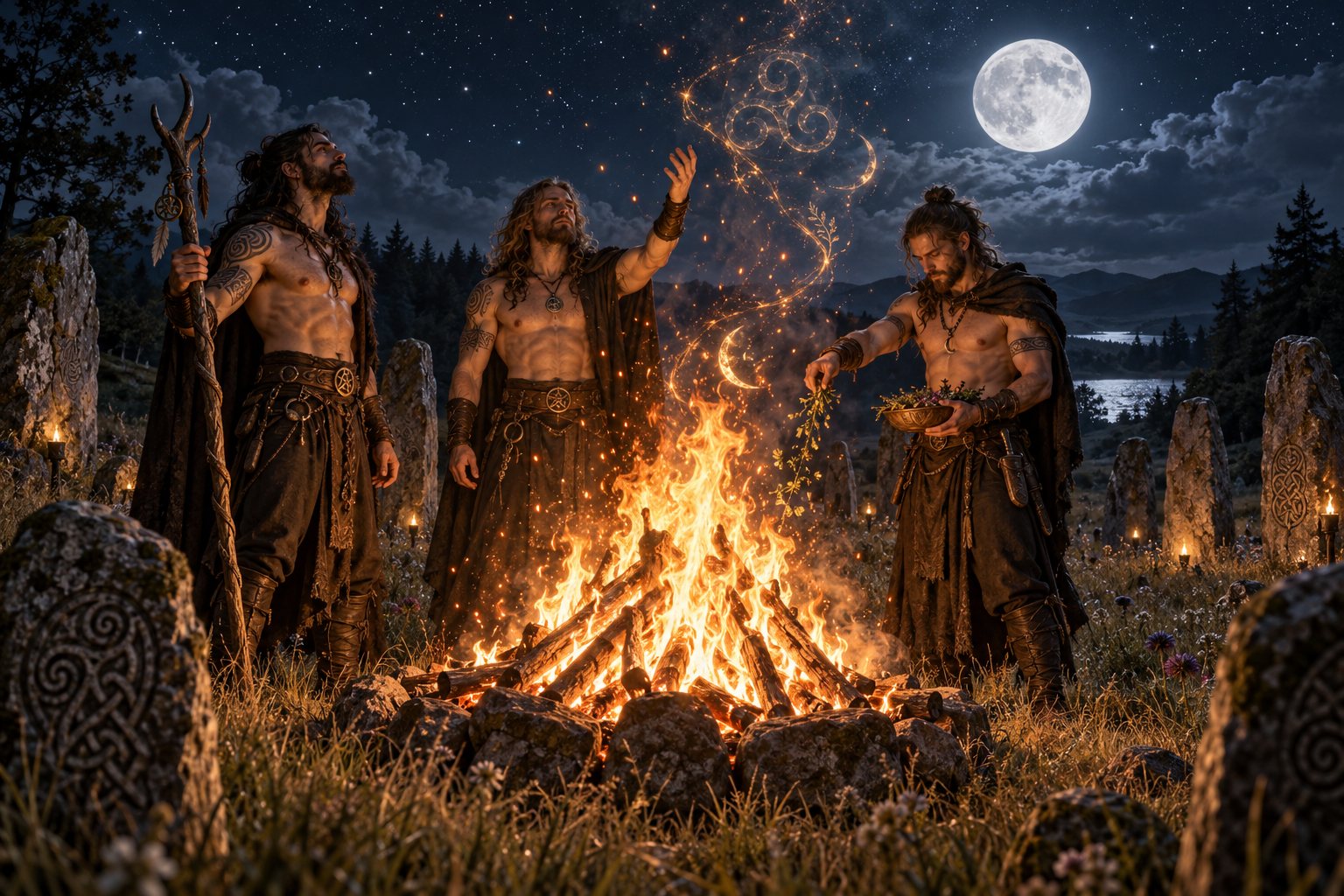
Against that darkness stands fire.
Fire is among humanity's oldest symbols of protection, community, purification, and survival. Samhain traditions recorded in later Irish and Scottish sources include communal fires, although claims about specific ancient rituals must be treated cautiously because much of our evidence comes from periods long after pre-Christian Celtic religion had disappeared.
Nevertheless, fire is entirely appropriate to Samhain's seasonal symbolism. As daylight diminishes, human beings create their own light.
The modern candle continues this symbolism beautifully. A candle placed in a dark window represents a small area of safety surrounded by darkness. Inside the jack-o'-lantern, the flame becomes something stranger: light is placed inside a carved face, giving apparent life to an otherwise lifeless object.
Fire at Halloween can consequently symbolize protection, life, memory, purification, and defiance of darkness.
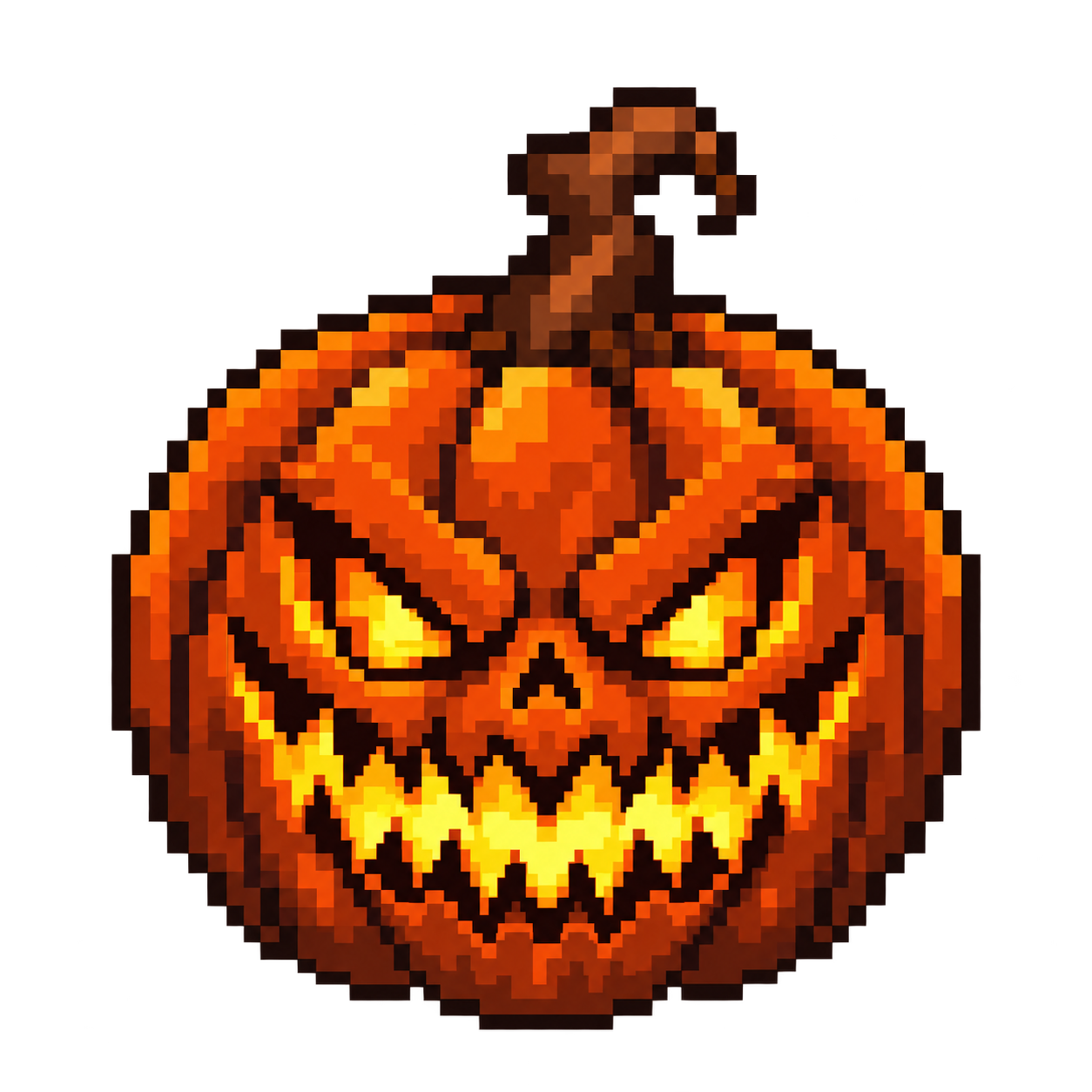
The Jack-o'-Lantern
No symbol represents modern Halloween more completely than the jack-o'-lantern.
Pumpkins themselves cannot be ancient Celtic Halloween symbols because pumpkins are native to the Americas. The tradition of carving frightening or grotesque faces, however, has European precedents. In Ireland and Britain, turnips and other root vegetables were hollowed and carved into lanterns or faces.
The term “jack-o'-lantern” also became associated with mysterious wandering lights and folklore concerning figures such as Stingy Jack, although versions of these stories vary considerably.
After Irish immigrants carried Halloween traditions to North America, pumpkins proved ideal for carving. They were larger, softer, and easier to hollow than turnips. Over time the orange pumpkin became inseparable from Halloween.
Symbolically, the jack-o'-lantern combines several older themes: harvest, death, transformation, fire, protection, and the supernatural. A harvested vegetable is cut open, given a human face, illuminated from within, and placed upon the boundary between the home and the darkness outside.
It is almost a perfect Halloween object — a threshold guardian staring into the night.
Masks and Disguises
Costumes are another major symbol linking Halloween with older traditions.
Later Gaelic customs associated with Samhain included guising, in which people disguised themselves and traveled from house to house performing or requesting food. Similar masking traditions existed elsewhere in Europe during various seasonal celebrations.
Disguise carries powerful symbolism. By wearing a mask, a person temporarily abandons ordinary identity. The living can imitate the dead, humans can become animals, and ordinary villagers can transform into supernatural beings.
The mask therefore represents transformation and ambiguity.
Modern Halloween preserves this idea even when costumes are humorous rather than frightening. For one night, identity becomes flexible. A person can become a witch, ghost, vampire, monster, animal, celebrity, or imaginary character.
The symbolism is remarkably appropriate for a festival centered upon boundaries. Just as Samhain stands between seasons, the masked individual stands between identities.
Ghosts and the Dead
The ghost is perhaps the purest representation of the boundary between worlds.
Samhain became strongly associated in Gaelic folklore and medieval literature with supernatural encounters. Later traditions sometimes held that spirits or fairies were particularly active around this time. Christian observances of All Saints' Day and All Souls' Day strengthened the season's connection with death and remembrance.
Halloween's ghost therefore represents several overlapping traditions.
At its simplest, a ghost is someone who belongs simultaneously to the worlds of the living and the dead. It has died but remains present. Like Samhain itself, the ghost occupies a threshold.
The familiar white-sheet ghost is comparatively modern and often comic, but its symbolic meaning remains ancient: the past returning to the present.
Skulls and Skeletons
Skulls and skeletons seem naturally suited to Halloween because they provide unmistakable images of mortality.
Yet they should not automatically be labeled Celtic Samhain symbols. Much of their importance comes from wider European Christian traditions concerning death. Medieval and early modern art frequently employed skulls as memento mori—reminders that every human being must die.
Halloween transformed this solemn symbolism into something simultaneously frightening and playful.
The skeleton strips away wealth, occupation, beauty, and social rank. Beneath clothing and outward identity, everyone possesses essentially the same bones. As a Halloween symbol, the skeleton therefore represents mortality, equality in death, and the physical boundary between life and what remains afterward.
 Apples Apples
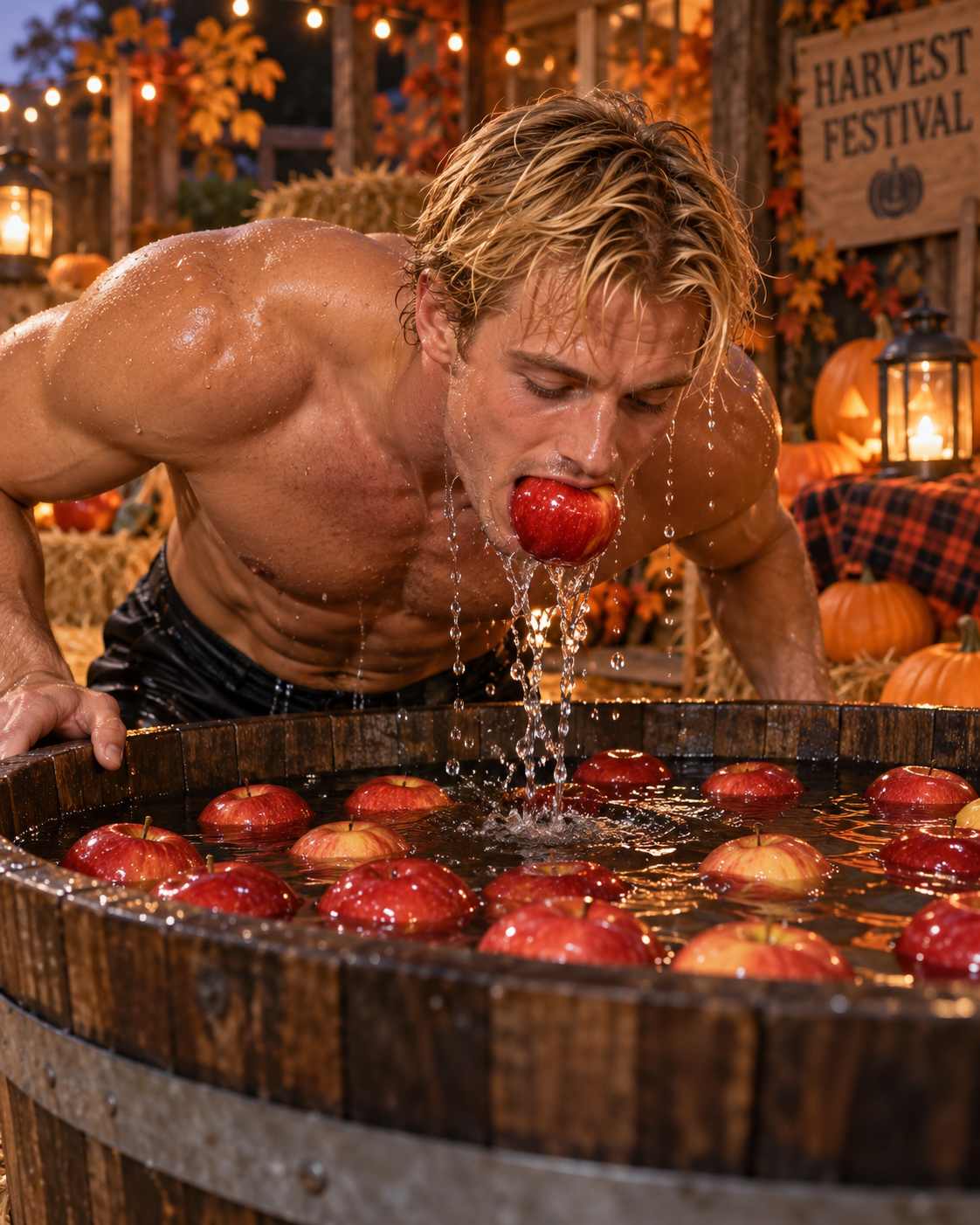
The apple is one of Halloween's gentler but historically significant symbols.
Apples were harvested during autumn and became incorporated into seasonal games and divination customs. Apple bobbing, peeling apples, and examining peels or seeds could become methods of predicting romance or marriage.
Some modern accounts attempt to connect virtually every apple custom directly to ancient Celtic religion. Such claims should be approached carefully. Nevertheless, apples unquestionably became important within later Irish, Scottish, and British autumn traditions.
Their symbolism is especially rich. Apples represent harvest, abundance, fertility, temptation, love, and hidden knowledge.
Unlike skeletons and ghosts, the apple reminds us that Halloween was never exclusively concerned with death. It was also a harvest celebration filled with food, games, courtship, and community.
 Witches and Cauldrons Witches and Cauldrons
The Halloween witch is largely the product of later European history rather than an inheritance directly from ancient Samhain.
Ideas concerning harmful magic existed in many societies, but the familiar Halloween witch — with pointed hat, broomstick, black cat, and bubbling cauldron — developed from medieval and early modern European beliefs, witch-trial imagery, folklore, literature, and eventually popular entertainment.
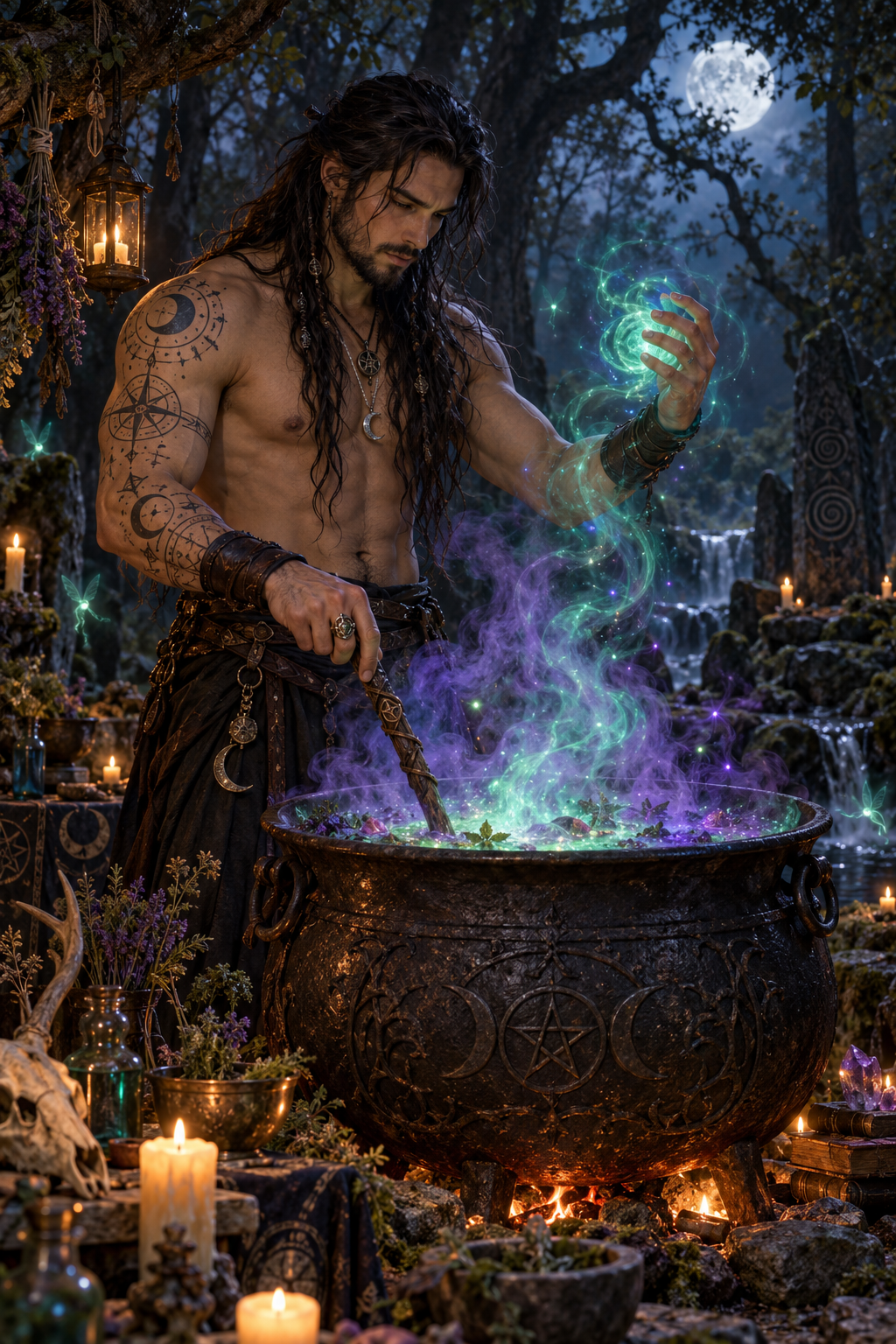
The cauldron, however, has genuine significance within Celtic mythology. Magical cauldrons appear in medieval Irish and Welsh literature, sometimes associated with abundance, feasting, restoration, or supernatural power.
This does not mean that ancient Celtic women dressed as Halloween witches and stirred magical Samhain cauldrons. That familiar image combines traditions separated by centuries.
Symbolically, however, the cauldron fits Halloween exceptionally well. It is a vessel of transformation: separate ingredients enter and something new emerges. It can therefore symbolize abundance, magic, transformation, death, and renewal.
Black Cats, Bats, Owls, and Ravens
Halloween animals generally share one characteristic: association with darkness, death, or the night.
The black cat became linked with witchcraft through later European folklore. Its nocturnal habits and ability to move silently made it an ideal companion for the imagined witch.
Bats acquired Halloween significance partly because they emerge at twilight and inhabit caves, ruins, and other dark places. Their later association with vampires made them even more prominent.
Owls represent night, mystery, and unseen knowledge. Their haunting calls naturally contribute to nighttime folklore.
Ravens and crows, meanwhile, possess particularly strong associations with death because of their scavenging behavior. Ravens also appear prominently within Celtic mythology. The Irish Morrígan is associated in medieval tradition with battle, prophecy, sovereignty, and carrion birds, particularly ravens or crows.
These animals therefore represent creatures comfortable within spaces humans find unsettling: darkness, ruins, battlefields, forests, and the boundary between life and death.
Orange and Black
Even Halloween's dominant colors contain symbolic meaning.
Orange represents autumn: pumpkins, fire, falling leaves, harvest, and the final brilliant colors of vegetation before winter.
Black represents night, darkness, death, mystery, and the unknown.
Together they visually summarize Halloween. Orange is the dying brilliance of autumn; black is the approaching winter darkness.
Their pairing recreates the same fundamental tension represented by a candle burning inside a jack-o'-lantern: light surrounded by darkness.
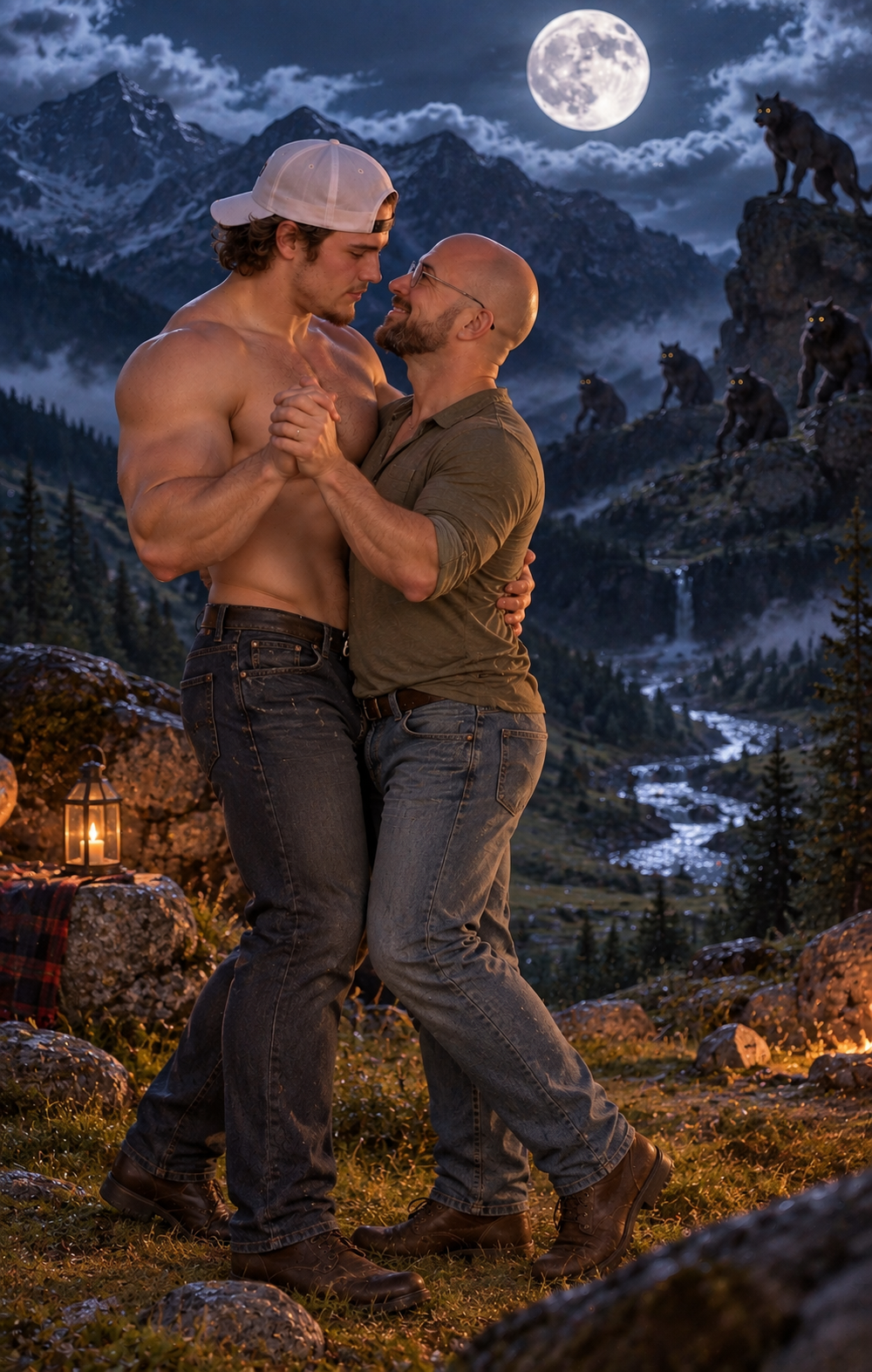
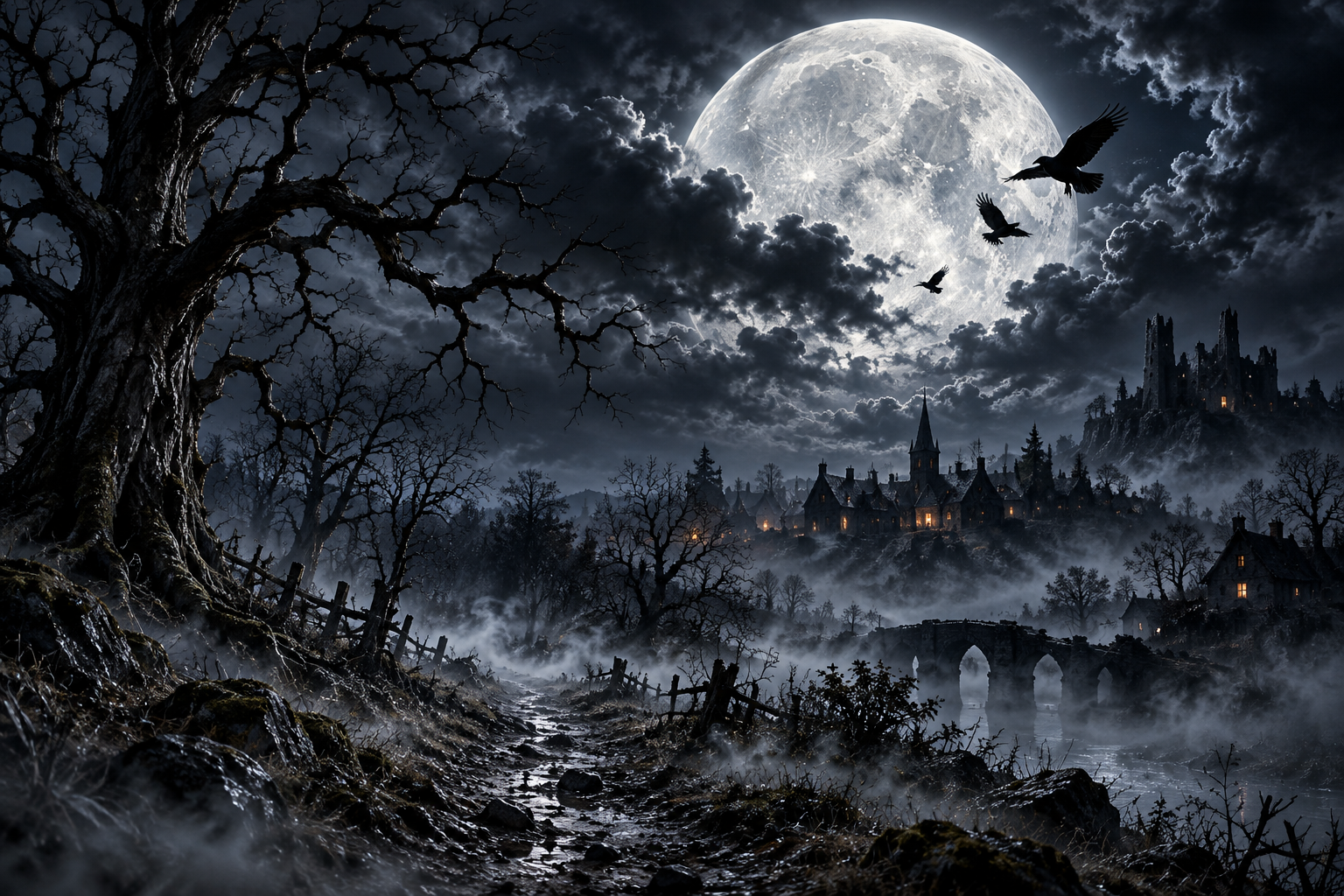 The Moon The Moon
The full moon has become one of Halloween's most recognizable images, although Halloween does not consistently occur during a full moon.
Its importance is primarily symbolic. The moon governs the appearance of the night landscape and has long been associated with cycles, transformation, mystery, and supernatural activity.
In modern imagery, witches fly across it, bats surround it, and werewolves transform beneath it.
For Halloween, the moon functions as the sun's nocturnal counterpart. It illuminates without turning night into day. It therefore belongs perfectly to a festival celebrating things that exist between ordinary categories.
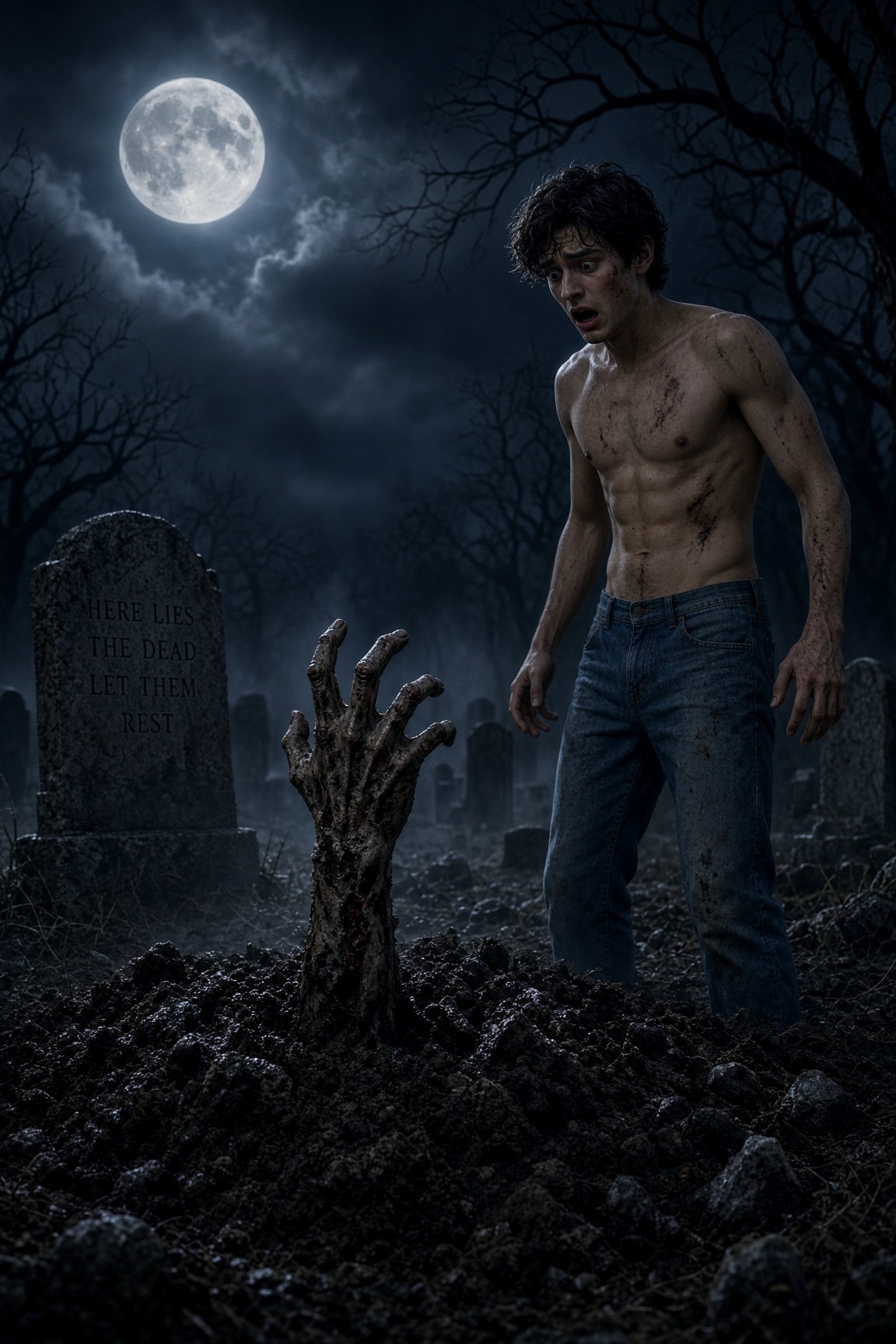
The Cemetery and Gravestone
Cemeteries and gravestones became Halloween symbols because they physically represent the boundary between living communities and their dead.
Christian traditions surrounding All Saints and All Souls reinforced the association of the season with remembrance of the deceased. Later Gothic literature and horror entertainment transformed graveyards into settings for ghosts, vampires, and supernatural encounters.
Yet beneath the horror imagery lies something profoundly human. The graveyard represents memory.
It reminds the living that previous generations remain part of the identity of families and communities even after death.
Samhain's Enduring Symbol: The Boundary
Ultimately, the most important symbol connecting Samhain and Halloween may not be the pumpkin, witch, ghost, or bonfire.
It is the boundary.
Nearly every major Halloween symbol crosses one.
The ghost crosses between death and life. The mask crosses between identities. The jack-o'-lantern places living fire inside dead vegetation. The skeleton reveals what exists beneath the living body. The apple represents the final abundance before winter. The bat crosses the twilight between day and night. The moon provides light within darkness. The cauldron transforms one substance into another. Even trick-or-treating carries people repeatedly across thresholds as they travel from darkness to illuminated doorways and back again.
This is where the spirit of Samhain remains most visible.
The ancient Gaelic festival marked a transition from one seasonal condition into another. Medieval stories made Samhain a particularly appropriate moment for journeys, supernatural encounters, feasts, assemblies, and disruptions of ordinary boundaries. Christianity added the remembrance of saints and the dead. Later folklore contributed witches, divination, ghosts, and disguises. Immigration carried these traditions across the Atlantic, while American agriculture supplied the pumpkin. Literature and cinema added vampires, werewolves, haunted houses, and countless monsters.
Halloween became a cultural cauldron in its own right.
Its symbols come from different centuries, religions, countries, and traditions, yet they share a common language. They speak of darkness and light, abundance and decay, fear and laughter, concealment and revelation, death and continued memory.
That is why Halloween symbolism remains so powerful. Beneath the plastic skeletons, carved pumpkins, costumes, candy, and theatrical monsters lies an ancient human response to the changing season. Summer has vanished. Harvest is ending. Darkness comes earlier. Winter approaches.
Human beings respond by gathering together, lighting fires, telling stories, remembering the dead, disguising themselves, laughing at frightening things, and placing lights against the darkness.
Samhain and Halloween are not identical celebrations separated only by time, and not every modern Halloween symbol should be assigned an ancient Celtic origin. Halloween is instead the result of centuries of accumulation and transformation. Yet beneath those accumulated layers survives a remarkably persistent idea inherited from the seasonal world in which Samhain flourished: certain moments stand at the threshold between what has been and what is coming.
That threshold is the true landscape of Halloween.
The pumpkin glows upon it. The ghost walks across it. The mask conceals who crosses it. The candle illuminates it.
And every autumn, as the days shorten and the darkness returns, we approach that threshold once again.
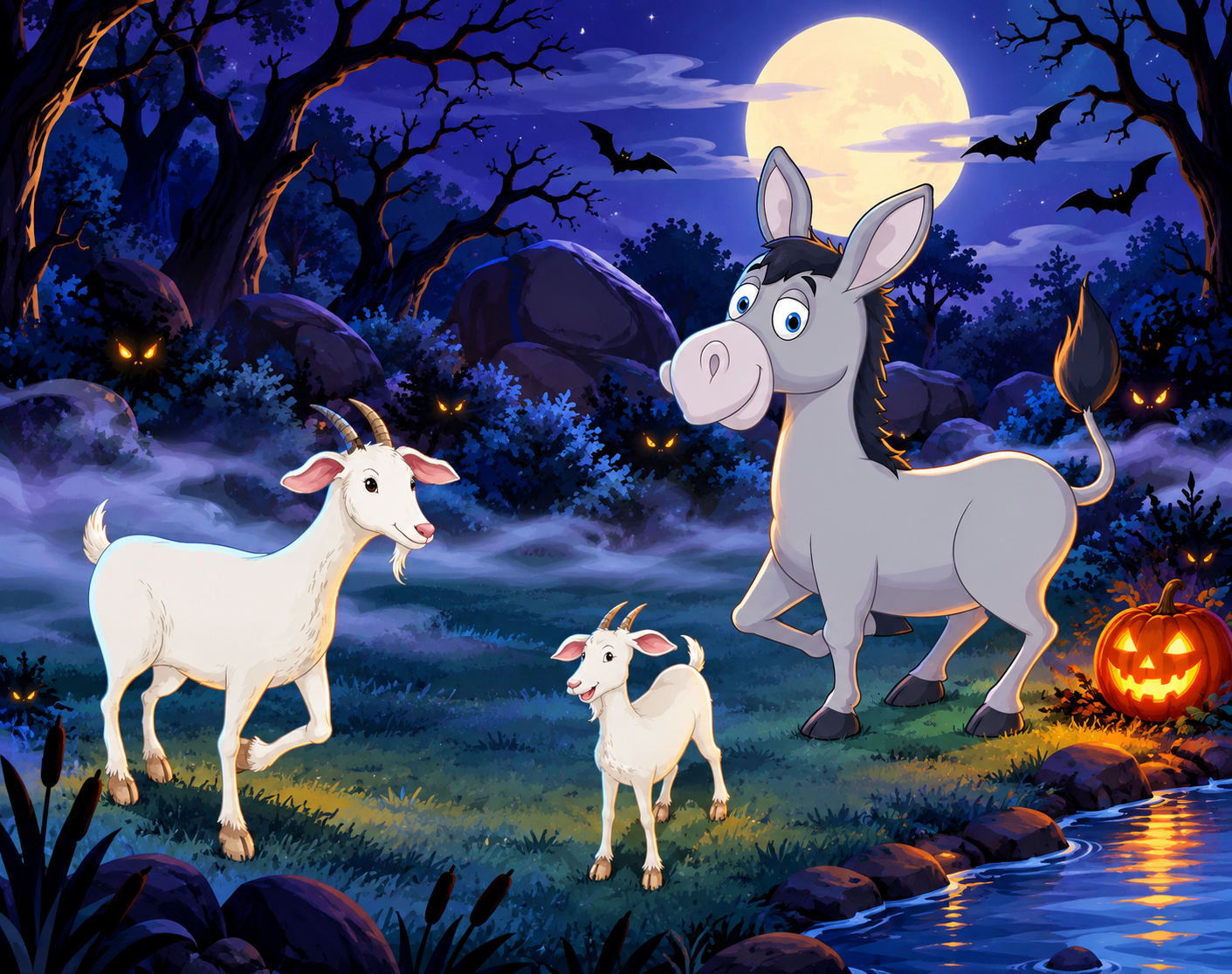
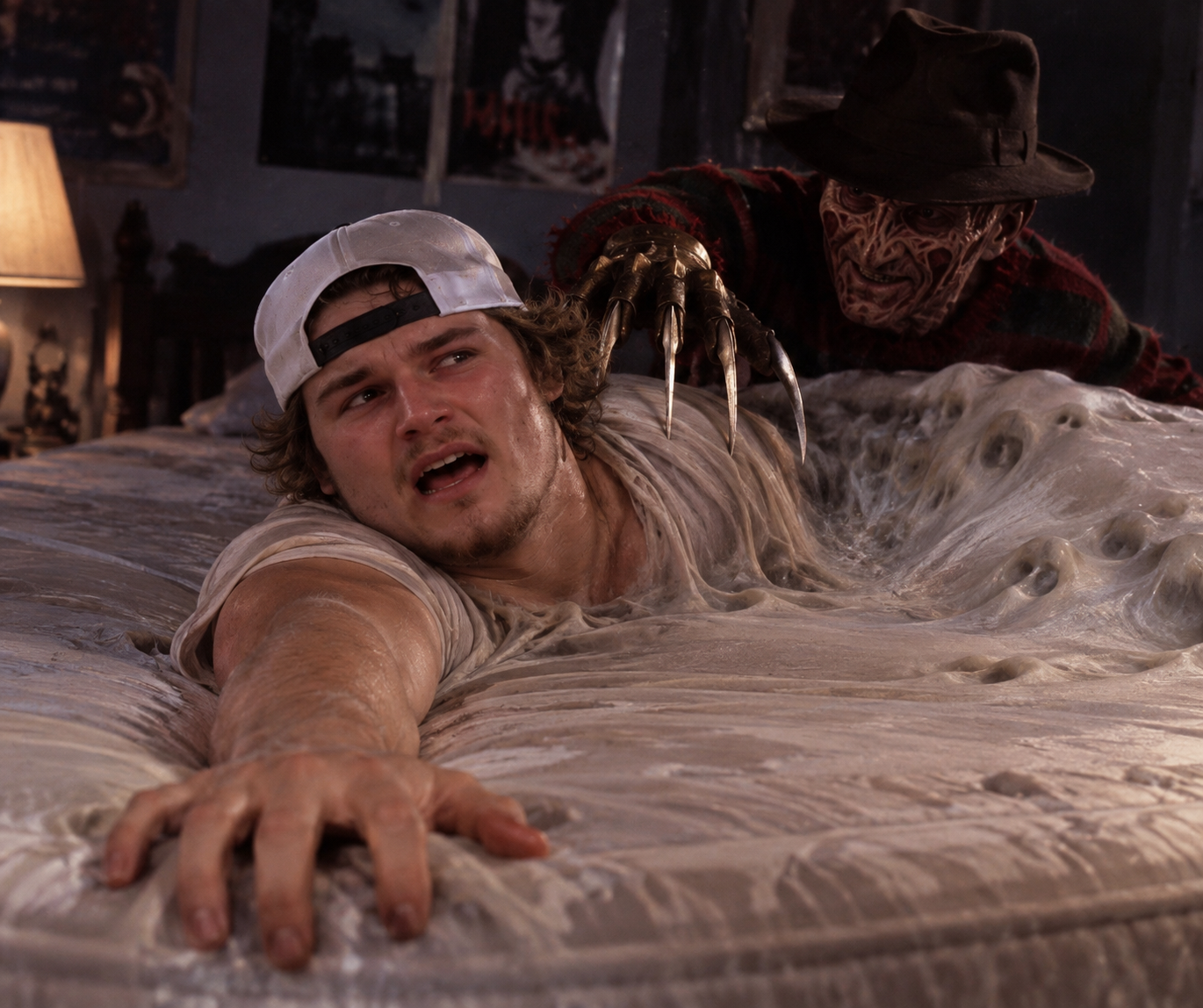
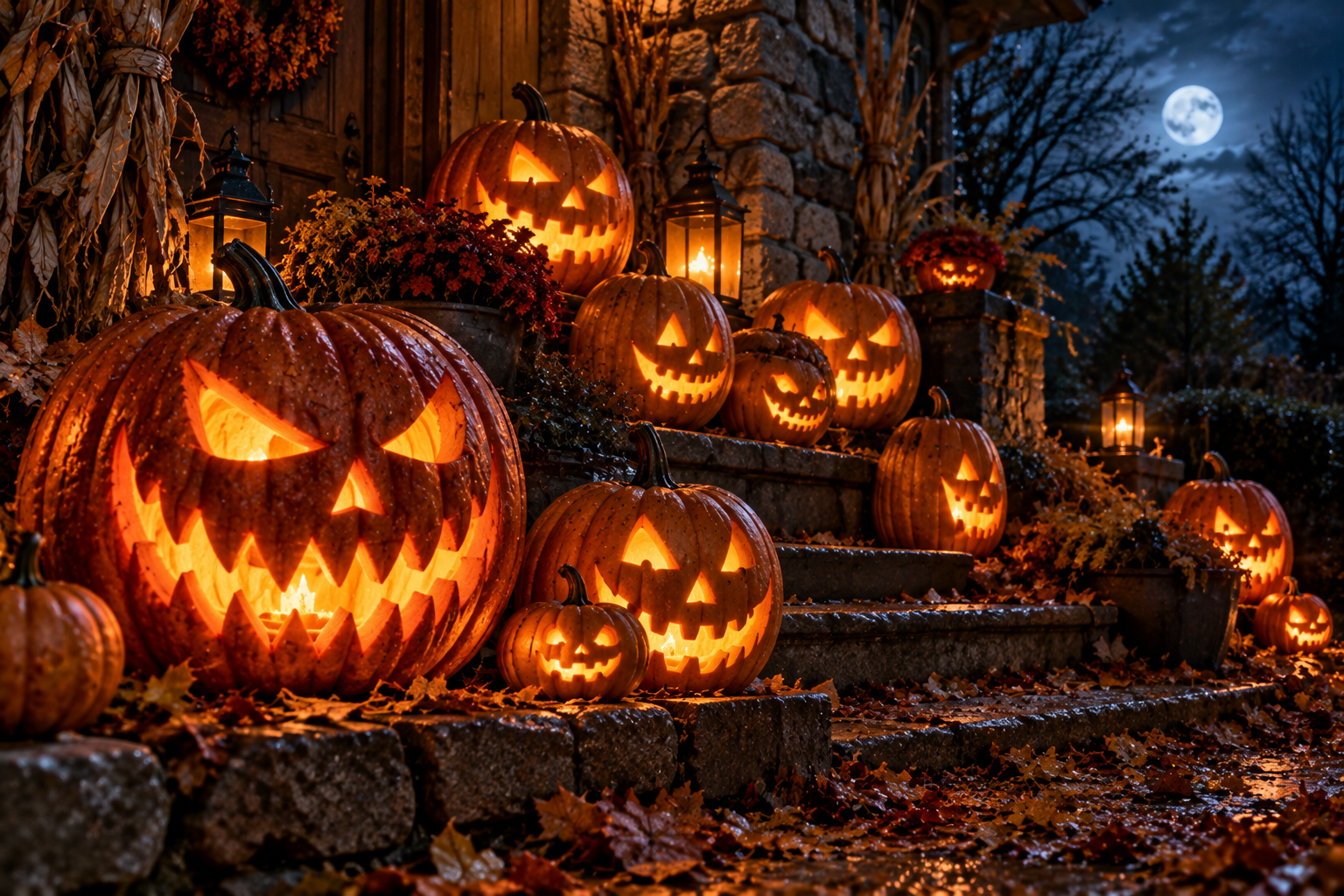
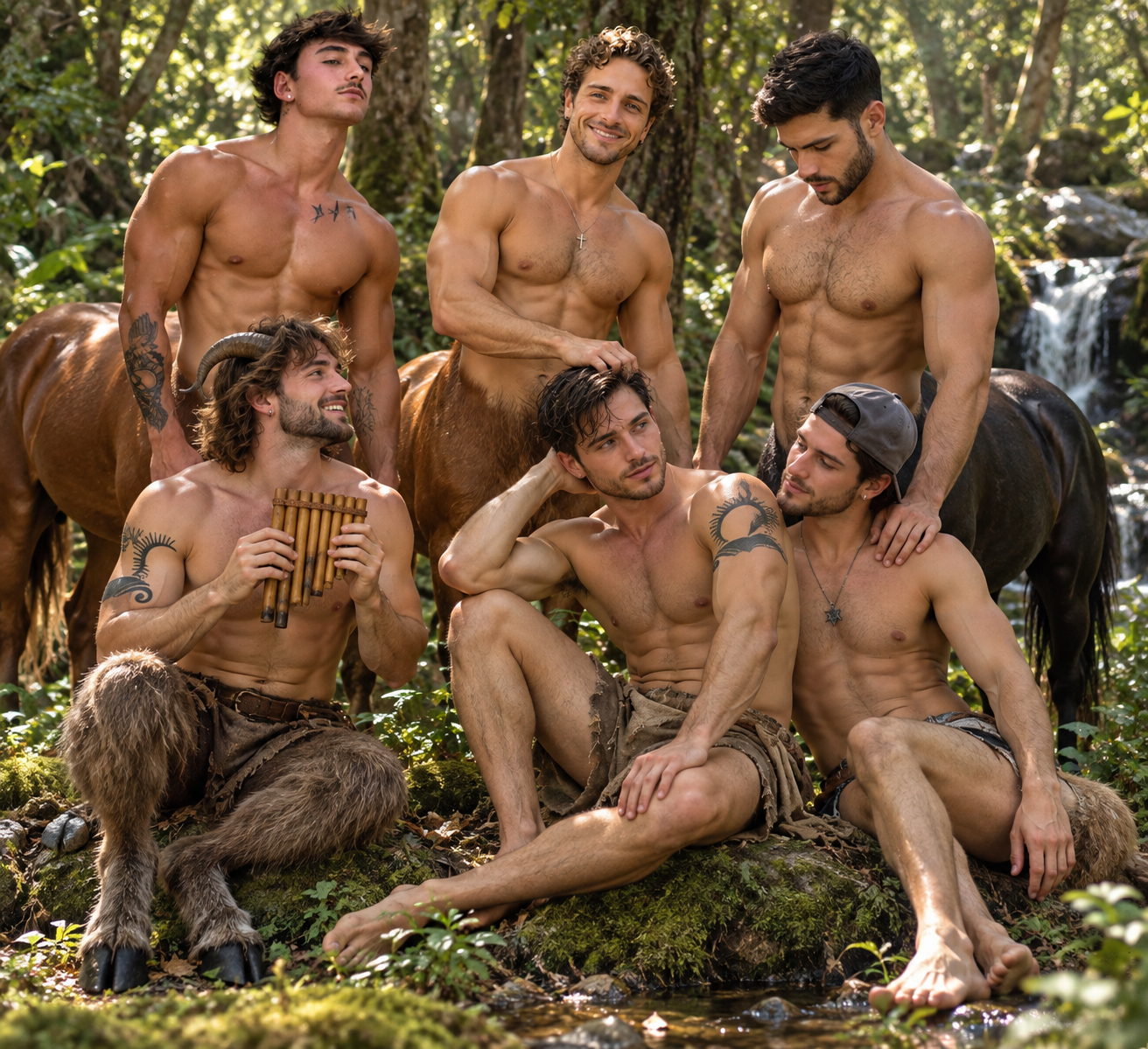
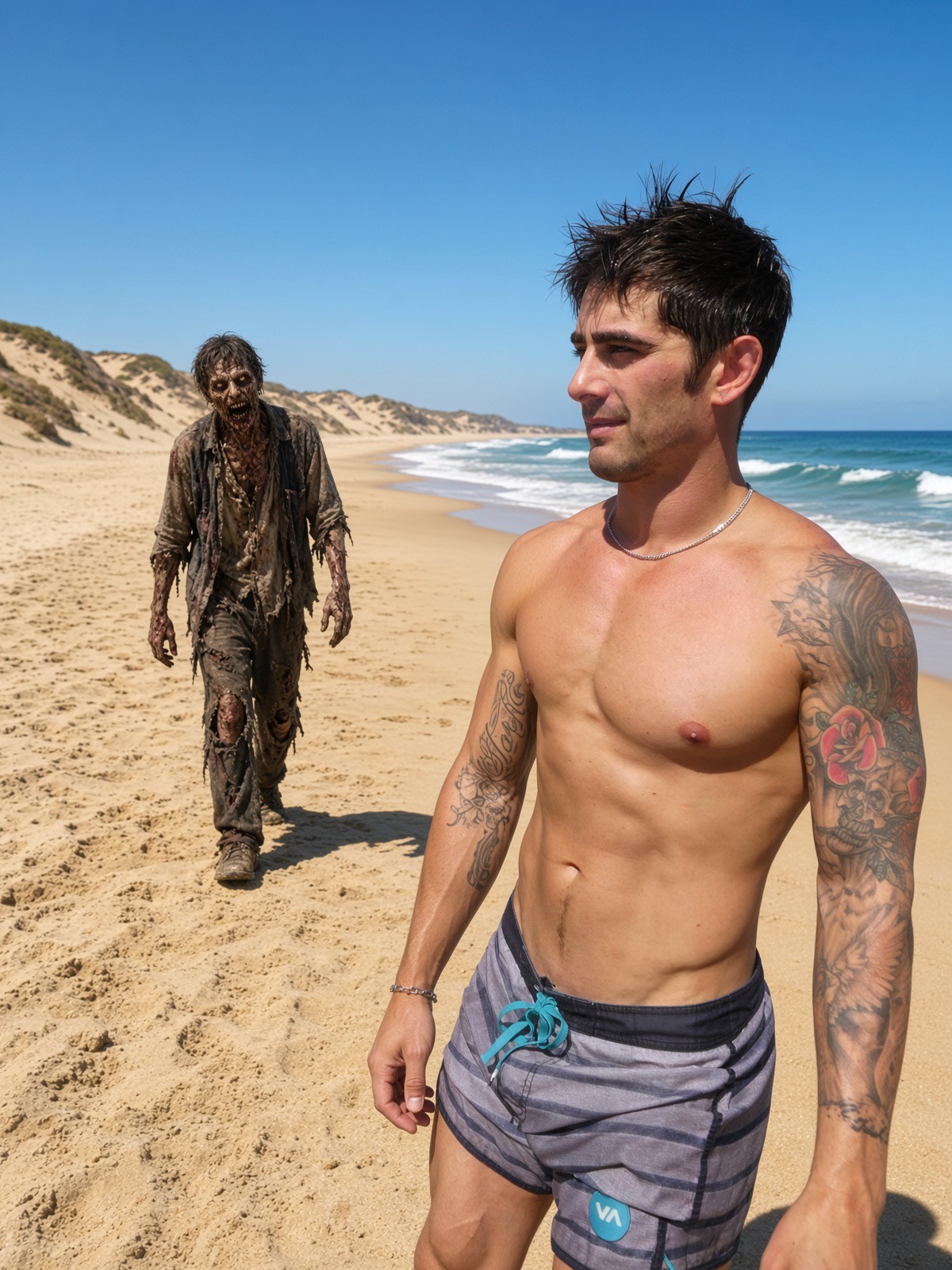
The images below are all AI-generated by me with ChatGPT, Grok, and Google Gemini on my iPhone. Enjoy!

The 31 Days of Halloween! Click on the day number you want! 01 | 02 | 03 | 04 | 05 | 06 | 07 | 08 | 09 | 10 | 11 | 12 | 13 | 14 | 15 | 16 | 17 | 18 | 19 | 20 | 21 | 22 | 23 | 24 | 25 | 26 | 27 | 28 | 29 | 30 | 31
George
|