Navigation:
Index
Splash Page |

 Two Goats and a Donkey! Two Goats and a Donkey!
On The 25th Day of Halloween
Sunday, October 25, 2026
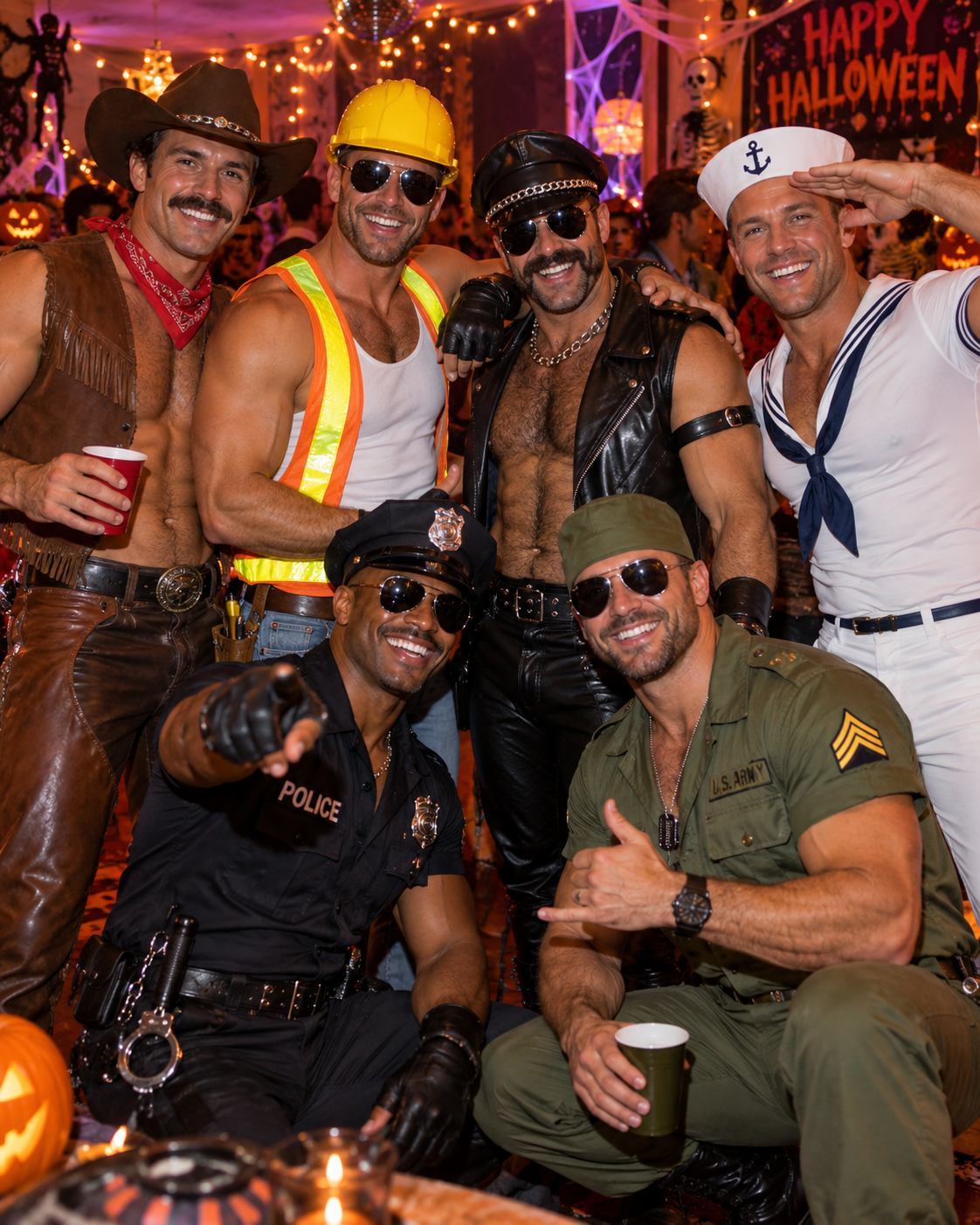 Behind the Mask: Halloween and the LGBTQ+ Community Behind the Mask: Halloween and the LGBTQ+ Community
Halloween occupies an unusual place in LGBTQ+ culture. For much of American history, lesbian, gay, bisexual, transgender, and queer people lived within societies that placed severe restrictions upon how openly they could express their identities. Clothing could be regulated by social convention and sometimes policing; same-sex relationships could carry criminal penalties; gay and lesbian establishments faced raids; transgender and gender-nonconforming people could be subjected to harassment or arrest; and simply appearing publicly with a same-sex partner could carry personal or professional consequences.
Yet once each year, American culture celebrated a holiday devoted to masks, costumes, altered identities, theatricality, and the temporary suspension of ordinary expectations.
Halloween offered possibilities.
Behind a mask, someone could become another person. Clothing normally associated with another gender could become a “costume.” Men could dress extravagantly. Women could wear masculine clothing. Couples who might attract attention on another evening could disappear within a crowd of disguised revelers. Drag could move from the margins toward the center of a public celebration.
Over time, Halloween became so important within portions of gay and lesbian culture that it was sometimes jokingly described as a kind of “gay Christmas.” The expression is playful, but it points toward a serious history. Halloween provided generations of LGBTQ+ people with opportunities for experimentation, community, visibility, satire, beauty, sexuality, and temporary freedom.
The relationship between Halloween and LGBTQ+ life is not a single continuous tradition stretching from ancient Samhain into the present. Ancient Celtic Samhain was not a “gay holiday,” nor is there evidence that its historical observances possessed a special connection with sexual orientation or modern concepts of gender identity. The LGBTQ+ significance of Halloween developed much later, particularly within nineteenth- and twentieth-century urban culture.
What connects these histories is not an ancient identity but an enduring concept: transformation. Halloween is the night when society expects people to become something they ordinarily are not. For communities whose members were often forced to conceal important parts of themselves, that invitation acquired extraordinary significance.
The Mask and the Hidden Self
The mask is one of humanity's oldest instruments of transformation. Masks have been used in religious ceremonies, theater, festivals, warfare, funerary customs, masquerades, and folk traditions throughout the world. At Halloween, the mask performs a deceptively simple function: it separates ordinary identity from temporary identity. A person puts on a mask and becomes unknown. For LGBTQ+ people living in periods when disclosure could have devastating consequences, the symbolism was especially resonant.
For much of modern American history, the metaphor of the closet described the necessity of concealing sexual orientation or gender identity. People might construct elaborate divisions between their public and private lives. A man could be openly gay among trusted friends while appearing heterosexual at work. A lesbian couple might be known as roommates. A transgender person might have extremely limited opportunities to present publicly in accordance with their gender.
Halloween complicated this system. On October 31, concealment itself became public. Everyone was hiding. Paradoxically, this could make it easier for some people to reveal something.
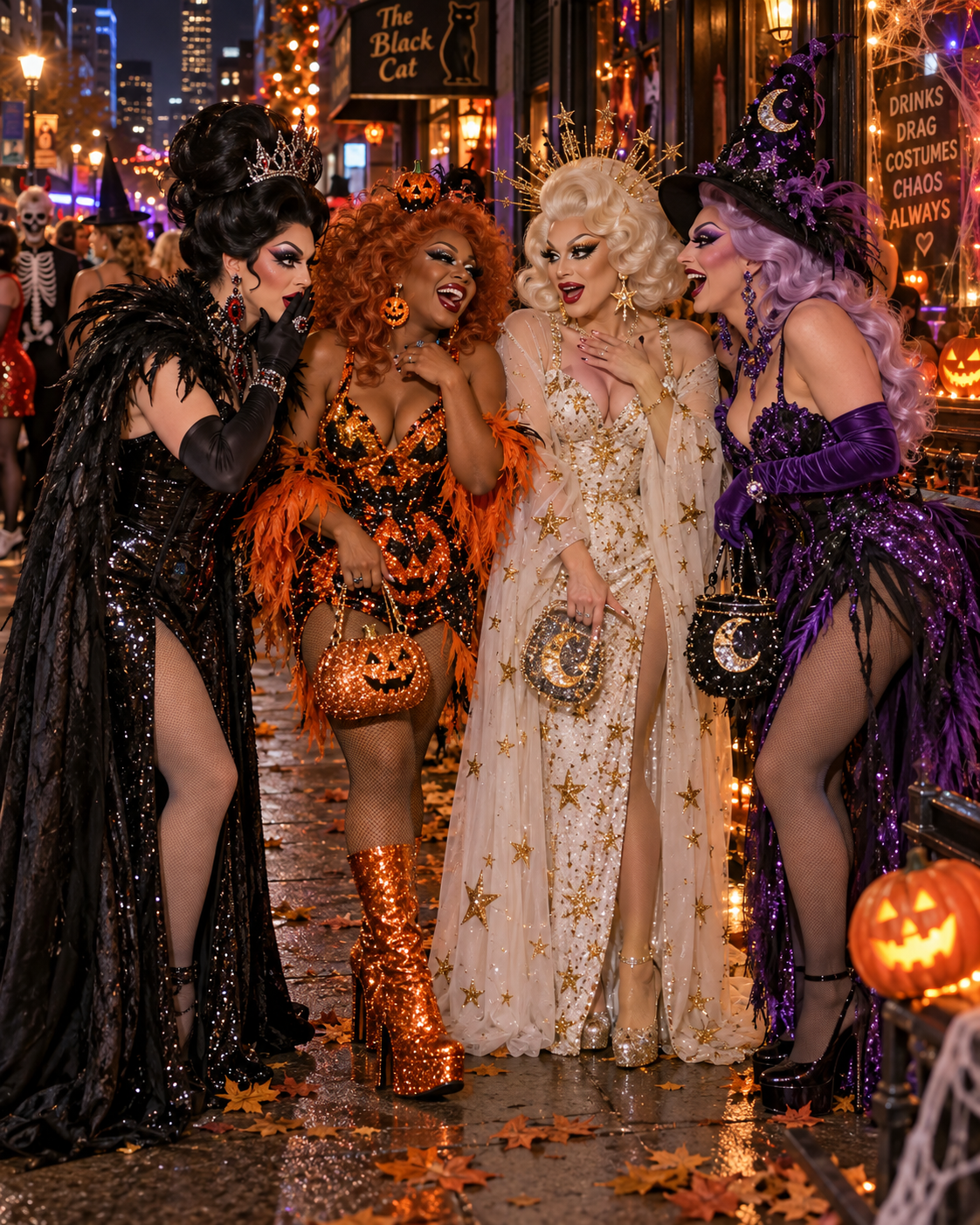 Masquerade and Gender Masquerade and Gender
Long before modern LGBTQ+ identities developed, masquerades created opportunities for gender experimentation. European masquerade traditions allowed participants to obscure social status and personal identity. Cross-gender disguise also appeared in theater, carnival, folk customs, and entertainment. American Halloween inherited elements of this tradition. By the late nineteenth and early twentieth centuries, Halloween parties frequently involved costumes and masquerade. Men dressing as women and women dressing as men could be presented as humorous or theatrical inversions. This did not necessarily indicate that participants were gay or transgender. Cross-dressing has existed within many cultural contexts unrelated to sexual orientation or gender identity. Nevertheless, the existence of a socially acceptable occasion for gender disguise mattered. A person who genuinely wished to wear clothing normally forbidden by gender expectations could do so while retaining a convenient explanation: It was only a Halloween costume. The costume could therefore operate simultaneously as concealment and revelation. The wearer could show something authentic while society agreed to interpret it as pretend.
Early Gay and Lesbian Urban Culture
During the late nineteenth and early twentieth centuries, large American cities increasingly contained recognizable communities of people whose same-sex relationships or gender presentation placed them outside conventional expectations. New York, Chicago, San Francisco, New Orleans, and other cities developed networks of bars, clubs, theaters, private parties, neighborhoods, and social circles where forms of queer life became increasingly visible. Costume balls became especially important. New York's famous masquerade and drag-ball culture provides one of the clearest examples. Beginning in the late nineteenth century and flourishing during the early twentieth century, events such as the Hamilton Lodge balls in Harlem drew participants and spectators fascinated by elaborate gender presentation and performance. These events were not identical to Halloween parties, but they shared an essential cultural vocabulary: masks, costumes, transformation, performance, and the temporary disruption of ordinary social categories. Halloween fit naturally into this environment. It offered something that explicitly queer events could not always provide: mainstream cultural permission for disguise.
The Policing of Clothing
To understand why Halloween could feel liberating, it is necessary to remember how intensely gender presentation was once regulated. Popular histories often refer to laws supposedly requiring people to wear a specific number of garments corresponding to their assigned sex. The actual legal history was more complicated and varied considerably by city. There was no single nationwide “three-article rule.” Nevertheless, police did use laws concerning disguise, impersonation, public decency, and disorderly conduct to harass or arrest gender-nonconforming people. Gay bars and gathering places were also subject to raids. Clothing could therefore become evidence. A dress, suit, hairstyle, or application of makeup could attract police attention because it challenged expectations about how men and women were supposed to appear. Halloween disrupted those expectations. When thousands of people were wearing costumes, determining what constituted unacceptable disguise became considerably more difficult. The holiday did not eliminate danger, but it created temporary ambiguity.
Halloween as Permission
This ambiguity may be the key to understanding Halloween's importance within LGBTQ+ history. Most holidays tell participants what role to perform. Christmas emphasizes family and generosity. Thanksgiving emphasizes family, food, and gratitude. Valentine's Day emphasizes romantic partnership. For LGBTQ+ people historically excluded from conventional definitions of family and romance, these holidays could sometimes reinforce social expectations from which they felt alienated. Halloween did something different.
Halloween said: Become someone else. There was no required identity. A man could become a glamorous woman. A woman could become a handsome prince. Someone could become neither. Someone could become a monster, angel, demon, celebrity, animal, historical figure, fantasy creature, or entirely invented being. Halloween temporarily transformed identity from an obligation into a creative act. That principle had obvious appeal within queer communities.
Drag and Halloween
No discussion of Halloween and LGBTQ+ culture is complete without drag. Drag has a complicated history encompassing theater, vaudeville, nightlife, queer performance, comedy, pageantry, gender satire, and artistic expression. Halloween provided an unusually welcoming environment for drag because exaggerated transformation is already part of the holiday. The theatrical elements of drag—makeup, wigs, costumes, performance, illusion, exaggeration—fit seamlessly into Halloween aesthetics. For someone performing drag regularly, Halloween could offer an opportunity for even greater extravagance. For someone who had never appeared publicly in drag, Halloween could provide a first opportunity. The phrase “I'm wearing a costume” created social cover. Yet what began as costume could sometimes lead to personal discovery. A person might discover that presenting differently produced feelings of confidence, beauty, comfort, excitement, or recognition. Again, this did not mean that everyone who experimented with gender presentation on Halloween was transgender or gay. The significance lay in the freedom to experiment. Halloween allowed the question to be asked.
Gay Bars and Halloween Night
During the middle decades of the twentieth century, gay bars became important social institutions. In an era when LGBTQ+ people could face rejection from families, employers, churches, and communities, bars often served functions extending far beyond drinking. They were meeting places. Information networks. Dating spaces. Performance venues. Places where people could recognize others like themselves. Halloween became one of the biggest nights of the year for many such establishments. Costume contests encouraged elaborate transformations. Drag performers attracted crowds. Patrons who normally dressed conservatively could become outrageous. The bar itself became a theatrical world. For one evening, queer visibility could become not merely tolerated within the space but celebrated.
The Street Becomes a Stage
Eventually LGBTQ+ Halloween culture expanded beyond bars and private parties. In neighborhoods with large gay populations, Halloween celebrations spilled into the streets. Costumed crowds gathered in places such as Greenwich Village in New York, West Hollywood in California, and San Francisco's historically queer neighborhoods. The significance of this development was enormous. Earlier generations often depended upon hidden or semi-private spaces for safety. Public Halloween celebrations reversed the relationship. Queer people were no longer invisible inside buildings. They occupied streets. Costume became public spectacle. The neighborhood became a stage. Spectators arrived specifically to see creativity, extravagance, drag, humor, beauty, and outrageous costumes. Something that once needed concealment had become an attraction.
The Village Halloween Parade
One particularly important example is New York City's Village Halloween Parade. Beginning in the 1970s as a neighborhood event and growing into a massive annual celebration, the parade became closely associated with Greenwich Village, a neighborhood with deep importance in LGBTQ+ history. The parade was not created exclusively as an LGBTQ+ event, but its location, theatrical nature, openness, and emphasis on individual creativity made queer participation highly visible. The Village itself already carried enormous symbolic importance. The Stonewall uprising of 1969 occurred there, helping energize a new era of gay liberation activism. Within that environment, Halloween's tradition of public transformation acquired additional significance. The parade offered an enormous moving stage upon which identity could be exaggerated, parodied, celebrated, or reinvented.
Halloween and Camp
Another connection between Halloween and queer culture can be found in camp. Camp is difficult to define precisely, but it often involves exaggeration, theatricality, irony, artificiality, melodrama, and an appreciation for things that are gloriously excessive. Halloween is naturally camp. A twelve-foot skeleton in someone's front yard is camp. A vampire wearing an impossibly dramatic cape is camp. A witch with enormous eyelashes, a towering wig, and glitter-covered broomstick is camp. Halloween embraces excess. Nothing needs to be subtle. This aesthetic overlaps naturally with traditions that developed within parts of gay culture and drag performance. The result is a holiday where “too much” can become exactly enough.
Monsters and Queer Identification
There is also a deeper and sometimes darker connection between LGBTQ+ culture and Halloween monsters. For centuries, societies have described people outside accepted sexual and gender norms as unnatural, deviant, dangerous, or monstrous. Queer people have sometimes responded by reclaiming the monster. The vampire provides a particularly powerful example. Vampire literature has long contained themes of forbidden desire, secrecy, seduction, bodily intimacy, and relationships that violate conventional social boundaries. Later queer writers, filmmakers, artists, and audiences found enormous interpretive possibilities within these stories. The vampire lives secretly. The vampire recognizes others of its kind. The vampire belongs to the night. The vampire must often conceal what it is from ordinary society. These themes can easily acquire queer resonance. The same is true of other monsters. The werewolf conceals another identity beneath an ordinary exterior. The shapeshifter changes bodies. The witch is persecuted for forbidden knowledge. The ghost exists outside ordinary social categories. The Frankenstein monster is rejected partly because society fears what it does not understand. None of these figures is inherently LGBTQ+. But marginalized communities can recognize themselves within stories of outsiders. Halloween gathers all those outsiders together.
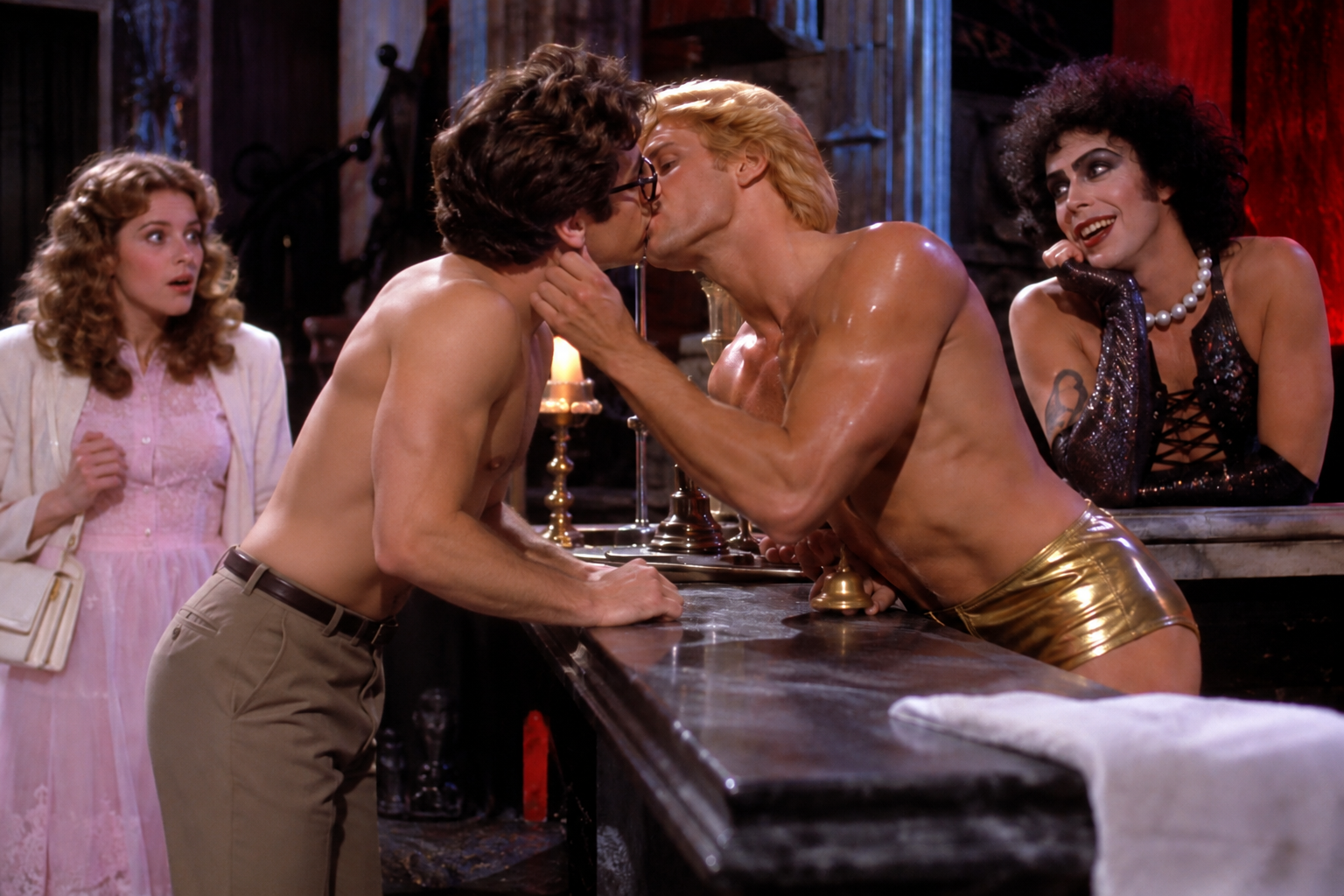 The Rocky Horror Influence The Rocky Horror Influence
Few works illustrate the relationship between horror, gender, sexuality, camp, and queer culture more vividly than The Rocky Horror Picture Show. Released in 1975, the film became a cult phenomenon through midnight screenings and audience participation. Its combination of horror parody, science fiction, sexual liberation, gender play, corsets, theatricality, and outrageous performance made it particularly influential within queer culture. Audiences did not merely watch. They dressed as the characters. They performed. They shouted lines. They crossed the boundary between spectator and participant. In many ways, Rocky Horror embodies the same principle that makes Halloween powerful: identity becomes theatrical, and theater creates freedom. Its continuing popularity around Halloween is therefore hardly accidental.
Halloween During the AIDS Crisis
The 1980s and early 1990s brought catastrophe to LGBTQ+ communities. The AIDS epidemic killed enormous numbers of gay and bisexual men, transgender people, and others while governments, media organizations, religious institutions, and the broader public often responded with indifference, hostility, or stigma. Halloween continued during this period, but celebration existed alongside grief. Gay neighborhoods that had once experienced extraordinary cultural growth were losing friends, partners, performers, artists, bartenders, activists, and community leaders. Parties could therefore possess complicated emotional significance. Celebration became an assertion of survival. Fundraisers connected nightlife and community support. Drag performers and gay establishments helped raise money for people living with AIDS and organizations providing care. Humor remained important. So did outrageousness. There is something profoundly human about responding to death by dressing extravagantly and gathering together. Halloween, already a holiday in which death is transformed into theater, became particularly resonant. Skeletons dance. Ghosts become playful. Gravestones become decorations. Fear is turned into laughter. For communities experiencing genuine death on a devastating scale, the ability to laugh, perform, dress up, and remain together could itself become an act of resilience.
The Meaning of Chosen Family
Halloween also intersects with the LGBTQ+ concept of chosen family. Many LGBTQ+ people have historically created strong networks of friends and community members who perform roles traditionally associated with biological family. This became especially important for people rejected by relatives after coming out. Halloween is unusually compatible with chosen family because it does not require the traditional household structure associated with many other holidays. Thanksgiving often asks: Where is your family? Christmas often asks: Where are you going home? Valentine's Day asks: Who is your partner? Halloween asks: What are you going to be? Friends can answer together. They attend parties. Coordinate costumes. Decorate apartments. Visit clubs. Watch horror films. Walk through neighborhoods. Halloween can therefore function as a community holiday without requiring conventional definitions of family.
Lesbians and Halloween Culture
Popular accounts sometimes reduce LGBTQ+ Halloween history to gay men and drag queens, but lesbian and bisexual women have also participated significantly in costume culture, nightlife, house parties, bars, and public celebrations. Historically, Halloween could provide women with opportunities to experiment with masculine clothing and gender presentation in ways that might attract greater scrutiny on ordinary nights. For some, wearing a suit, uniform, or masculine costume was simply playful disguise. For others, it could provide an opportunity to inhabit a presentation that felt more comfortable or authentic. Lesbian bars also held Halloween parties and costume contests, providing social environments where women could gather beyond mainstream expectations. As with gay male culture, Halloween offered flexibility. Femininity could be exaggerated. Masculinity could be embraced. Gender could become humorous, theatrical, erotic, frightening, or irrelevant.
Transgender People and Halloween
Halloween's relationship with transgender experience requires particular care. A transgender person's gender is not a costume. Trans identity should therefore not be reduced to cross-dressing or Halloween disguise. Nevertheless, historically, Halloween sometimes provided transgender and gender-questioning people with rare opportunities to experiment publicly with presentation. Someone who feared appearing in public according to their gender on an ordinary day might be able to do so on Halloween with reduced scrutiny. The costume provided plausible deniability. For some people, that experience could be personally significant. They might discover that being perceived differently felt unexpectedly natural. Halloween did not create transgender identity. It could, however, create a temporary space in which someone encountered an aspect of themselves that everyday social rules required them to suppress. The difference is important. The costume was temporary. The recognition might not be.
The 1990s and Growing Visibility
By the 1990s, LGBTQ+ visibility in American culture was expanding. Pride celebrations grew. Gay and lesbian characters appeared increasingly in media. Queer nightlife became more visible. Halloween celebrations expanded alongside this cultural change. Costumes became more elaborate, and LGBTQ+ neighborhoods became destinations for Halloween tourism. Straight visitors increasingly attended celebrations that had been shaped substantially by queer creativity. This produced an interesting reversal. What had once offered LGBTQ+ people temporary permission to enter mainstream public space now drew mainstream audiences into queer spaces. Halloween had become a showcase.
The Internet and Social Media
The internet transformed Halloween once again. Queer people who once depended upon local communities could suddenly encounter LGBTQ+ culture across enormous distances. Costume photographs circulated online. Drag tutorials became accessible. Makeup techniques spread rapidly. Cosplayers, artists, transgender creators, drag performers, and LGBTQ+ influencers could display transformations to global audiences. Social media intensified this phenomenon. Halloween became both physical celebration and digital performance. A costume could be seen by millions. Queer creativity no longer required access to Greenwich Village, San Francisco, Los Angeles, or another major urban center. Someone living in a small town could participate online. That democratization has been especially significant for LGBTQ+ people who remain geographically isolated.
Halloween and Pride
Halloween and Pride are very different celebrations, yet they share certain visual and cultural qualities. Both involve public spectacle. Both encourage unusual clothing. Both can involve parades. Both transform streets. Both permit exaggerated self-presentation. Both frequently use humor and theatricality. Yet there is an important distinction. Historically, Halloween sometimes allowed queer people to express themselves because everyone was disguised. Pride allows queer people to express themselves without needing disguise. In that sense, the two celebrations can represent opposite stages of visibility. Halloween says:
“I can show this because tonight it can be interpreted as costume.” Pride says: “I can show this because this is part of who I am.” That difference reveals how dramatically LGBTQ+ life has changed.
From Hiding Behind the Mask to Choosing the Mask
The symbolism of the mask has consequently changed. For earlier generations, the mask could provide protection. It allowed someone to hide while simultaneously revealing something normally concealed. For many LGBTQ+ people today, the Halloween mask is increasingly voluntary. A gay couple can dress as matching vampires without pretending not to be a couple. A transgender woman can dress as a witch without her femininity being treated as part of the costume. A drag queen can transform into an even more elaborate character. A lesbian couple can arrive at a party holding hands. The costume no longer necessarily creates permission. Instead, it creates possibility. That is a profound historical change.
Halloween Is Not Universally Liberating
It is also important not to romanticize the relationship. Not every LGBTQ+ person experiences Halloween as liberating. Queer people can still encounter harassment or violence. Costumes can rely upon offensive stereotypes. Transgender identities can be mocked through costumes that treat gender variance as a joke. Gay stereotypes can similarly become caricatures. Halloween's temporary permission to violate social rules can therefore produce cruelty as easily as freedom. The same ambiguity has existed throughout the holiday's history. Masks can liberate. Masks can also conceal people who behave badly. Halloween reflects the culture celebrating it, including that culture's prejudices.
The Queer Power of Transformation
Despite these complications, transformation remains the central connection between Halloween and LGBTQ+ culture. Queer history contains countless stories of people refusing identities imposed upon them. Halloween dramatizes that refusal. For one night, society acknowledges that appearance can change. Names can change. Clothing can change. Roles can change. Expectations can change. The frightening can become beautiful. The beautiful can become monstrous. Men can become queens. Women can become kings. Humans can become creatures. The living can become the dead. The ordinary can become extraordinary. Halloween does not erase the distinction between costume and identity, but it demonstrates something important: the way people present themselves is capable of transformation.
The Night of Possibility
Perhaps this explains why Halloween has held such affection within parts of the LGBTQ+ community. It is not simply because gay people enjoy costumes. It is not simply because drag fits naturally into Halloween. It is not simply because queer nightlife embraced the holiday. The connection reaches deeper. For generations, LGBTQ+ people were told that there were strict boundaries surrounding acceptable identity. Men behaved one way. Women behaved another. Families looked one way. Love looked one way. Clothing belonged to one gender or another. Desire was permitted to travel only in approved directions. Halloween temporarily disrupted those rules. For one night, transformation was not merely tolerated. It was expected. A person could step through the door wearing something impossible on October 30 and receive applause on October 31. That temporary freedom could be humorous. It could be erotic. It could be artistic. And sometimes it could be revelatory. Someone might put on a costume and discover that what society considered disguise felt unexpectedly like recognition. Someone might enter a gay bar for the first time because Halloween provided an excuse. Someone might perform drag for the first time. Someone might hold a partner's hand beneath a mask. Someone might simply stand among thousands of other people and experience the extraordinary relief of not needing to appear ordinary.
Behind the Mask
The history of Halloween and the LGBTQ+ community is therefore ultimately a history of visibility. At first, the mask could conceal. Then it could protect. Then it could permit experimentation. Eventually it could become theater. And finally, for many, it became something worn simply because wearing masks is fun. That progression mirrors a much larger transformation within LGBTQ+ history. The goal of queer liberation was never to remain safely disguised. It was to make disguise unnecessary. That is what makes the modern relationship between Halloween and LGBTQ+ culture particularly meaningful. A century ago, a man wearing a dress at a masquerade might have depended upon the calendar for protection. Today, a drag performer may spend weeks creating an extraordinary Halloween look precisely because the audience already knows who stands beneath it. The mask is no longer necessarily hiding the person. It is displaying the artist. Halloween remains filled with ghosts, witches, vampires, monsters, skeletons, demons, and creatures that exist between categories. LGBTQ+ people did not invent those symbols, nor does the holiday belong exclusively to queer culture. But queer communities recognized something valuable within it. Halloween creates a world where transformation is normal. Where outsiders occupy the center of the celebration. Where monsters become beloved. Where difference becomes spectacle rather than shame. Where a person can construct an identity, walk into the night, and invite the world to look. Perhaps that is the most enduring connection of all.
Samhain once marked a threshold between seasons. Halloween inherited the language of thresholds and transformed it repeatedly across centuries. LGBTQ+ culture found within that threshold a space for another kind of crossing—the movement between concealment and expression, expectation and possibility, imposed identity and chosen presentation. For generations, Halloween provided a night when the rules could loosen. The costume created cover. The mask created freedom. The crowd created community. And behind the disguise, sometimes, a person discovered not someone else at all — but a clearer glimpse of themselves.
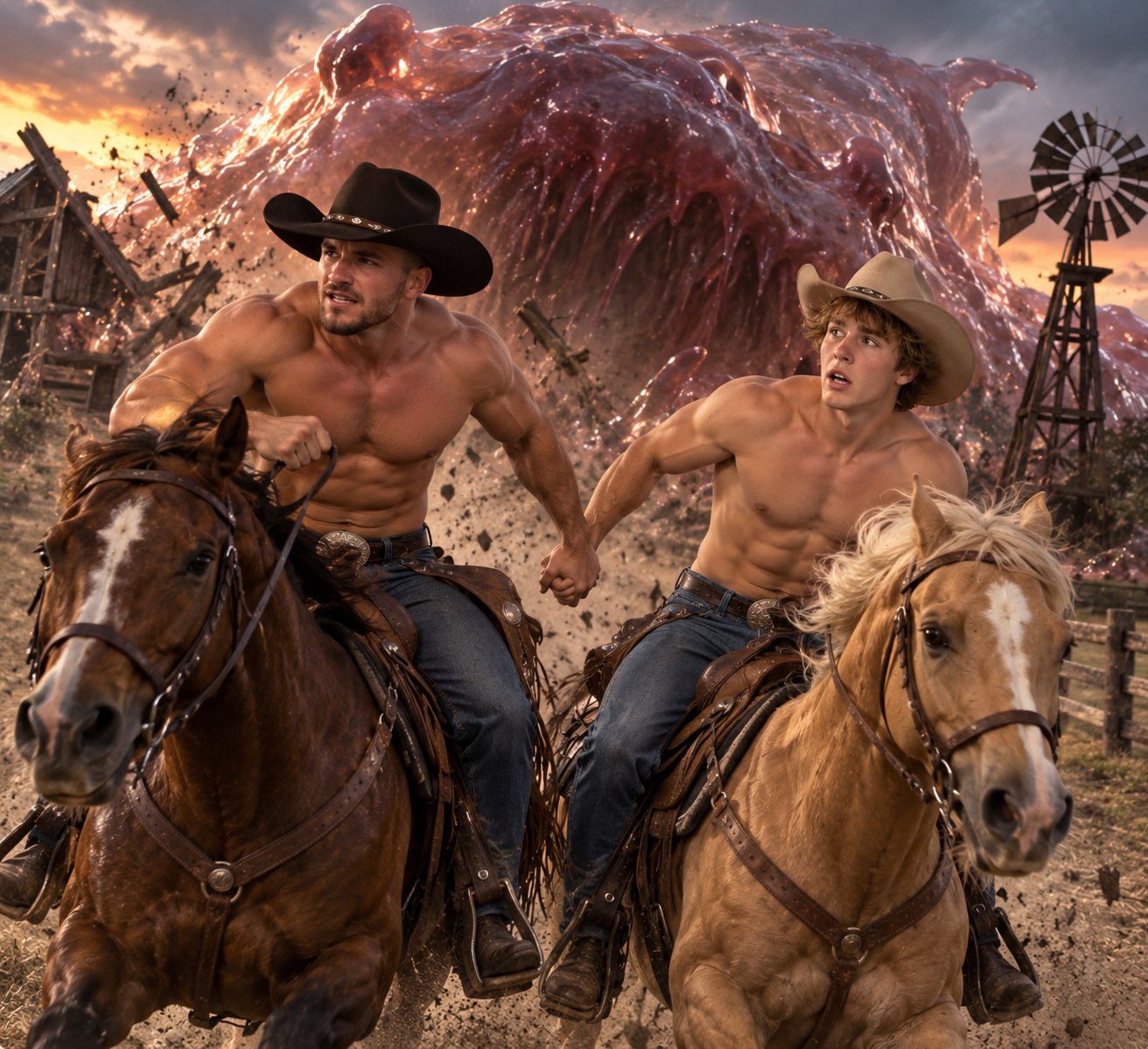
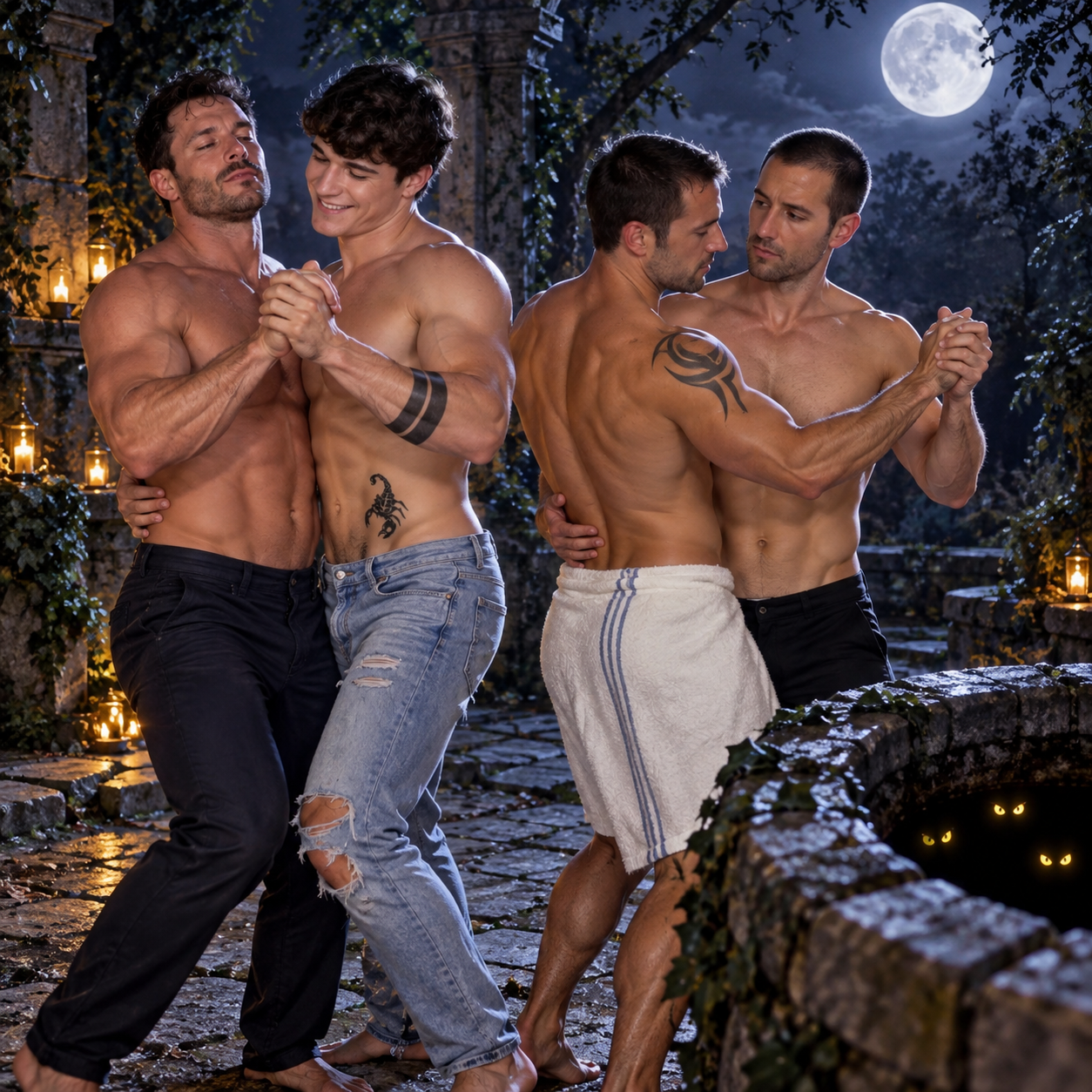
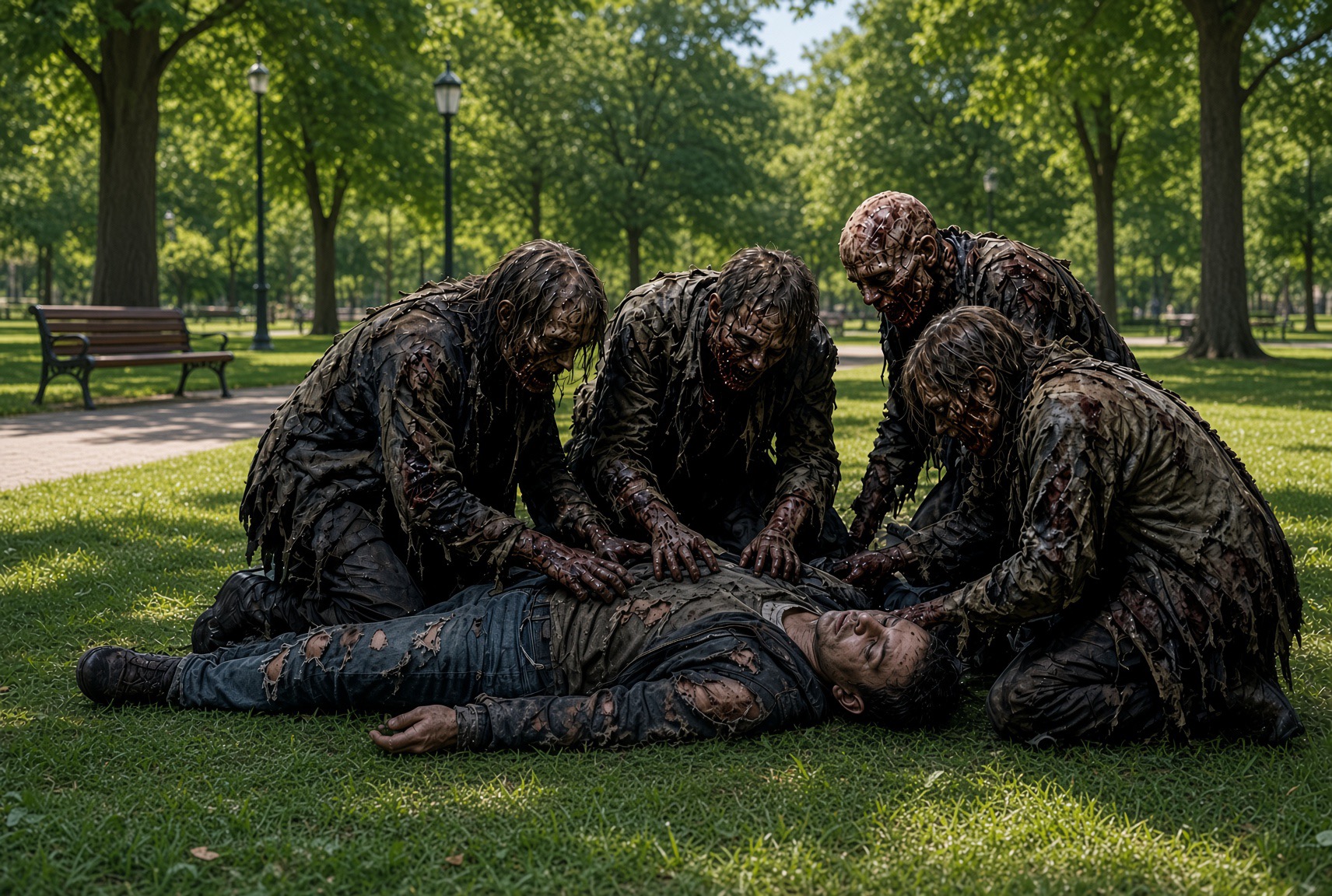
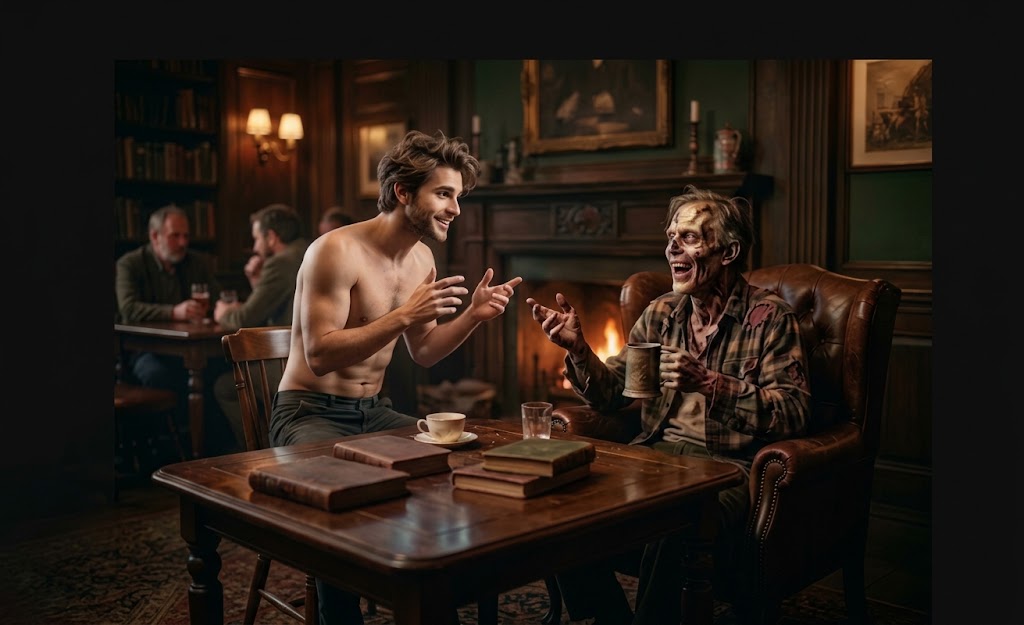
The images below are all AI-generated by me with ChatGPT, Grok, and Google Gemini on my iPhone. Enjoy!

The 31 Days of Halloween! Click on the day number you want! 01 | 02 | 03 | 04 | 05 | 06 | 07 | 08 | 09 | 10 | 11 | 12 | 13 | 14 | 15 | 16 | 17 | 18 | 19 | 20 | 21 | 22 | 23 | 24 | 25 | 26 | 27 | 28 | 29 | 30 | 31
George
|