
Navigation:IndexSplash Page |
What the Farm Keeps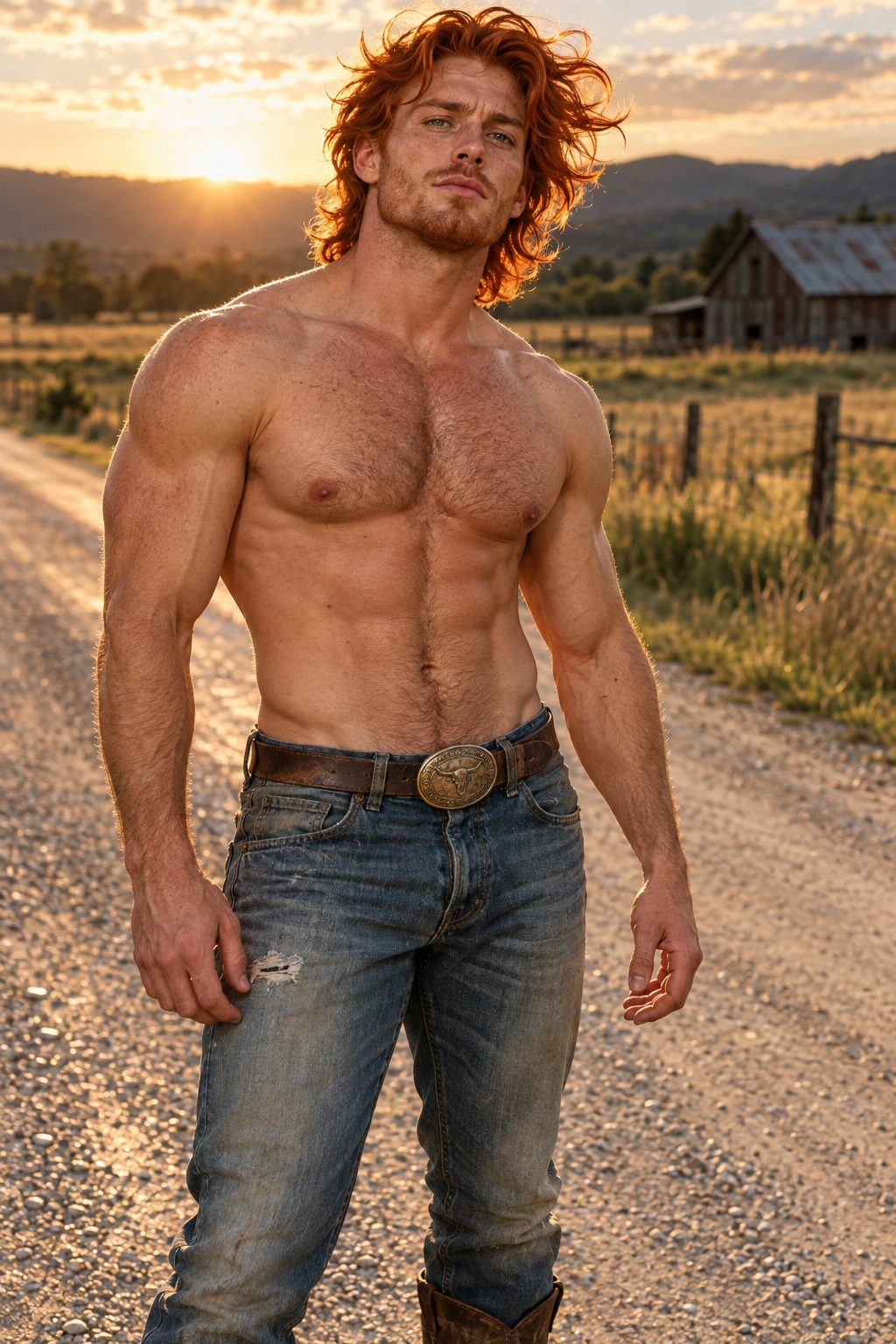
A Joe Liene StoryI did not hate him. I had never hated him. That would have made things easier, I suppose, but my feelings had never been tidy enough to arrange themselves that way. I was angry about the way our fling ended. I was hurt. I had felt foolish for hoping he might choose me when I had never made him promise he would. I had told myself from the beginning that I could handle a short affair with a gorgeous redhead, and then I had discovered that I was not quite as casual as I pretended. There was no villain in that story, really. There was one man who could not decide what he wanted, and another man who had decided he could live with less than he wanted. It had been me who finally said enough. The last time I saw him, a few months after the breakup, he came into the store to buy bourbon. We had exchanged a polite greeting. We had not flirted. We had not reached for each other's hands. I told him to take care of himself. He said I should do the same. Then he crossed the parking lot, climbed into his old pickup, and drove away. I remember watching him for a moment, but only for a moment. I had work to do. That was the version of it I kept: quiet, finished, ordinary. Two years later, on a warm Wednesday afternoon, Joe walked into my store again. I noticed him before I recognized him. I was in the back office, wrestling with an invoice that had somehow managed to list the same case of wine twice, and I came out to find a man by the bourbon shelves with his back to me. He was wearing boots and jeans and a faded green work shirt, sleeves rolled up. His red hair was longer than it had been the last time I saw him, loose around his ears and bright as a penny where the front windows caught the sun. He stood very still, looking at the labels. The first thing I thought was, Well, there he is. The second thing I thought was, Don't be stupid.
“Hello, Geoff,” he said. The sound of my name in his voice did a small, ridiculous thing to my chest. “Joe.” “I wasn't sure you still worked here.” “You know where I work.” “I did. I wasn't sure you were still here.” I looked at him. “Well. I am.” He nodded. He had a bottle of bourbon in one hand, but he did not set it on the counter. He looked as if he had rehearsed something on the drive over and then forgotten all of it when he saw me. I could not tell whether that made him more sincere or merely less prepared. “How have you been?” I asked, because it seemed better than asking what in the hell he was doing there. “Fine,” he said. Then he exhaled and shook his head. “No, that's not true. I've been all right. I've missed you.” There are sentences a person imagines hearing from an old lover, and then there are sentences that actually arrive, right in the middle of a workday, with a delivery truck scheduled in twenty minutes and two customers deciding between vodka brands in the next aisle. I had not imagined that exact sentence. I had not expected it. And I did not appreciate how quickly my mind could turn it into a question: How much? “You've missed me,” I repeated. “Yeah.” “For two years?” “Not every minute,” he said. “I do sleep. But more than I expected.” I couldn't help it; a laugh escaped. “You haven't lost your charm.” “I was hoping I hadn't.” “That's not what I meant.” “I know.” His smile faded around the edges. “I know you have every reason to be cautious with me.” That was a better beginning than “I can explain,” which is one of those phrases that usually means a person cannot. I put the invoice on the counter and folded my arms. “What do you want, Joe?” He held my gaze. “A chance to do this properly.” “To do what properly?” “Be with you. In a real relationship. Not another fling, not a few good nights that we pretend won't matter. I want to be your partner.” I stared at him. There was a pause, and then I said, “You walked in here with bourbon and a rehearsed speech.” “I did.” “Did you practice it in the truck?” “A little.” “Did you practice the part where you tell me you want a relationship?” “I practiced a lot of parts. That one came out best.” “Did you practice the part where you explain why I should believe you?” His expression changed. “I can try.” “Try, then.” He set the bourbon on the counter, but he didn't push it toward me. “Because I was wrong about what I thought I wanted. Because I liked being wanted more than I liked being responsible for what I did with that. Because I took you for granted, and because you were right to end it. I spent a long time thinking I could just move on and be fine. I did move on. I dated. I went out. I did what I always did. And I was fine. But I kept comparing everyone to you, which is a stupid thing to do and a very inconvenient thing to admit.” I looked down at the bottle, as if there might be a label on it that would tell me what to do. “You were good at making people feel like they were the only man in the room.” “I know.” “You made me feel that way.” “I know.” “And I found out I wasn't.” He nodded once. “You did.” I waited for him to defend himself. He didn't. I waited for him to say it was complicated, that I had misunderstood, that we had never made promises. He could have said all of those things and been technically correct. He only said, “You deserved more than I gave you.” I had spent two years imagining what I would say if he ever came back. In one version, I told him to take his bourbon and get out. In another, I made some cutting comment that would leave him stunned and regretful. In the version I liked best, I was indifferent. I had imagined myself being wonderfully indifferent. It turned out indifference was a difficult performance when the man in question was standing three feet away with green eyes and a confession. “You could have said all of this two years ago,” I said. “I couldn't. I didn't know it then.” “And now you do?” “I know I want you. I know I don't want to keep doing this halfway. I know I want to be faithful to you. I know I want to build something that keeps going after the good nights.” He said “faithful” plainly. He did not say “I would never hurt you,” or “I can promise you'll never worry.” He said what he wanted to do. It mattered that he said it. It mattered more that I would have to see if he meant it. I tapped the invoice on the counter. “I'm working.” “I know.” “And I can't have this conversation in the middle of the store.” “I know that too.” “Do you still have my number?” “Yes.” “Don't call me tonight.” “Okay.” “Text me tomorrow. Just a text. No speech. No big romantic declaration. I need to think.” He nodded. “I can do that.” “And don't make me regret giving you that much.” “I'll try not to.” “That's not especially comforting.” “No,” he said. “I guess it isn't.” He paid for the bourbon. He did not ask for a kiss, or a drink, or an answer before I was ready. He left the store, and I watched him walk across the parking lot. That was when I realized my hands were shaking a little. I took a deep breath. Then I picked up the invoice and went back to the office. I had cases of wine coming, the cooler needed to be checked, and one of my regulars wanted to talk for twenty minutes about a bottle he had bought for a barbecue. The day did not stop because Joe Liene had reappeared. It did, however, become much longer. He texted me the next morning, exactly as I had asked. “Good morning, Geoff. I meant what I said. I won't crowd you. I hope your day goes well.” No wink. No red heart. No “I dreamed about you.” No line that was meant to make it hard for me to ignore him. Just a good morning and space around it. I read the message while standing in my kitchen, one hand on a mug of coffee, the other on my phone. I put the phone down. I picked it up again. I read the message a third time. I could not tell if that was because I was moved by his restraint or if I was hunting for a sign of manipulation. The two feelings looked similar from where I stood. I replied, “Thank you. I need a little time.” He wrote back, “Take it.” So I did. For three days, I thought about Joe. Not constantly. I had learned how to keep my thoughts from running off with me. I went to work. I jogged the walking trails. I called my sister. I made dinner. I tried to watch a show, but I kept losing track of the plot because I was debating with myself about whether people actually change. It was not a philosophical debate, despite how grand that sounds. It was just me in my living room saying, “People can change,” and then answering, “Sure, but do they?” On the fourth day, I texted him. “Coffee. Saturday. Somewhere public. One hour. You can tell me more, but don't try to convince me.” His reply came five minutes later. “One hour. Public. No sales pitch. I can do that.”
“You look good,” he said. “That's not a sales pitch?” “No. That's an observation.” “Dangerous distinction.” “I'm willing to take the risk.” I ordered vanilla latte and a small lemon pastry. Joe had black coffee and something with chocolate on it. He had remembered I liked lemon, which was either a sweet detail or an unfair advantage. I sat down across from him and put my phone on the table between us. I did that on purpose. It reminded me that I could leave whenever I wanted. “I've thought about what you said,” I began. “I figured.” “Don't say you know what I'm going to say.” “I wasn't going to.” “You look like you're thinking it.” “I am trying not to think anything too far ahead.” That answer earned him a small smile. “Good. Then we're both trying.” We talked for an hour. It became an hour and twenty minutes, which I noticed and pretended not to. I asked him where he had been, what he had done in the last two years, whether he had been in another relationship. He answered directly. He had dated. He had slept with people. Nothing had lasted more than a few months. He had gone through a stretch where he avoided dating altogether, which he said had been less a noble transformation and more a period of being tired of himself. He had kept working, helped his uncle more often, and taken over the day-to-day care of the farm when his uncle's knees got bad. I asked whether he had been with anyone recently. “Not for the last four months,” he said. “I haven't been seeing anyone since I decided I wanted to come talk to you.” “You decided four months ago?” “I decided I should talk to you four months ago. It took me a while to get up the courage to actually do it.” “That's a lot of courage for a man who once flirted with me in the bourbon aisle.” “I was better at flirting than apologizing.” “That was obvious.” He smiled. “I know.” I leaned back. “What does a real relationship mean to you? Don't say it means you want to spend time with me and see what happens. That's what we did last time.” He rubbed a thumb along the rim of his cup. “It means exclusivity. It means I tell you where I am and I don't hide who I'm with. It means I don't keep another man in the wings because I'm afraid of being alone. It means when something bothers you, I don't make you feel like you're unreasonable for bringing it up.” I was quiet. That was a pretty good answer. It was almost suspiciously good. “Did you memorize that?” “No,” he said. “I learned it the hard way.” “From me?” “Partly.” “I'm not interested in being your lesson.” “You aren't. You are the person I wish I had treated better.” There it was again, something intimate and well phrased, the sort of sentence he could have used on someone else. But this time I noticed the way he was holding himself: not leaning in, not reaching for my hand, not trying to pull me toward him. He wanted me to respond. He was letting me decide whether to. “I'm not saying yes yet,” I told him. “I know.” “Don't say you know.” “Right. Sorry. I understand.” “Better.” “I can wait.” “You've said that before.” “I know.” He caught himself and smiled. “I understand.” I laughed. “You're going to have to work on that.” “Then I have a reason to keep seeing you.” “You do not have that reason yet.” “Then I have a reason to keep hoping.” He said it lightly, but not carelessly. I let the silence sit between us. I had expected him to be as he used to be, all charm and forward motion, looking for the quickest way from a smile to a kiss to a bed. He still had that in him. It was right there, under the surface, in the way he looked at my mouth. But there was a pause now, a place where he could choose not to push. I had not seen that from him before. Maybe it was new. Maybe I had not looked for it. When we left the coffee shop, he walked beside me to my car. He did not touch me. At the driver's door, he said, “Could I ask you to dinner next week?” “You can ask.” “Would you like to have dinner with me next week?” “I would like to think about it.” “Then I will wait.” He opened the car door for me. I paused with one hand on it and looked at him. “Are you going to kiss me?” “I would like to.” “That wasn't my question.” “No,” he said. “I'm not going to kiss you unless you say you want me to.” The answer pleased me so much that I almost got annoyed with myself for being pleased. “Good.” I got into the car and rolled down the window. “You can ask me about dinner on Monday.” His whole face lit up. “I will.” “Don't get too excited.” “I'm trying.” “Try harder.” He laughed and stepped back from the car. “Have a good day, Geoff.” “You too, Joe.” Monday came. He texted at noon: “Dinner Thursday?” I looked at the message for a while before answering. Then I wrote, “Yes. But it is still a date, not a commitment.” His reply: “A date is a very good beginning.” I shook my head. The old Joe was still there, with that confidence and that flirtatious little tilt to his words. I did not want a different man. I wanted the same man to make a different choice. I understood the difference now. I also understood that wanting was not proof. We went to a seafood place on the edge of town. He offered to pick me up. I said I would meet him. He said “Understood” and arrived ten minutes early. He had a black shirt tucked into his jeans, and he had trimmed his beard. I asked if he had dressed up for me. He said, “I dressed up because I wanted to look like a man who deserved a second chance.” “That sounds like a speech.” “It was just a line.” “Which one?” “The one I thought of in the car.” “Do you usually rehearse your flirtation?” “I have a natural gift.” “You have a natural gift for making me roll my eyes.” “That's one of the things I missed.” “You missed me rolling my eyes?” “I missed your whole face. The eye rolling was part of the package.” There was no point pretending that didn't get to me. It did. So I sat down and ordered oysters, and he ordered fish tacos, and we had dinner. He flirted with the waiter, a young man with a silver ring in his nose, by telling him that his tattoos were beautiful. The waiter grinned and said thank you. Joe did not ask for his number. He did not shift his attention away from me. He did not keep a little spark going in the air after the moment had passed. He just complimented the tattoos, then turned back to ask what I thought of the oysters. I noticed all of that. I wanted to make a joke about it, but I held my tongue. It was too soon to start tallying. I didn't want to make him pass a test he had not agreed to take. But I did want to see if the man I remembered could learn to flirt without leaving the door open behind him.
“I'm glad,” he said. “You are?” “I'm glad you lived your life. I don't want you to have spent two years waiting around for me.” “I didn't.” “Good.” “You don't get to be jealous about it.” “I'm not.” He lifted one eyebrow. “Maybe a little.” “That's not going to help you.” “I'm not trying to help myself. I'm trying to be honest.” “It's a fine line.” “I know.” He caught himself and grinned. “I understand.” I shook my head. “You're learning.” “I'm trying to.” The bartender asked if we needed anything else. Joe ordered a second bourbon, then asked if I wanted another drink. I said no. He finished his, paid, and walked me back to my car. I was tempted to invite him home. I was tempted because he looked wonderful in the light from the streetlamp, and because my body remembered how it felt when he touched me. But I also remembered how the last time ended. I wanted to see what it felt like to let a date end with a kiss and not a bed. So I kissed him beside the car and said goodnight. He said, “May I kiss you again?” I kissed him again. “May I come over sometime?” he asked. “Maybe.” “That's not a no.” “It's not a yes either.” “I have heard that one before.” “And you survived.” “Barely.” He kissed my cheek, then stepped away. “Goodnight, Geoff.” “Goodnight, Joe.” In the days that followed, Joe did exactly what he said he would. He texted, but he did not flood my phone. He asked about my day. He invited me to dinner again. He came by the store once with lunch, but he called first to make sure I could take a break. He did not show up unexpectedly at my house. He did not assume that I owed him my time because he had been brave enough to apologize. He kept the promises that were small enough to be easy, and perhaps that was the point. Trust is not built out of speeches. It is built out of a man saying he'll bring you coffee at noon and then showing up at noon with coffee. We went out the next Thursday. He came to my apartment afterward and sat beside me on the couch. He did not put his hand on my knee until I leaned against his shoulder. He kissed me slowly. When I touched the back of his neck, he made a quiet sound that I felt more than heard. It was familiar. It was also new, because this time I was not trying to decide whether I wanted to be there. I did want to be there. I wanted to kiss him. I wanted to feel his hands on me. I wanted to find out if the memory of our first time had made it better than the reality, or if the reality was simply that good. We did not sleep together that night. We did the next one. I will not pretend there was no chemistry left. There was plenty. There was enough that it felt as if the two years between us had been a long-held breath. But I was older than I had been the first time, and maybe a little wiser, or maybe just more practiced at asking questions. I told him I wanted this only if we were clear about what it meant. He said, “I want to be with you. I want us to be exclusive. I want to be your boyfriend. I want you to call me out if I start acting like the man I used to be.” “I'm not going to police you.” “I don't mean that. I mean if I get careless or thoughtless, tell me. I don't want you to swallow it because you think you'll scare me off.” “That's a nice thought.” “It is a promise.” “Promises are easy.” “Then don't judge it by the words.” I looked at him. “I won't.” He reached up and touched my cheek. “Can I kiss you now?” “You may.” He kissed me as if he had been trying not to for two years. Then again, maybe he had. I let myself believe him in that moment, just a little. Not all the way. Not forever. But enough to kiss him back. The first couple of months were not a grand romance in the way people imagine a grand romance. There were no violins and no dramatic declarations in the rain. There was Joe showing up after my shift with tacos because he knew I would forget to eat if the store got busy. There was me keeping an extra toothbrush at his house, then pretending it was no big deal when he cleared a drawer for my things. There was him calling me his boyfriend in front of his cousin and then glancing at me to make sure I was alright with it. There was me telling him yes, I was alright with it, and then feeling a little strange for the rest of the afternoon because I liked how it sounded. He was still Joe. He still flirted. He still smiled at waiters and made comments that could have been lines in a movie. He still called me handsome at moments when I was carrying groceries or wrestling with a trash bag and looked nothing like a man who belonged in a movie. He could make me roll my eyes on command. “You are extremely attractive when you are annoyed with me,” he told me once while I was trying to get a stubborn lid off a jar of pickles. “Then I will try to be more annoyed.” “You don't have to try. You have a natural gift.” “I am going to throw this jar at you.” “See? Stunning.” That was how he was. A flirt, even when he was already with the man he wanted. The difference was that he no longer treated every smile like an invitation. He might tell someone they had a nice haircut, but then he would turn back to me, put his hand on my back, and ask what I wanted to eat. If a man flirted with him, Joe did not become a different person. He did not draw out the moment to see how far it would go. He laughed, thanked him, and made it clear he was taken. Sometimes he did that with words. Sometimes he did it by slipping his fingers through mine. I noticed. Of course I noticed. I also noticed when he said he would call after his workday and called. When he said he would be at my place at six, he was there at six. When he was delayed, he let me know. Maybe that sounds like the bare minimum. It is the bare minimum. But a man who had been unreliable in the ways that mattered can make the bare minimum feel like a kind of miracle, and I was trying not to make too much of it while also allowing myself to appreciate it. One Friday night, a man at the bar where we met friends leaned over and said something to Joe that made him laugh. I could not hear the words. I did hear Joe say, “I appreciate it, but I'm here with my boyfriend.” Then he looked over at me and raised his glass. The man said something else, and Joe shook his head, still smiling, but that was all. Later, when we were walking to the truck, I asked what the man had said. “He told me I was too handsome to be taken.” “And what did you say?” “That he was too handsome to be making bad decisions.” I stopped walking. “Joe.” “What?” “Did you flirt back?” “I joked. I didn't give him my number. I didn't ask for his. I didn't hide you. I didn't kiss him. I told him I was with you.” “That's true.” “Did it bother you?” I didn't want to lie. “A little.” “Tell me why.” “Because I remember when you flirted with me like that. And because it worked.” He nodded. “I understand.” “You can be friendly. I'm not asking you to become a monk.” “Thank God. I don't think I'd be good at it.” “I just need to know the line is still there.” “It is.” He took my hand. “And if I ever make you feel like I moved it, tell me.” I looked at our hands. “I will.” We went home, and he kissed me in the kitchen while I was putting away leftovers. Then he kissed me again when I was trying to find the foil. He was very good at distracting me. That was one of the things I had missed most, though I would never admit it in front of him. I could have spent a whole evening with him flirting over a jar of pickles. Maybe I did. The vacation idea came from a conversation about passports. My passport was expiring. Joe had never had one. He had been outside Mississippi and Louisiana, of course, but he had never left the country. I asked if he had ever wanted to. He said he had, but it had never seemed worth planning around anyone else. I told him that was the saddest thing he'd ever said. He asked why. I said because there were whole places on the map he had never seen, and he was making it sound as if the only thing that could make a trip worth taking was having somebody else there. “Would you go with me?” he asked. “Where?” “Anywhere.” “That's a big question.” “I can narrow it down.” “Where would you want to go?” He thought about it. “Ireland. Maybe Scotland. I've always wanted to see the coast, the old stone places, the hills. I'd like to drive around and stop wherever looks interesting. I want to see a castle and pretend I own it.” “Will you be wearing a kilt?” “If you want me to.” “I didn't say that.” “You didn't say you didn't want it, either.” I shook my head. He grinned. “You would look good in one,” I said. “I look good in most things.” “You're supposed to be modest now.” “I'm trying to be a better person. I'm not trying to become a liar.” I laughed. Then I looked at him. “You really want to go?” “Yeah.” “With me?” “Geoff, I want to go everywhere with you.” “Don't say that unless you mean it.” “I mean I want to go to Ireland and Scotland with you. I don't mean I expect you to follow me around the world forever. I know the difference.” That was a surprisingly careful answer. I appreciated it. Then I said, “If we're going to do it, I want to do it properly. Not four nights and a rushed tour. I want two or three weeks. I want to see the country and not just the airport and a hotel room.” “Then we'll take three weeks.” “You can get that much time away from the farm?” “I can get someone to look after things. My cousin can handle the daily stuff. Uncle Ray will complain, but he can complain from the porch.” “Three weeks is a lot of money.” “We can save.” “I'll need time off work.” “We'll plan around your schedule. I don't want you to feel like I'm asking you to drop everything.” “Good, because I won't.” “I wouldn't ask you to.” He was not making a promise of a life together. He was making a plan for three weeks. That seemed manageable. We sat at my kitchen table with our phones and started looking at flights. Then we stopped looking at flights and looked at places to stay. Then we argued about whether we needed to rent a car or take trains. Then we realized we had not even figured out when we could go. It took us weeks to get from “we should” to a real itinerary, and perhaps that was the first time we had done something together that required both of us to think about the other person's needs over a long stretch of time. We chose late September. We would fly from New Orleans to Dublin, spend a few nights there, take the train west to Galway, rent a car, follow the coast south, then ferry across to Scotland and spend the last week driving through the Highlands before flying home from Edinburgh. I wanted a comfortable room with a private bathroom and a bed that did not look like it had been assembled from old church pews. Joe wanted to stay in a castle at least once. We found a hotel in Scotland that had once been a small manor house and told ourselves it counted. I booked flights. Joe booked two cottages, a country inn, a hotel in Dublin, and a ferry. We divided the expenses as we went. We did not pretend money did not matter. We did not pretend this was a spontaneous adventure funded by magic. We had spreadsheets, which Joe claimed to hate but kept updating. He made a column for “pubs and questionable snacks,” which I thought was a reasonable category. I made one for “emergency expenses,” which he thought was gloomy. We both contributed to it anyway. As the departure date got closer, I grew excited and nervous. Not just about the trip. About being away together. A vacation is a strange thing to take with a new partner. You are together all day, every day. You get lost together. You get hungry together. You discover that the person you are attracted to has strong opinions about maps and an entirely different philosophy of packing. You cannot retreat to your home or his home when one of you gets tired. You have to decide, in real time, how to handle a missed train, a hotel with a broken shower, a sudden rainstorm, and the fact that you are both hungry and the only open place is serving fried things. I told Joe this. He said, “If we can survive the pickle jar, we can survive a vacation.” “The pickle jar was not a test.” “It was a test. You passed.” “I did not throw it at you.” “Exactly.” “I would have missed.” “You would not have missed.” “Don't flatter me.” “I'm not. You have an excellent throwing arm.” And then he kissed me in the doorway, which was a good way to end an argument about whether I could throw a jar at him. Joe was still a man who could turn almost anything into flirtation. The difference was that he could now flirt and remain present. He could look at me and not be looking past me at the next person who might offer a thrill. We flew out on a Thursday morning. I had not slept much. Joe said he had slept well, which was a lie. I could tell because he was too quiet at baggage check and had already checked his passport three times. He said he was calm. I said his hands were cold. He said that had nothing to do with nerves and everything to do with the air-conditioning in the airport. Then he laughed because he knew I did not believe him. On the plane, we sat beside each other. I had a window seat. He had an aisle. He held my hand when the plane took off, and I held his back. I had thought I might be nervous. Instead, I felt something close to joy. It was hard to admit that. I had spent so long being careful with Joe that joy felt like a sort of surrender. But there I was, watching the clouds slide past and feeling his thumb move along my knuckles. I was going to another country with the man who had once broken my heart, and I was happy about it. I looked over at him. “This is real, right?” He glanced at me. “The plane?” “The trip. Us. All of it.” His fingers tightened around mine. “Yes.” “Are you sure?” “Yes.” I nodded. “All right.” “Are you?” “I'm trying to be.” “That's all I need.” I leaned back and closed my eyes. I did not sleep. Neither did he. We watched movies we had seen already, ate a meal that tasted like a packet, and whispered jokes about the man two rows ahead who kept pressing the call button and then looking surprised when the flight attendant showed up. Joe's shoulder was warm against mine. That was enough for the first several hours. Dublin welcomed us with cold air, a low grey sky, and a taxi driver who had opinions about American television. Joe spent the first day moving around the city as if he were afraid he might miss something if he stopped walking. I wanted to visit museums and bookstores. He wanted to see the old buildings and find a pub with live music. We did both. I saw Trinity College and looked at an illuminated manuscript. Joe stood beside me and tried to read the old script upside down, which was not particularly useful but entertaining. Then we wandered until we found a pub with a fiddle player and a tin whistle, and Joe bought two pints of stout even though he had said he was only having one. “You said one,” I reminded him. “I said one at a time.” “That is not how it works.” “It is now.” He was chatting with the bartender, who had dark curly hair and a silver hoop in one ear. Joe said he liked the man's accent. The bartender laughed. Joe turned and introduced me as his boyfriend. He did it so easily, so naturally, that I almost missed the words. Then the bartender said it was nice to meet me and asked whether we were visiting for long. Joe answered, “Three weeks, and I plan to make every day count.” The bartender grinned. “Good plan.” Joe looked at me, winked, and said, “I have a very good travel companion.” I rolled my eyes. The bartender smiled at me like he understood. Joe came back to the table with the drinks and pressed a kiss to my temple before he sat down. I remember that moment because my mind had been trained to look for danger, but there was no danger there. There was just Joe being Joe and also being mine. We spent the next few days walking, eating, looking at buildings, and getting lost in a city whose streets did not care about our map. Joe was a beautiful traveler. He was curious. He wanted to talk to people, taste things, hear stories. At the same time, he had the attention span of a golden retriever near an open field. He would stop in the middle of a sidewalk because he had seen a narrow alley or an old doorway. He tried to pet a small dog that looked unimpressed by everyone. He bought a wool scarf for me because he said the color matched my eyes. I told him my eyes were not the color of a scarf. He said, “Then I have been looking at your eyes wrong all this time.” “You have not.” “I have been looking at them very right.” “That doesn't make any sense.” “It does to me.” He was flirtatious and ridiculous, and he was faithful. Those things could coexist. I knew that now, at least in theory. I was beginning to feel it in practice. From Dublin we took the train west to Galway. We spent one night there before picking up the rental car. The car was smaller than I expected and had the steering wheel on the right side. Joe said he was perfectly capable of driving on the left. I asked if he had ever driven on the left. He said he had watched videos. I informed him that was not the same thing. “It'll be fine,” he said. “I have seen you back a trailer.” “That was one time.” “You nearly took out a mailbox.” “That mailbox was in a terrible place.” “The mailbox was beside the road.” He gave me a wounded look. “You're supposed to support me.” “I am supporting you. I am telling you to let me drive.” “You don't know how to drive on the left either.” “I know how to read a map and can drive straighter than you can.” “I'll drive.” I laughed at his stubbornness, the stubbornness that I had fallen in love with secretly so long ago, and nodded. "Fine, I'll navigate." So Joe drove. I navigated. The first roundabout nearly ended our vacation before it started. I mean, a roundabout is confusing at the best of times, but when driving on the wrong side of the road? Absolutely horrible! But we made it through, and after that we only missed three turns and one exit. The countryside made everything worthwhile. The hedgerows were thick and bright green, the stone walls looked as if they had been there since the first person decided a field needed a border, and the sky changed its mind every ten minutes. We stopped for tea, stopped to take photographs, stopped because a sheep had wandered into the road, and stopped again because I wanted to look at the sea. Joe complained that I was making us late. Then he got out and took a picture of me looking at the sea. “You said we were late,” I told him. “We are.” “Then why are you taking pictures?” “Because you're pretty.” “I am not pretty, and even if I were, that's not a good reason.” “It's the best reason I have. And in my eyes, you're fucking adorable.” We stayed in a cottage near the coast, with a small stone fireplace and a window that looked out toward grey water. One night the rain came down so hard that we stayed inside. Joe made a fire. I tried to make tea. Neither of us knew where the host had put the mugs, so we used two tiny cups with flowers painted on them. We sat by the fire and talked about what we had wanted when we were younger. Joe said he had thought he'd own a big house by now. I asked why he hadn't. He shrugged and said he had never figured out what a big house was for if nobody was waiting there when he got home. “That sounds like you've been waiting for me,” I said. He looked at me. “I wasn't. I didn't know you would come back into my life.” “I didn't come back. You walked into my store.” “You know what I mean.” “I do.” I wrapped both hands around my tea. “But I don't want you to rewrite those two years as if you spent them pining for me.” “I didn't.” “Good.” “I had dates. I had fun. I had moments where I thought, this is nice, and then I wished you were there. I didn't want to pretend that meant I had been waiting for you. It means I missed you.” I nodded. “That sounds more honest.” “It is.” “I'm glad you didn't spend two years waiting.” “I am, too. I don't think I would have been any better when I came back if I hadn't learned how to be alone.” “Maybe.”
I looked at our hands in the firelight. “It still surprises me when you say that.” “Why?” “Because you used to talk like if I wanted you, I should accept whatever you were willing to give.” “I thought that's what I wanted. I was selfish.” “Are you not selfish now?” “Of course I am. I still want to keep you to myself.” “That is selfish.” “I'm not acting on it in any terrible way.” “Then we're making progress.” He kissed my hand. I let him. We sat close to the fire, listening to the rain, and for once I did not feel the need to tell myself not to get carried away. I was not making a vow. I was not changing my life. I was just there, in a cottage with Joe, holding his hand. That was enough. The next morning, we drove toward the Cliffs of Moher. The wind was so strong that it stole my hat. Joe laughed and chased it across the grass. I told him he looked like a fool. He brought the hat back and said he was my fool. That was also a line, but it worked. I would be lying if I said all his lines stopped working. They did not. They just no longer made me forget who was saying them. We took the ferry to the Aran Islands. We rented bicycles and promptly discovered that we had not ridden bicycles in a very long time. Joe was better at it than I was. I was slower and more careful. He rode ahead, then came back to me, then rode ahead again. I told him to stop acting like a sheepdog. He said he was watching over me. I said I was not a sheep. He said I was a very handsome sheep. We got into an argument about whether that was a compliment. It was not an important argument, so we laughed before it could become one. We spent the evening in Doolin, listening to music in a pub. Joe danced with me, which mostly involved him moving his shoulders while I stepped carefully around a chair. I told him I was not much of a dancer. He said he was not either. He was right. We were not good at it. We were, however, happy, and perhaps that is a kind of dancing. The next day, we drove south. The roads were narrow. The sheep were everywhere. Joe made more than one comment about the landscape being beautiful, and I made more than one comment about his eyes being on the road. He said he could do both at once. I said, “That's what they all say before they drive into a hedge.” In Killarney, we stayed in a small inn with a breakfast room that smelled like toast and coffee. Joe talked to an older couple from Ontario who had been traveling around the country for two weeks. They asked if we were married. Joe said, “Not yet.” I nearly choked on my tea. He laughed. “I was joking.” “Were you?” “I don't know. I was trying the words out.” “Don't try things out on strangers before you try them out on me.” “Fair.” He leaned over and kissed my cheek. “I was joking.” “Good.” “But I wouldn't be opposed to the idea someday.” “Joe.” “I know. Too soon.” “I'm not angry. I'm just not ready to talk about marriage in a breakfast room in Killarney.” “That's fair too.” And then he said nothing more about it. That was one of the things I was learning about him: when he was earnest, he could say something bold and then step back when I asked him to. He did not punish me for needing time. He did not make me prove I loved him by agreeing to the future he had imagined. Maybe that was what it meant for him to be faithful. Not only keeping his body to me, but not trying to claim more of my life than I had offered. We spent a day in the national park, walking beside the lake and through the old woods. Joe held my hand whenever the path was wide enough. When we came to a narrow bridge, he went ahead and then turned to help me across. I told him I was perfectly capable of crossing a bridge. He said he knew, he just wanted an excuse to hold my hand. That was the Joe I remembered. Persistent. Flirtatious. A little ridiculous. But no longer trying to get away with something. We drove the Ring of Kerry over two days. We stopped at viewpoints and tiny shops. I bought a knit cap. Joe bought a wooden spoon for his aunt, a small bottle of whiskey for his uncle, and a wool blanket for the farm. He said the farm was cold in the winter. I said that was what blankets were for. He said he wanted one that reminded him of the trip. I told him he could just look at the photographs. He said photographs did not keep you warm. It was a simple thing, but I kept thinking about it: Joe buying a blanket for his farm and talking about where it would go, while I stood beside him with a cup of tea. A small gesture, not a promise. But I had started to picture the farm with the blanket on the couch. I had started to think about what it would be like to wake up there. I tried not to let the thought get too far ahead of me. We took the ferry to Scotland on a cold morning. The water was choppy. I got seasick. Joe held my hand and told me to look at the horizon. I said the horizon was not helping. He gave me crackers and did not make a joke about it, which was perhaps the most romantic thing he had done all week. When we reached the other side, I felt better. He kissed me beside the car and said, “Welcome to Scotland, handsome.” “Don't get cocky.” “I can't promise that.” We spent two nights in Edinburgh. The city was all stone and steep streets and weather that changed from rain to sun and back again before we could decide whether to carry an umbrella. We toured the castle. Joe stood in front of the cannons and told me he would have been a great king. I told him he would have been overthrown by lunch. He said I would have made a very good queen. I told him I was not a queen. He said he knew that, but he was making an observation about my temperament. We had dinner in a small restaurant, and Joe ordered too much food. He said he had been hungry all day. I pointed out he had eaten a sandwich an hour before. He said that had been a snack. He was forever hungry. He was also forever stealing bites from my plate. I took a bite of his dessert just to be fair. He said I could have the whole thing if I wanted. I said I only wanted the bite. He said, “You can have anything you want from me.” I raised an eyebrow. “Anything?” “Within reason.” “That's not what you said.” “I'm learning to put caveats in my flirtation.” “Please don't.” “Too late.” We were laughing when I saw the man at the next table looking at Joe. He was about our age, with grey at his temples and a scarf looped over one shoulder. He recognized Joe first. His face opened into surprise, and then he stood and walked over. “Joe Liene?” he said. Joe stood too. “Martin. Wow. What are you doing here?” “I could ask the same. Are you traveling?” “Yeah, with Geoff.” Joe turned to me. “This is Martin. We used to know each other back home.” Martin smiled. “We knew each other rather well, once upon a time.” He offered me his hand. I shook it. “Geoff.” “My boyfriend,” Joe added. He said it easily, without looking at me first. “We're on vacation.” Martin's gaze flicked between us. “That's lovely. I didn't know Joe had settled down.” “I haven't,” Joe said. He smiled at me. “I'm just getting started.” It was funny. It was flirtatious. It was exactly the sort of thing I liked about Joe. It was also the sort of thing that made me wonder what he and Martin had been to each other, what had happened, what old feelings still had a place in Joe's life. I kept my smile polite. Martin asked how long we were in Edinburgh, and Joe told him. Martin said he was staying nearby and that we should get a drink sometime. Joe said maybe. Martin touched Joe's arm as he left, a brief familiar gesture, nothing obviously inappropriate. Nothing that would have been a problem if I did not know Joe's history. He sat back down. “That was unexpected.” “Who is he?” “Someone I dated for a while. Years ago.” “How long is a while?” “Maybe three months.” “Did you sleep together?” “Yeah.” “Were you in love?” “No.” “Was he?” Joe looked at me. “I don't know.” I nodded. “Alright.” “I should have told you I might run into somebody.” “You didn't know you would.” “No, but I should have said I had people here.” “You didn't have to give me a list.” “I know.” He reached for my hand. I let him take it, but I was already a little distant. I felt the old reflex come up: look at the man, look at the situation, imagine the worst before it can surprise you. I reminded myself of what Joe had done in the months since he came back. I reminded myself this was a man from years ago, not someone he was seeing now. I reminded myself that he had called me his boyfriend without hesitation. Still, I wondered if Martin had been one of the men Joe had left behind. And if so, whether there were a dozen more. I wondered if Joe had learned not to leave or if he had simply learned how to make the promise sound better. The next day, Joe suggested we go to a pub that Martin had mentioned. He said he wanted to hear the music and that it was one of the old places in the city. I asked if Martin might be there. Joe said he could be, but he did not know. I asked why we could not pick another pub. Joe said he didn't want to avoid a place just because an old acquaintance might show up. I said I wasn't asking him to avoid anything, but I also did not want to spend my vacation meeting his old lovers one at a time like a parade. He laughed at that, and I did not. “I'm sorry,” he said. “That wasn't funny.” “No.” “Do you want to go somewhere else?” “I want to go somewhere we both want to go.” “I do want to go there.” “Then go.” “Geoff.” “What?” “Don't do that thing where you say it's fine and then punish me for taking you at your word.” “I am not punishing you.” “Your face is.” I looked away. “I don't want to be the jealous boyfriend who tells you who you can see.” “I know you aren't.” “But you also don't want to avoid him. So what am I supposed to do with that?” “Come with me. Meet him. See that it's nothing.” “You can't tell me what it is to me.” “No, I can't. But I can tell you what it is to me.” I went quiet. We decided not to go to the pub. We went to a museum instead, and we were pleasant with each other all afternoon. Too pleasant. The kind of pleasant that is really a disagreement wearing a clean shirt. That evening, after dinner, Joe said he wanted to talk. We were in the room at the little manor hotel, with rain ticking at the windows. He sat on the edge of the bed while I stood by the desk. “Are you upset because Martin was there?” he asked. “I'm not upset that you have a past.” “Then what?” “I'm upset that I don't know how to be around it. You were a different man before me. You had a lot of people. You didn't stay. Now you say you want to stay with me. I want to believe that. I do believe you, mostly. But sometimes I meet someone and I feel as if I'm standing in a room full of ghosts.” Joe's jaw tightened. “I can't change who I was.” “I know.” “I can't go back and handle every man better. I can't make sure none of them still have feelings. I can't erase the fact that I dated people before you.” “I never asked you to.” “It feels like you want me to be ashamed every time one of them walks into the room.” “I don't want you to be ashamed. I want you to understand how it looks from where I stand.” “Then tell me. Don't make me guess. Don't go cold and expect me to work out which thing I did wrong.” “I didn't go cold.” “You did. You stopped touching me at dinner. You answered every question with one word. You looked at me like I was already guilty.” That stung because it was true. I had been trying not to show that I was hurt, and had ended up showing something worse: suspicion. “I was trying to keep from making a scene,” I said. “You can talk to me without making a scene.” “Can I? Because last time I talked to you, I had to end things before you could decide whether you wanted me.” “That was three years ago.” “It still happened.” “I know it happened.” “Don't say that like it should be over now.” “I don't think it should be over. I think I have been trying to show you I've changed.” “And I have been trying to see it.” “Have you?” His voice rose. “Or are you waiting for me to fail so you can say you knew I would?” The room got very quiet. The rain kept ticking against the glass. I felt my whole body tense. “That is not fair.” “Neither is being treated like I am on trial every time a man from my past appears.” “You don't get to tell me how long it takes me to trust you.” “And you don't get to make me pay forever for the fact that I was an idiot.”
“I am not asking you to pay,” I said. “I'm asking you to remember what you did.” “I remember every damn day.” “Then why are you acting like I'm wrong for being cautious?” “Because I don't know what else to do, Geoff! I came back to you and told you I wanted a relationship. I have been faithful. I have shown up. I have put you in my life. I have called you my boyfriend in front of everyone I've met. What else can I do if you still think I'm going to leave the minute someone smiles at me?” “You can stop making me feel like I'm the only one responsible for your past.” “I didn't say you were.” “You just said I make you pay forever.” “Because sometimes I feel like you do.” I stared at him. Neither of us spoke for a few seconds. Then I said, “Maybe I should go back to Dublin and catch a flight home.” Joe's face changed. The anger did not go away, but something frightened moved beneath it. “Do you want to?” “I don't know.” “Are you ending this?” “I don't know.” “Geoff, look at me. Do you want to end this?” The answer should have been easy. It wasn't. I was angry. I was hurt. I was tired of feeling as though I had to be the mature one, the understanding one, the one who remembered that Joe had changed while also remembering that he had once hurt me. And yet I did not want to end it. I wanted him to understand. I wanted him to stop fighting me long enough to listen. I wanted to be able to say I was afraid without it turning into an accusation. “I don't want to end this,” I said. “Then don't say you're going home.” “I said I might.” “That's the same thing when you know it scares me.” I didn't answer. I had not realized it would scare him. Or perhaps I had and had said it anyway. That was not my best moment. Joe sat down and put both hands on his knees. He looked away from me. “I can't do this if I have to be perfect before you'll trust me.” “I didn't ask for perfect.” “I know.” He looked up at me. “I know I haven't earned all of your trust. I'm not asking you to forget the past. But sometimes I need you to look at the present too.” I went to the window and stood there for a while, watching the rain crawl down the glass. He was right about some of it. I was right about some of it. It was a terrible argument because nobody was entirely wrong, and no one can win an argument like that. We were both saying the thing that hurt us most. We were both trying to make the other person understand, and we were doing it by pushing harder. “I don't want to keep meeting ghosts,” I said eventually. “Then we can meet them together.” “That sounds easy.” “It isn't. But I can tell you who they are. I can tell you what happened. I can tell you if I still care about them. I don't. Not like that. I care about you.” “You've said that.” “I know.” He stopped himself. “I have told you that. I mean it.” I turned around. “I need you to see why I get scared.” “I do see it. I just need you to see that I'm here.” “I'm trying.” “I know you are.” His voice had softened. Mine had too, though it did not feel like we had made up. It felt like we had reached the edge of the fight and discovered that there was still ground underneath it. “I shouldn't have said I might go home,” I said. He nodded. “That hurt.” “I know.” “I'm sorry I said you make me pay forever. I was angry.” “I don't want to punish you.” “I know.” “I don't want to be afraid of your past every time we walk into a room.” “Then don't do it alone. Ask me. I will tell you the truth.” “Even if the truth makes me uncomfortable?” “Especially then.” I walked over and sat beside him. We did not hug right away. We sat with the space between us and the argument in the room. I could hear the next room's television through the wall. Someone was laughing at a sitcom. Life continued. The world did not care that we were nearly breaking up in a hotel room in Edinburgh. “I don't want to lose you,” he said. “I don't want to lose you either.” “Can we start over tonight?” “No.” He looked at me, startled. “I don't want to start over. I want to keep going. Starting over would mean pretending we didn't just say those things.” He nodded. “That makes sense.” “I want to keep going, but I need a little time to calm down.” “Take it.” I went into the bathroom and splashed cold water on my face. I stood there looking at myself in the mirror and asked if I was being reasonable. I asked if I was making the same mistake I had made two years ago, except in reverse — holding a good thing at a distance because I was afraid it might turn bad. I didn't get an answer. I just got a wet face and a tired-looking man who needed to stop having important conversations after dinner. When I came back, Joe was still sitting in the same place. He had ordered room service tea. He poured me a cup and handed it over. It was not a grand gesture. It was better than one. I sat beside him. He touched my knee and waited. I put my hand over his. We talked for another hour. We did not resolve every issue. We did not decide that all suspicion was gone, or that Joe's past would never bother me again. We agreed to be more direct. If I felt uneasy, I would tell him what I had noticed instead of withdrawing and making him guess. If he ran into someone from his past, he would tell me who the person was and what the history had been. I would try to believe his present behavior. He would accept that my trust was not a prize he could demand because he was doing well now. It was not a perfect agreement. It was a working agreement. Those are usually better. Before bed, Joe said, “I was scared you were going to leave.” “I was scared you were going to tell me I was too much trouble.” “I never thought that.” “You've been a man who left people when they wanted too much.” “I know. I did that. I don't want to do it with you.” “Then don't.” “I won't.” I believed him more than I had that morning. Not completely. But more. He reached for me, and I let him. We kissed softly, without trying to erase the fight. It was a hard, quiet kiss, the kind that has to carry the truth of what was said and the hope that neither of you meant to end it. He held me close. We went to bed without sex. In the morning, he made the first joke about the argument, but he did not make fun of me. He said we should start our day with coffee before either of us tried to have another opinion. I said that was the smartest thing he had ever said. He said that was because I was still under the influence of sleep. And there we were again, not fixed, but together. We drove north into the Highlands over the following days. We stopped in Glencoe, where the mountains rose around us like they had been keeping secrets for centuries. We took a boat on Loch Ness. Joe told me he did not believe in the monster. Then, when the water rippled beside the boat, he grabbed my arm and said, “What was that?” I told him it was probably a fish. He said he was just checking. He bought a ridiculous Nessie keychain for his uncle, and I bought a small print for my kitchen. At a little inn near Fort William, we had dinner with two other travelers, a married couple from Wales who had been together twenty-seven years. They told stories about the trips they had taken, the apartments they had lived in, the jobs they had lost, and the dogs they had buried. They spoke of each other with a kind of affectionate irritation that made me smile. The wife said her husband was terrible with directions. He said she was worse. They had the ease of people who had survived many arguments and still wanted to sit next to each other. After dinner, Joe and I walked back to our room. The air was cold and damp. I had my hands in my pockets. Joe reached over and tugged my sleeve. “What?” I asked. “Nothing.” “You have a nothing face too, you know.” “Mine is much more handsome.” “Debatable.” “I was thinking about those people.” “The couple?” “Yeah. Twenty-seven years.” “Do you want that?” “I want to wake up next to you for a long time.” “That isn't exactly the same thing.” “No. But it's what I can say right now.” I looked at him. “That's honest.” “I am trying to get better at that.” “You are.”
“Good,” I said. “Because I will be very annoyed if I have to move to Scotland alone.” He laughed and kissed me. Then we went back to the inn, where the radiator clanked all night and neither of us slept especially well. We flew home three days later. I had no dramatic speech at the airport. I was tired, had a case of dry skin in one small patch on my forehead, and happy to be going home. Joe held my hand as we waited to board. He had bought a bag of shortbread for the plane and insisted he had packed enough for both of us. It was an absurd amount of shortbread. I told him he had a problem. He said he had a solution: eat the shortbread. When we got back to Mississippi, the heat and humidity hit us like we had opened an oven. Joe drove me home. We sat in my driveway for a few minutes, neither of us getting out of the truck. “I had a good time,” he said. “Even with the fight?” “Even with the fight.” “That's a strange measure of a vacation.” “I didn't like the fight. I liked that we got through it.” I nodded. “I did too.” He looked at me. “Can I see you tomorrow?” “You're going to see me tomorrow. We live twenty minutes apart.” “That's not an answer.” “Yes, Joe. You can see me tomorrow.” He leaned over and kissed me. “I miss you already.” “I'm still here.” “Yes. But in three minutes I won't be.” I got out of the truck, retrieved my bag, and walked to the door. He stayed until he saw me get inside. I waved at him through the window. Then he finally drove away. The trip had changed something. Not in the way an adventure changes you in a movie, where you return home and suddenly understand the meaning of life. I still had to go to work. I still had laundry. My phone still buzzed with questions from my sister. But the trip had given us a kind of shared memory that was not about sex or the past. We had been lost together, hungry together, tired together, delighted together, and angry together. We had argued in Scotland and made up without pretending the argument had not happened. We had sat in a rainstorm and talked about old choices. We had made plans and changed them. We had seen each other in the small, unglamorous moments that make up most of a life. I still did not call Joe perfect. I would not have wanted him to be. He remained flirtatious. He remained confident. He still occasionally said something that made me wonder whether he had ever heard himself. But he was faithful to me. He showed me that not in one enormous test but in a hundred ordinary moments. He kept his word. He included me. He did not make excuses when he made a mistake. He stopped when I needed him to stop. He put his hand on my shoulder and made sure I knew he was there. Over the next year, our life became ordinary in a way I had not expected to value so much. We had Sunday dinners at the farm. Joe taught me how to drive a tractor, which I did badly. I taught him how to use the coffee maker I had bought for my apartment, which he also did badly. He claimed the machine was defective. I said it was user error. He said he was the user, therefore the machine was defective. That was his logic, and I was not going to be the one to fix it. The farm was not a grand estate. It was a modest house with a deep porch, a few barns and sheds, a pond, fields, and stands of pine and oak that Joe's uncle had planted years earlier. There were chickens, two old horses, and a collection of farm cats who had no interest in being anyone's pets but accepted food as a sort of rent. Joe knew each cat by sight and had names for half of them, though he denied naming them. One was called Scruffy. Another was called Other Scruffy. The third was Big Scruffy. “You named them,” I said. “I identified them.” “You called one of them Big Scruffy.” “He is bigger than the other Scruffies.” “That's a name.” “It's a description.” The farm suited him. He looked comfortable there in a way he never looked at a bar or restaurant. He knew where every tool was, which gate needed a new hinge, which part of the road turned muddy after a hard rain. He could hear an engine start and tell whether something was wrong. He could walk into a room and notice if someone had moved a chair. I liked watching him work. He was strong and capable, but he was not showing off. He just knew what to do and did it. Sometimes I helped. Sometimes I sat on the porch with a glass of tea and watched him. He would look up from whatever he was fixing and wave at me. Sometimes he would come over, bend down and kiss me, then go back to work. The first time he did that while his uncle was on the porch, I asked if he was trying to make a point. “What point?” Joe asked. “That you are affectionate.” “I am affectionate.” “Not with everyone.” “No. Just with you.” His uncle chuckled. “You two are going to make the rest of us sick.” “Sorry,” I said. “Don't apologize,” Joe replied. “He's jealous.” His uncle shook his head and went inside. Joe turned back to me, grinning. “See? Everybody knows.” “Knows what?” “That you're mine.” I looked at him. “I am not property.” “I know. You are my boyfriend.” “Better.” He kissed me again. “My very handsome boyfriend.” “Now you're overdoing it.” “That's my specialty.” We had our first Christmas together at the farm. I brought decorations from my apartment. Joe had not decorated the house in years. He said he was happy to let me do it. I hung a garland over the mantel and put a small tree by the front window. Joe contributed a string of colored lights that did not match the rest of the decor. He said he had found them in the barn. I asked why the barn had Christmas lights. He said he did not know, but they had worked. I told him that was not the same thing as making them tasteful. “I don't need tasteful lights. I need lights.” “You could have bought white ones.” “You could have bought me white ones.” “I didn't know you needed lights.” “You could have sensed it.” “I'm not psychic.” “Yet.” Christmas was quiet and warm, with Joe's uncle and cousin, a few friends, too much food, and more laughter than any of us expected. Joe gave me a small framed photograph from Scotland: me standing on the shore in a knit cap, looking out at the sea, unaware he was taking the picture. I had complained when he took it. Now I loved it. I gave him the wooden spoon I had bought in Galway, which I had been keeping in a drawer until Christmas. He looked at it and laughed. “I thought you said it was ugly.” “I did. I changed my mind.” “Why?” “Because I like the memory.” He held it up. “I will use it every day.” “Please don't.” He kissed me, and I felt the kind of happiness that makes you afraid to say it out loud. I did say it eventually. Not right then, but later, when we were alone. I told him I was happy. He said he was too. He did not turn it into a proposal or a promise. He just held me and said he wanted to keep making me happy. “You can't promise that,” I told him. “I know.” “You keep saying that.” “I do.” “Try saying, ‘I want to keep trying.’” “I want to keep trying.” “That is better.” He smiled. “I want to keep trying to make you happy, even when I can't.” “That's almost perfect.” “Almost?” “I have to leave you something to work on.” He kissed the tip of my nose. “You are very demanding.” “Only when I care.” He looked at me for a moment. “I know.” We moved slowly toward a shared life. I spent more nights at the farm than at my apartment. I left more clothes there. Joe made me a shelf in the bathroom. He moved a chair into the bedroom because I liked to sit and read before bed. I brought a box of books, then two boxes, then enough books that Joe joked he was going to need a library permit. We had conversations about money, chores, privacy, and whether the old porch swing was sturdy enough for two people. It was sturdy enough, though it creaked with every movement, which Joe said gave it character. I was happy. I was also scared. Both things could be true at once. I knew that from the first time. I was not afraid of Joe cheating. Not then. He had earned my trust through his actions. I was afraid of moving too fast, of leaving my own space, of becoming someone who depended on a man who had once not been able to decide if he wanted me. I was afraid that if I moved in, there would be no easy way to leave if things fell apart. I was also afraid that if I did not move in, I would spend years standing in a doorway that Joe had already opened for me. He did not push. He never asked, “When are you moving in?” He did not joke about me already living there. He did not act as if the decision had been made for me. He let the farm become familiar at its own pace. He gave me a key and said it was so I could come and go without waiting for him. I told him I would probably use it to take his best bottle of bourbon. He said that was one of the privileges of being his boyfriend. In the spring, his uncle announced he wanted to move closer to town. He had been considering it for a while, and now he had found a small place near the clinic. He would still come out to the farm, he said. He just didn't want to spend another winter going up and down the porch steps. Joe helped him pack. The house became a little emptier. The guest room, which had been full of his uncle's boxes and old furniture, was cleared out. Joe asked if I wanted to help him turn it into a proper room. I said I would. We painted the walls a warm grey. I chose curtains. Joe brought home a bed frame from a local furniture shop and put it together without reading the instructions. It wobbled. I made him take it apart and do it again. He accused me of being a tyrant. I reminded him that a person should not have to sleep on a bed that tilted toward the wall. “Maybe it has a preferred side,” he said. “Beds don't have preferences.” “This one does.” “Then the bed can live somewhere else.” He laughed and fixed it. At some point, while we were folding the quilt over the mattress, he said, “You know, if you ever wanted to stay here more permanently, this could be your room.” I looked at him. “You mean move in?” “I mean if you wanted to.” “You're asking me now?” “I am asking if it's something you might want to consider. I'm not asking you to decide today. I'm not asking you to give up your apartment before you're ready. I just want you to know there's room for you here. For your things. For you.” I put the quilt down. “You don't have to make it sound like I'm being offered a guest room.” “I'm trying not to pressure you.” “You can ask me what you want.” “Then I want you to move in with me.” I took a breath. “Why?” He blinked. “Because I love you. Because I want to wake up next to you. Because I like having you here. Because I want the house to feel like ours, not mine with your toothbrush in it.” That was a better answer than I expected. I looked at the room we had just painted, the bed we had argued over, the curtains I had chosen. I looked at Joe, who was trying not to look hopeful and failing. “I need to think about it.” “Of course.” “Don't ask me every week.” “I won't.” “And don't try to turn it into a romantic gesture when I say no.” “I won't.” “I might say no.” “I know.” “Joe.” “I understand.” “Good.” He smiled. “Can I kiss you?” “Yes.” He kissed me in the doorway of the new room, with paint on one of his hands and a smudge on my sleeve. It was not a proposal. It was a question. It was a question with room to say no. I appreciated that. I thought about it for weeks. I made a list of reasons to move and reasons not to. I told my sister I was considering it. She asked if I was sure. I said no. She asked if I loved him. I said yes. She said, “Then maybe being sure isn't the only thing that matters.” I hated when she made a good point. I looked at my apartment. It was comfortable. It was mine. It had my furniture, my routines, my quiet. It was also a place I spent most nights alone while the man I loved lived twenty minutes away. I could keep my independence and still share a life, but I had to be honest about what I wanted. I wanted to wake up with Joe. I wanted to sit on the porch with him in the morning. I wanted to have a shelf for my books and a drawer for my clothes. I wanted to bring home groceries and have him already be there. I wanted to live at the farm. I said yes on an ordinary Sunday. We were standing in the kitchen, and Joe was trying to fix the cabinet door under the sink. The hinge had come loose. He was on his back with a screwdriver in one hand and a flashlight in his mouth. I had been holding the cabinet door for him. He asked if I could tilt it just a little. I did. He said not that much. I tilted it back. He said now it was too far. I told him to get up and do it himself. He laughed. “You're a terrible assistant.” “I am a great assistant. You are bad at giving directions.” “Maybe I just need a different assistant.” I looked down at him. “Are you flirting with your assistant?” “I am flirting with my boyfriend.” “Your boyfriend is considering moving in with you.” Joe froze, the screwdriver still in his hand. “Is he?” “Yes.” “Is he going to?” “Yes.” He sat up so quickly that he bumped his head on the sink. I laughed. He winced and then laughed too. “You said yes?” “I did.” “You're sure?” “I am sure enough.” “That's all I need.” “Don't make a big thing of it.” “I won't.” He was grinning now. “I may make a medium thing of it.” “Joe.” “I'm happy, Geoff.” “So am I.” He came to me and kissed me in the middle of the kitchen, the cabinet door still hanging crookedly beside us. We did not fix the hinge until the next day. It was the first home repair I had helped him with as a person who lived there, and not just as a guest. That felt important. Maybe the hinge did too. I gave notice on my apartment. I kept a few things in storage for a while, just in case. I told myself that was practical. It was practical. It was also a way of leaving a door open. Joe knew that. He did not ask me to empty the storage unit. He did not ask what it meant. He let me have the extra space until I was ready to decide I did not need it. Moving in was not a single day. It took several weekends, several trips, a rented truck, and one argument about whether I truly needed all my books. I did. Joe claimed I had enough books to build a wall. I said that was a better use for them than some of the things in his barn. He asked what things. I pointed at a bent rake and a rusted pulley. He said those had potential. I said so did the books. We both laughed, and then I packed the books.
“You made that?” “I did.” “You spelled my name correctly.” “I've known you for years.” “That's a low bar.” “I wanted you to know this is yours too.” I inspected the sign. It was a little crooked, and the paint had dripped in one corner. I loved it immediately. I set down the box so I could reach up and caress the sign with one hand. Joe watched me, then asked if it was all right. “It's perfect.” “It's crooked.” “So am I.” He smiled. “You are not crooked.” “Don't ruin the moment.” “I wouldn't dare.” We settled into living together with the usual adjustments. I learned that Joe left his boots wherever he took them off. He learned that I wanted the kitchen counters clear. I learned he sang badly in the shower. He learned that I would get up early to make coffee but not to talk. He learned I got quiet when I was tired. I learned he sometimes needed an hour alone after work, not because he was avoiding me but because he had been around people all day. We learned that living with someone is a continuous negotiation between what you thought was normal and what they thought was normal. There were good mornings. There were lazy Sundays. There were nights when we cooked together and nights when we ordered pizza because neither of us wanted to cook. Joe would come in from outside with dirt on his jeans and a smudge on his cheek, and I would tell him he looked like a farmhand. He would say he was a farmhand. I would say he looked like a handsome farmhand. He would ask if I wanted to see how handsome. I would tell him I had already seen enough. He would grin and say, “Not nearly.” His flirtation remained. It was never the problem. The problem in the past had been what he did with it. Now he used it to make me laugh. He would call me from the barn and say, “I need a handsome assistant.” I would tell him the handsome assistant was busy. He would ask if the handsome assistant could be persuaded. I would say that depended on whether there was coffee. He would say there was, and then I would go outside and find him with a travel mug and some chore he had invented to get me out there. I believed he was faithful. Not because I never worried, but because I knew what his days looked like. I knew where he was. He was at the farm or doing carpentry work. He called when he was going to be late. He told me who he had seen. He did not act secretive with his phone. He did not disappear. If a man flirted with him, he mentioned it with a laugh and made it clear he had gone home with me. I did not check his messages. I did not ask him to prove himself every night. That was not the relationship I wanted. I wanted trust, and he was giving me reason to have it. For almost a year, that was enough. Then a new job came in. Joe's uncle had recommended him to a contractor who was renovating an old house outside Petal. It was a large project, the sort of work Joe liked: old wood, stubborn doors, floors that had been laid before anyone thought to make them level. The client was a man named Daniel who had recently moved back from Atlanta. He was polite, successful, and very particular about the restoration. Joe mentioned him often because the job was complicated. I met him once when I drove out to bring Joe lunch. He was around forty, with dark hair beginning to grey and a pleasant smile. He thanked me for the food and said Joe had been doing excellent work. “Joe's good at what he does,” I said. “He is,” Daniel replied. “He has a way of seeing what a place could be.” Joe had been in the back room measuring a doorway. When he came out, he put his hand on my shoulder and kissed my cheek. “You didn't have to bring lunch.” “I know. I wanted to.” Daniel smiled at us. “You two are sweet.” Joe grinned. “He is.” We all laughed. Nothing about the exchange felt odd. Daniel shook my hand again when I left. He said he was glad Joe had someone at home waiting for him. I said I was, too. The project was supposed to last three weeks. It lasted nearly two months. Old houses have a way of producing new problems. The floor had water damage. The porch railings had to be replaced. The contractor had underbid the work and then tried to blame Joe for the delay. Joe was tired. He came home later. He took calls after dinner. He said Daniel was particular and did not want to make a decision without Joe there. I sympathized. I knew what it was like to have someone else's workday fill your evenings. I asked if everything was okay. Joe said yes. I asked if he was sure. He said he was tired, but yes. I told him I missed spending time with him. He said he missed it too. He promised the project would be finished soon. It was. But then another job came up at a property Daniel owned near the coast. It was smaller, Joe said, but there were old windows and a porch that needed work. He could do it in a week, maybe two. I asked if the contractor had hired him or if Daniel had. Joe said Daniel had called him directly. I said that was good. Joe said he was glad I thought so. I asked if Daniel was paying a fair rate. Joe said yes. I asked if he liked the work. Joe said he did. I asked too many questions. I knew that, and I stopped. “Geoff,” Joe said, “you can ask me anything.” “I don't want to interrogate you.” “You aren't.” “I'm trying to be supportive.” “I know.” “Then let me do that.” He came over and kissed my forehead. “Thank you.” He started leaving earlier on the days he worked for Daniel. He said the drive was longer. He began returning later. He said the work was taking longer. He showered as soon as he got home. That made sense because he was working around dust and paint. He left his phone on silent more often. That made sense because he was on ladders or had his hands full. He began bringing his phone with him to the bathroom. That also made sense, perhaps. People bring their phones everywhere now. I bring mine into the bathroom myself, though usually because I'm reading the news. I noticed all of it. I told myself not to make it into a story. The old story had ended with Joe being unable to choose me. The new story had begun with him choosing me, and for a long time he had kept choosing me. I did not want to punish the man he was now for the man he used to be. I also did not want to be the last person to know if something had changed. I was trying to find the middle place between trusting him and pretending I had no eyes. One Thursday, he came home almost an hour later than he had said he would. He was quiet at dinner. He looked tired. He said the windows had been worse than expected. I asked if he was okay. He said yes. He kissed me. He made a joke about the chicken being overcooked. I told him the chicken was fine. He said it was dry. I told him not to insult my cooking when he had been gone all day. He laughed and said he missed me. I said I missed him too. It was an ordinary evening. That was why I paid attention to the details. Ordinary evenings are where you discover when something has shifted. The next day, I came home early from the store. Joe's truck was in the drive, even though he had said he would be at the coastal property until six. I thought perhaps he had come home to get a tool. The house was quiet. His phone was on the kitchen counter, charging. I did not touch it. I walked into the bedroom to put my coat down, and I saw his work shirt draped over the chair. It had a faint smell of cologne that was not Joe's. Not the cedar and soap I knew. Something warmer, sharper, expensive. There was a pale mark at the collar, perhaps dust, perhaps paint, perhaps something else. I stood over the shirt longer than necessary. “Don't,” I said to myself. I walked back into the kitchen. His phone lit up with a message. The name on the screen was Daniel. I still did not touch the phone. I didn't need to. The preview was visible, a few words, no more: “I keep thinking about last night. We should talk.” I stared at it. The screen went dark. I stared at the black glass, at my own reflection faintly visible there. I could hear Joe in the shower. Water ran behind the bathroom door. The message could mean many things. It could be about work. It could be about an argument. It could be about a night Joe had stayed late to finish the windows. It could be something innocent that sounded intimate because I was afraid. It could be nothing. Or it could be exactly what it looked like. I wanted to pick up the phone and read the whole message. I wanted to call Joe's name and demand an answer. I wanted to go back in time, to the liquor store, to the first day he said he missed me, and ask myself if I had been a fool. But I had not been a fool. I had taken a risk with my eyes open. I had loved him. He had been faithful, as far as I knew. He had built a life with me. He had moved me into his home and made a place for my books, my coffee, my crooked little sign. He had done all of that. The shower shut off.
“Hey, handsome. You're home early.” “Yeah.” My voice sounded normal. It did not feel normal. “I saw your phone light up.” His smile paused. Only for an instant. Then it came back. “Work message.” “It was from Daniel.” Joe reached for the phone and turned it over. “Yeah. He wanted to talk about the windows.” “About last night?” His hand stopped. He looked at me. The quiet between us seemed to expand until it filled the kitchen. “What did you see?” he asked. “Just the preview.” He picked up the phone. His thumb hovered over it. He could open the message. He could show me. He could explain. He could tell me there was nothing to explain. He could say one of the things he used to say, that I was reading too much into it, that I was making something out of nothing. He did not say anything at all. That silence was not proof. It was not a confession. It was not even an answer. It was only silence, and I had learned that silence can hold a great many things. “Joe,” I said. He looked at me, his expression unreadable. Behind him, the towel hung loosely at his waist. Water ran down one temple and disappeared into his beard. He was the man who had come back and asked me to trust him. He was the man who had kept choosing me, day after day, until I believed him. He was the man I loved. And for the first time since he returned to my store, I wondered if he might be having an affair.
 |
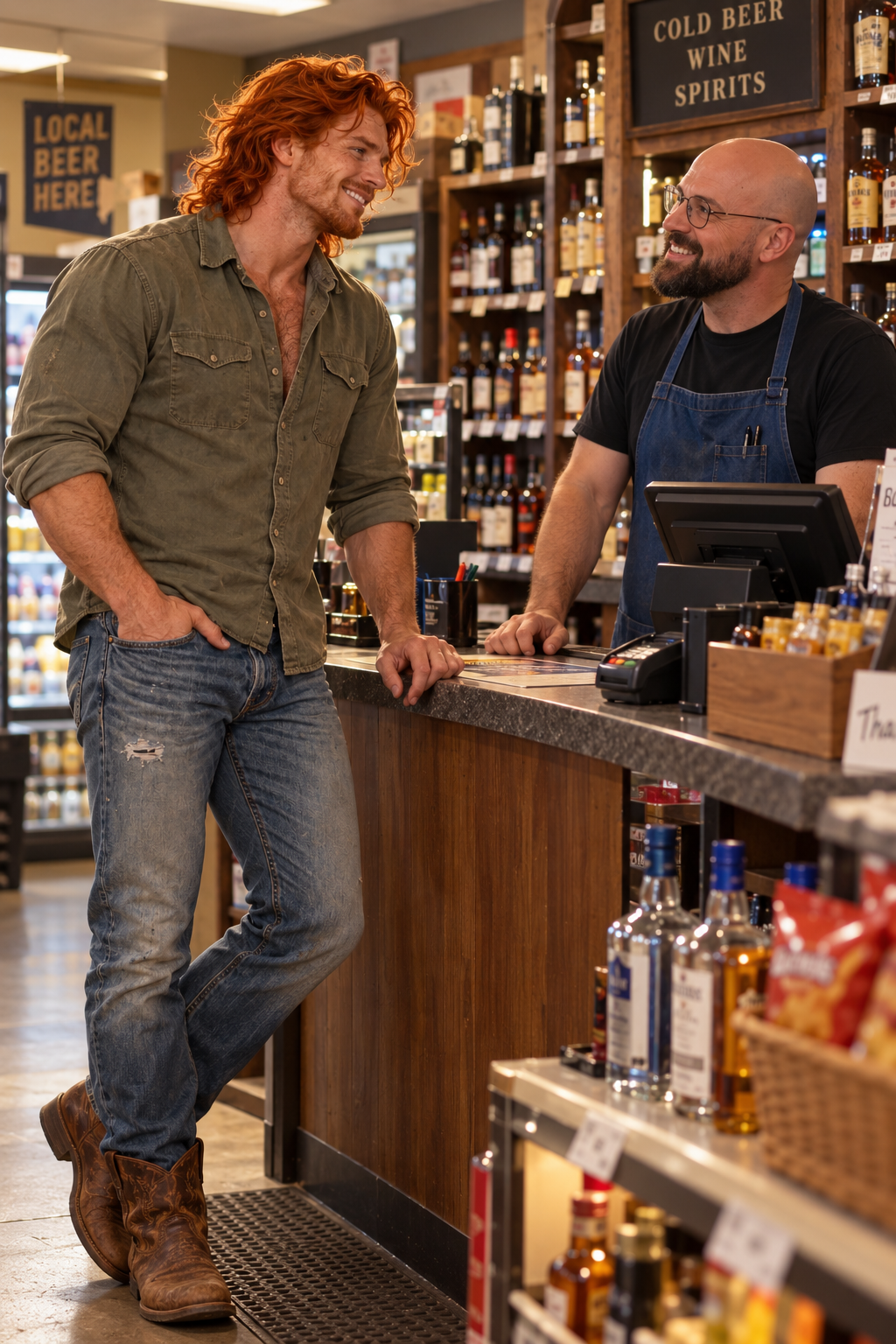 Then he turned around, and there was Joe's face, older only in the way a person gets older when enough days pass. There were a few faint lines at the corners of his eyes. His hair had a little more length to it. His smile was the same. That smile had gotten me into trouble before. I could still feel it coming for me as he walked toward the counter.
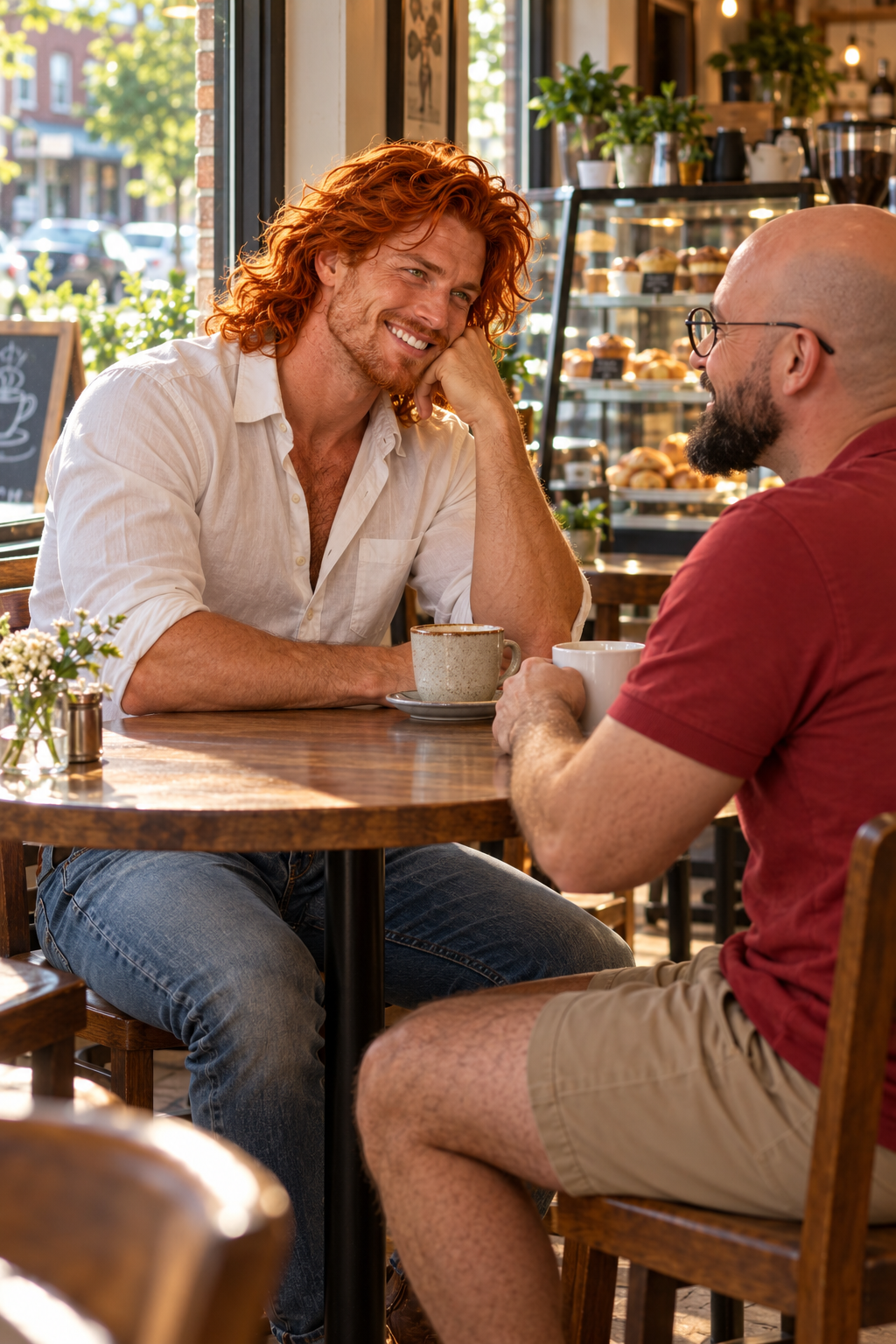 We met at a coffee shop that had a chalkboard sign out front and pastries behind glass. He was already there, seated by the window. When I came in, he stood up. He had a white shirt on, which seemed unfair. I had told him not to try to convince me, not not to look good. There is a difference, though I am not sure who benefits from it.
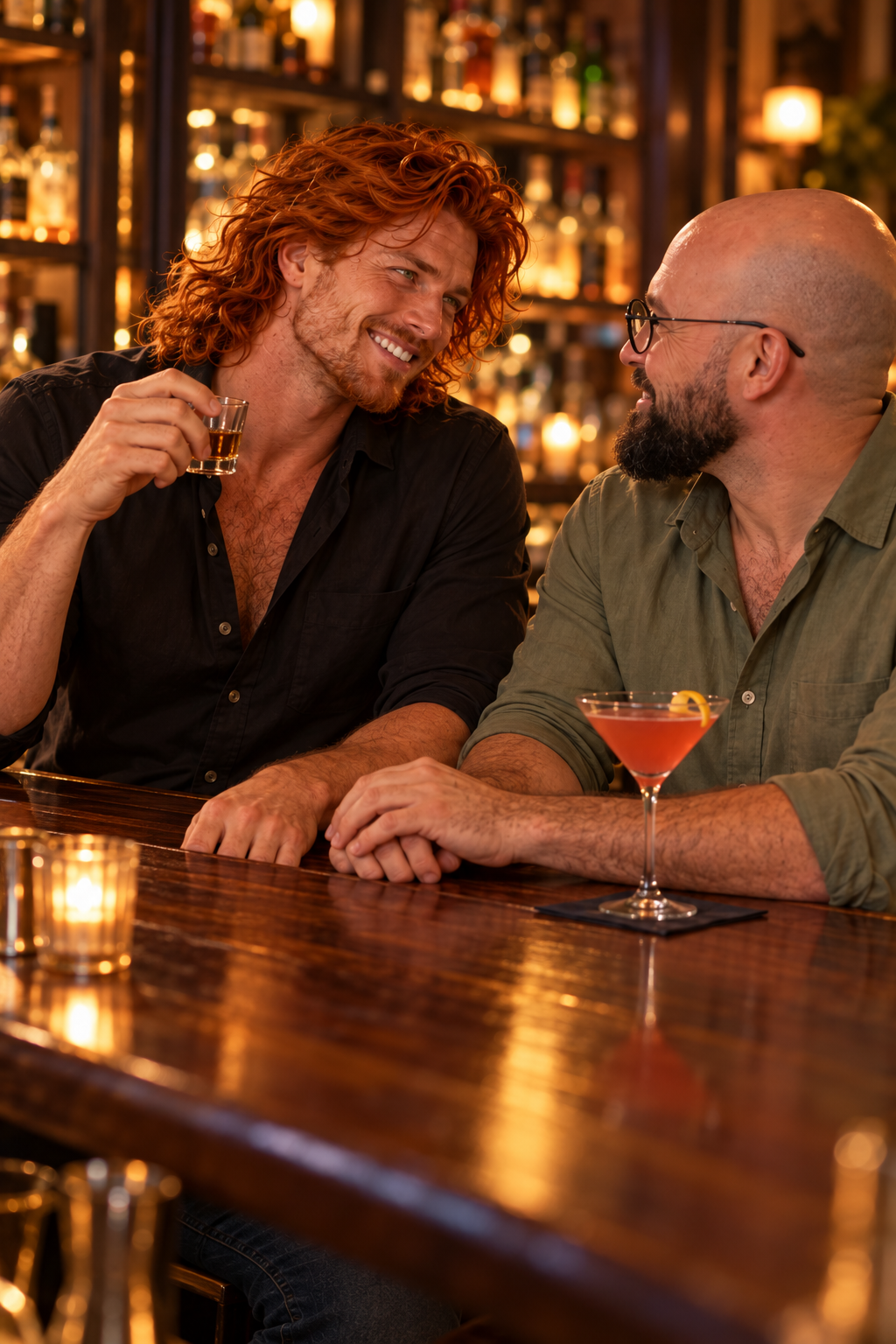 After dinner, we went to a quiet bar. He took my hand on the way in and looked at me before doing it, as if he wanted to check. I squeezed his fingers. We sat at the end of the bar and talked about the two years between us. He asked about my dates. I told him I had gone out with one man for a month, another for two dates, and had not felt much of anything for either. I told him I had liked them well enough. I had not been waiting for Joe.
 He leaned forward and put his hand over mine. “I know I can't make those two years disappear. I don't want to. They happened. You were right to leave.”
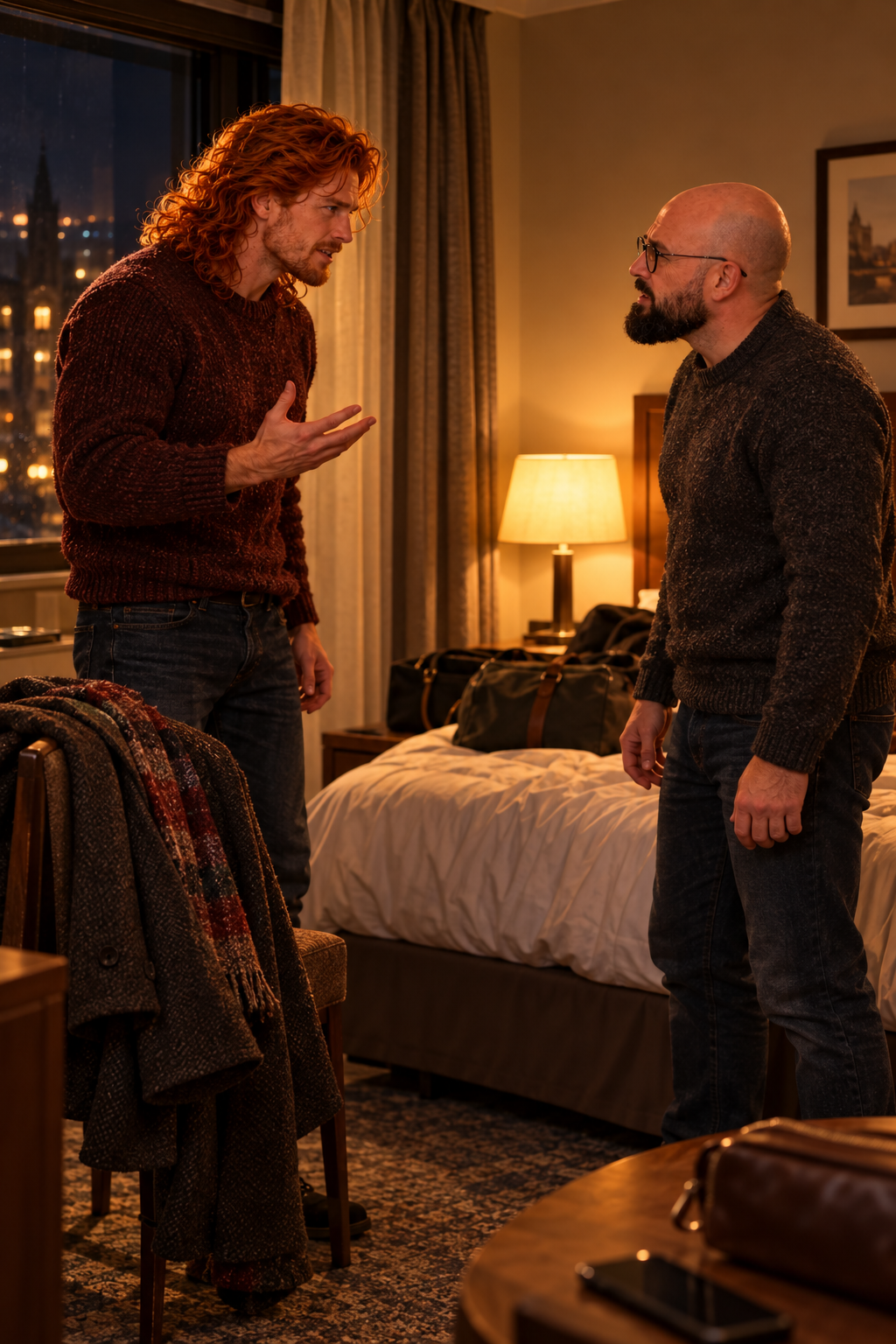 We were both standing now. My heart was pounding. I had not expected the argument to turn so quickly. It felt as if we had been circling the same subject for months, touching the edge and then stepping away. Now it had caught us both by the throat.
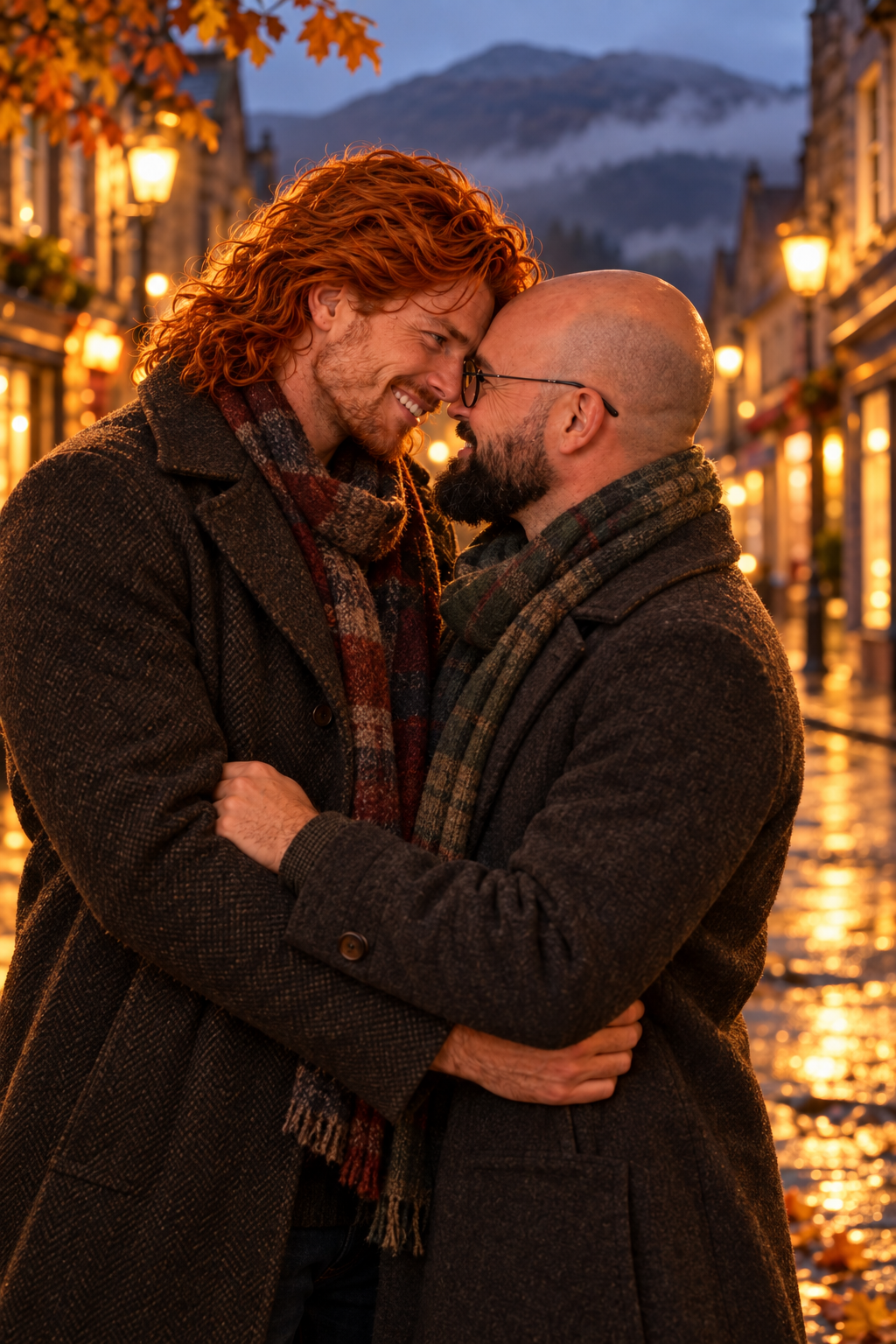 He stopped walking. I stopped too. He put his hand on my shoulder, just as he had in that sunset field, and looked down at me. “I don't want to rush you. I just want you to know I am not treating this like a vacation fling. I don't plan on letting it end when we fly home.”
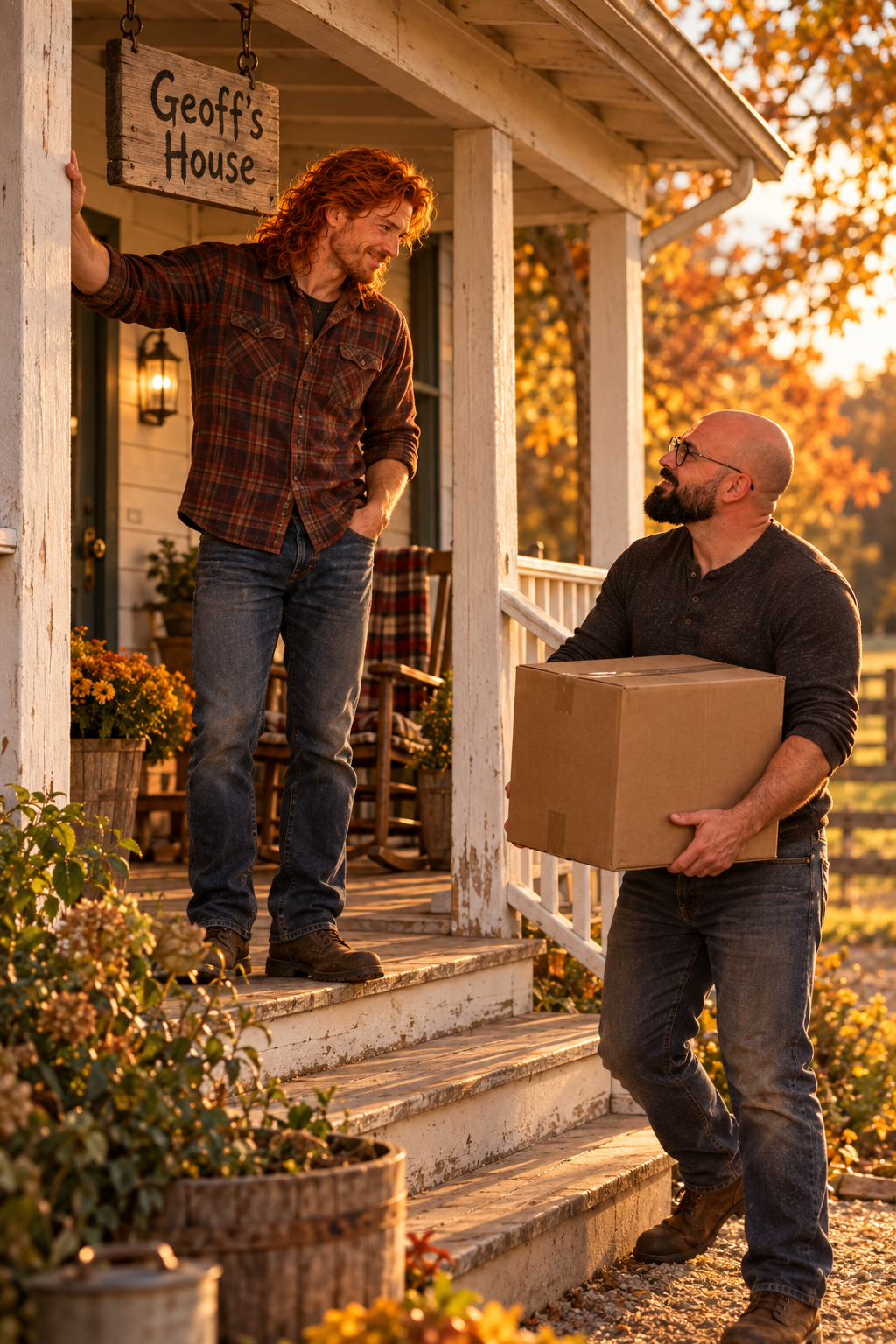 On the day I brought my last box to the farm, Joe had placed a small wooden sign on the porch. It said “Geoff's House” in uneven letters. I stared at it.
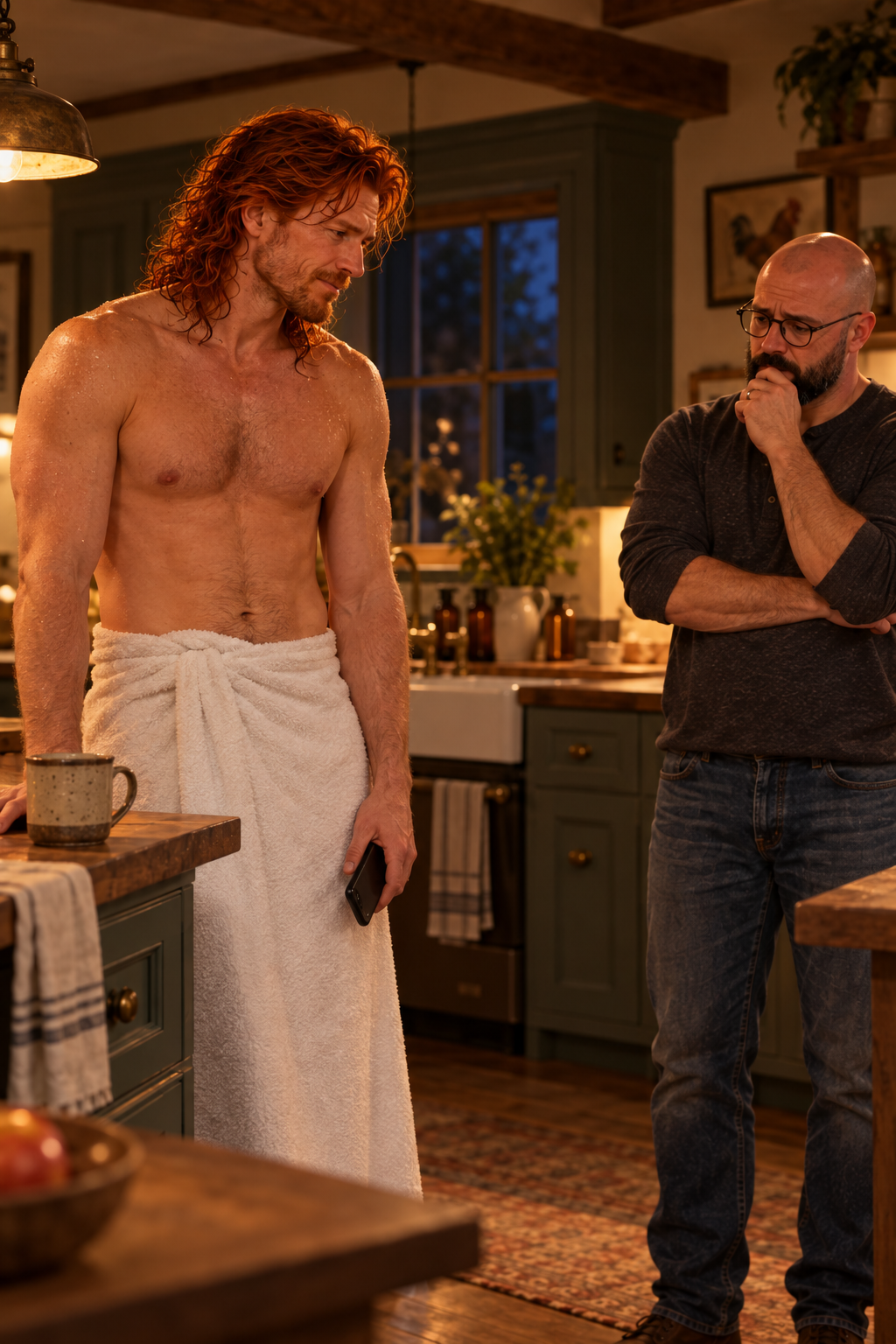 I stepped away from the counter. Joe came out with a towel around his waist, his hair wet, his face relaxed. He saw me and smiled.
