The House We Chose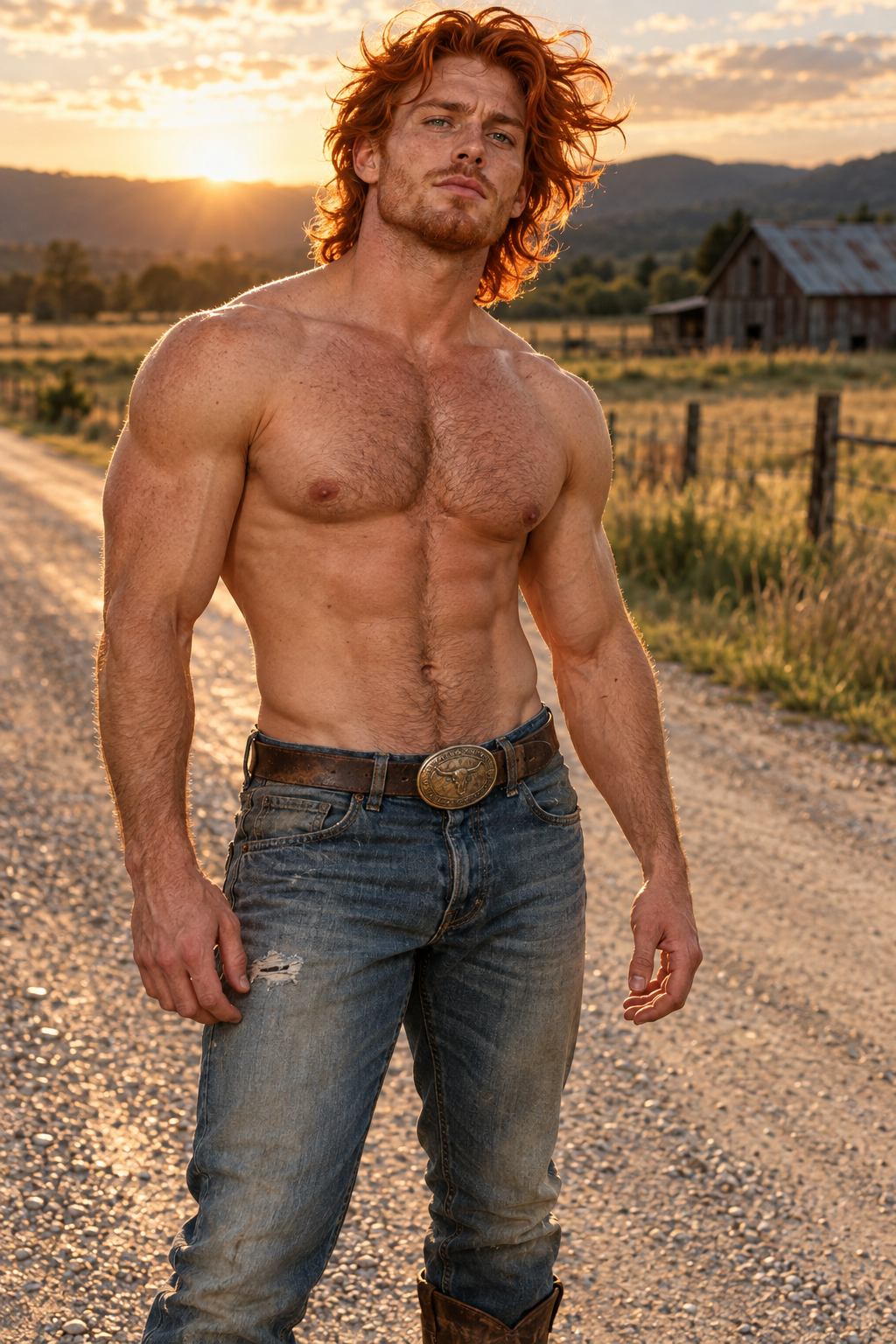
A Joe Liene Story: Story ThreeHe was still standing in the kitchen with his hair wet from the shower, a white towel tied around his waist, and his phone hanging loosely from one hand. A bead of water ran down the side of his face and caught in his beard. He looked as if he had been trying to hold himself together for so long that he had forgotten how to stand without doing it. I was looking at the phone. I had been looking at it for what felt like an hour, although it had only been a few minutes. The message preview was still there in my mind, black letters against a lit screen: I keep thinking about last night. We should talk. “Daniel tried to kiss you,” I repeated. “Yes.” The answer was plain. No smile, no shrug, no quick little explanation about how I had misunderstood. Just yes. It did not make the message disappear. It did not make my stomach stop tightening. But it was the first solid thing in the room, and I held on to it. I looked at him. “What happened?” Joe lowered his eyes to the phone. “Yesterday. At the house by the coast. We were finishing up the windows. I had the last one in, and Daniel came in to look at the work. He said it was good. He said I’d done a great job. Then he started talking about how much he enjoyed having me there.” “That sounds normal enough,” I said, and heard how careful I sounded. I hated that carefulness. I hated the part of me that was already examining his words for cracks. I hated, too, that I couldn’t just switch it off because Joe had said yes. “It was normal at first. I thought he was just being friendly. Then he put his hand on my shoulder and left it there. I moved away. I thought that was clear.” Joe swallowed. “Then he came around in front of me, put both hands on me, and pulled me into an embrace. He started pawing at me, Geoff. He tried to kiss me.” The phone shifted in his hand. His fingers tightened around it. “I pushed him off. Hard. I told him not to touch me. I told him I was with you, and that what he’d done was out of line. He tried to say he’d misunderstood me. I told him he had not misunderstood anything. I picked up my tools and left.” I stared at him. My mind was doing that thing it did when it wanted to protect itself: taking each sentence apart and turning it over. Was he making it sound worse? Was he leaving something out? Was Daniel’s text proof of what Joe said, or proof of something else? I didn’t want to ask those questions. I had asked them anyway, just not out loud. Joe looked up. “I should have told you last night.” “Yes,” I said. He flinched, and I regretted the bluntness before the word had finished leaving my mouth. But it was true. He should have told me. He had said we would tell each other when something touched the old wounds, and this was exactly that kind of thing. “I know,” he said. “I know I should have.” “When did you decide to stay home?” “This morning. I was going to quit. I woke up and thought about going back there, and I couldn’t do it. I wasn’t going to let him act like it hadn’t happened, or like we could just keep working together as if nothing had changed. I was going to call him and tell him I was done.” He looked down at the phone again. “Then I saw his message. I couldn’t answer him. I didn’t want to talk to him. I didn’t want to hear him tell me I’d got it wrong, or that I’d encouraged him, or that it was just a misunderstanding. I was trying to work out what had happened.” “You stayed home all day?” “Yes.” “And you didn’t tell me.” “I was trying to figure out if I was at fault.” Something in my chest went tight. “Joe.” “I know how that sounds.” His voice cracked. He closed his eyes for a moment. “I know what he did was wrong. I know that. But I kept going over it. Was I too friendly? Did I let him think something? Should I have noticed sooner? Did I say something that could have sounded like an invitation? And then I thought about you finding out, and I was terrified you’d think it was my fault. I was terrified you’d look at me and see the old Joe again. The one who couldn’t keep his hands to himself.” There it was. The thing he had been trying to say since he walked into the kitchen, and the thing I had been afraid he would say. I thought he was going to tell me he had betrayed me. Instead he was telling me he had been afraid I would mistake what Daniel had done for another choice Joe had made. I set my hands on the counter. “I don’t know what I think yet.” “I know.” “I’m trying to listen.” “I know.” “I don’t want you to agree with everything I say just because you’re afraid of what I might think.” “I’m not.” He paused. “Well, I am. But I’m also telling you what happened.” I looked at his face, wet hair curling against his forehead. I looked at his bare shoulders and the towel he had wrapped around himself, the phone in his hand, the way his thumb kept rubbing over the case. He had not come home smelling of someone else’s perfume. He had not come home with some evasive little lie. He had come home, showered, and waited for me to notice a message that had made him feel afraid. That did not prove anything. It did not answer every question. But I knew Joe. I knew the difference between his flirtation and his fear. He was not trying to charm me out of suspicion. He was trying to keep his voice from breaking. I had seen Joe nervous before. I had seen him when he stood in my store after two years away, trying to find the right words to ask for a second chance. I had seen him on the trip when we argued in the hotel room, all that old hurt rising between us like water finding a crack in the floor. I knew what his smile looked like when he was hiding something. I knew what it looked like when he was trying to make a difficult thing easier for me. This was neither. His mouth kept opening as if he had another sentence ready, and then he would swallow it. The muscles in his shoulders were drawn tight, not in the way they got when he was angry, but in the way a person held himself when he expected to be struck by a thought he could not dodge. I was still suspicious. I want to be honest about that, because I do not want to turn myself into the perfect understanding partner in hindsight. The text was there. His explanation was new. Our old history did not vanish just because a new kind of pain had entered the room. But suspicion is not a verdict. It is a feeling. It is your mind putting up a fence before it knows what is on the other side. I had spent enough time with Joe to know that if I treated every fear like evidence, I would eventually punish him for things he had not done. “You can sit down,” I said. He glanced at the chair by the table and then at the couch through the doorway. “I’m alright standing.” “You don’t look alright standing.” “I don’t know what I look like.” “You look like you’ve been holding your breath since yesterday.” His eyes flickered toward mine. I could see the moment he wanted to say that I was wrong, that he was fine, that there was no reason to make more of it. He had probably been saying those things to himself all day. Instead he put the phone down on the counter. He did not turn it over or hide the screen. He just let go of it, as if his hand had become tired of carrying it. “Can I ask you something?” I said. He stiffened. “Yes.” “Do you want to show me the message?” “I can.” “You don’t have to. I’m asking because I want you to know I’m not going to take your phone and inspect it.” “I want to show you.” He picked it up again, unlocked it, and opened Daniel’s message. The words were short. Daniel said he was sorry if he had made Joe uncomfortable, then asked if Joe could please call him so they could clear things up. The first line was an apology; the second was a request for access. That felt like Daniel had opened a door and then leaned his whole body against it. Joe held the phone out. I read it, then gave it back. “You don’t have to answer.” “I know.” “Do you want to?” “No.” “Then don’t.” He nodded. For a moment we were both looking at the phone. It was a rectangle of glass with a few words on it, but the whole room seemed to have been arranged around those words. I wanted to smash it. I did not. I had promised to use my words, too, and there was a difference between being angry and making your anger the other person’s problem. “Did you sleep?” I asked. “A little.” “Did you eat?” He looked embarrassed. “Some crackers.” “Joe.” “I wasn’t hungry.” “I’m not scolding you. I’m asking.” “I know. No, not really.” “Alright. I’m going to make something. You can eat it or not eat it. I’m not going to stand over you with a spoon.” “That would be terrifying.” “I can be very persuasive with a spoon.” He almost smiled. It did not stay for long, but it was there. That small return of him mattered more than I expected. I turned toward the stove. Behind me, he took one careful breath, then another. The day had not been repaired. Nothing was fixed. But the first thing I could do for him was let the kitchen become a kitchen again, instead of a place where he had to defend himself. “Did you want him to do it?” I asked. Joe’s mouth opened, then closed. “No.” “Did you kiss him?” “No.” “Did you encourage him to touch you?” “No.” “Then you weren’t at fault.” He looked at me as if he could not quite hear the words. “Geoff—” “You weren’t at fault,” I said again. “He put his hands on you. You pushed him off. You left. That is what happened. You didn’t cause it. You didn’t invite it. You don’t have to solve the mystery of whether you were charming or friendly enough to make him responsible for his own hands.” Joe stared at me. For a second he looked like he might argue. Then his face fell apart.
“I believe you,” I said into his damp hair. “I’m here. I believe you.” He clutched the back of my shirt. His body shook once, then again, and then he was crying in earnest. Not the neat, quiet kind of crying people do in movies where they shed a single tasteful tear and look handsome through it. This was messy and startled and human. He cried from the shock of Daniel’s hands on him. He cried because he had spent the day carrying the whole thing by himself. He cried because he had been bracing for me to decide he had done something wrong, and I had not. I held him tighter. I had never been especially good at comforting people. I was better at bringing them a glass of water and telling them where the clean towels were. But Joe did not need a clean towel. He needed me to keep my arms around him and not ask him to be all right before he was. “I’m sorry I didn’t tell you,” he said against my shirt. “I wish you had.” “I know.” “But I understand why you were afraid.” He shook his head. “I don’t want to be the man who makes you question yourself.” “You aren’t.” I pulled back enough to see his face. “You’re the man standing in my kitchen telling me the truth. You’re the man who pushed him away. You’re the man I love. Those are all true at the same time.” He covered his face with his hand, phone trapped between his palm and his cheek. “I don’t know what to do now.” “You don’t have to decide anything this second.” “I should quit.” “You should absolutely quit.” A faint, surprised laugh escaped him. “You don’t think I should go back and finish the job?” “I think you should never spend another minute alone with him if you don’t want to. I think you should leave the job. I think you should do whatever makes you feel safe. You don’t owe him a completed window.” “He paid me for most of it.” “Then we’ll figure out what’s owed. But you don’t have to stay somewhere you feel unsafe because a window has feelings.” He gave a small, damp laugh. “It was a very good window.” “I’m sure it was beautiful. It can be beautiful without you.” He leaned into me again. I kept one hand between his shoulder blades and the other behind his head, careful not to push or restrain him, just holding him where he wanted to be held. We stayed there long enough for the kitchen to grow quiet around us. The refrigerator hummed. Somewhere outside a bird made a sharp complaint, as if the entire situation had inconvenienced it personally. Eventually I guided Joe to the couch. I found him a pair of sweatpants and a soft shirt, because it seemed like an odd time to ask him if he wanted to put clothes on. He sat with his feet tucked under him, the blanket around his shoulders, while I made tea neither of us wanted. I made it anyway. It gave my hands something to do. I set the mugs on the coffee table and sat near him, leaving enough space that he could move toward me or away from me. I had a hundred questions. I wanted to know whether Daniel had said anything before he touched him, whether Joe had been able to get away immediately, whether there was anyone else in the house. I wanted a complete account because I thought facts would make me feel safe. But Joe was not a witness I needed to cross-examine. He was a person who had just told me something frightening, and I had to be careful not to make my need for certainty more important than his need to be believed. So I asked, “Do you want to tell me more, or do you want to leave it there for now?” He stared down at his hands. “I want to tell you. I just don’t know how much.” “Whatever you want.” “He kept his hand on my shoulder when I moved away. I said I needed to finish packing up. He said there was no rush. Then he came around in front of me, put both hands on me, and pulled me into an embrace. He started pawing at me, Geoff. He tried to kiss me.” Joe stopped and took a shaky breath. “I keep thinking that I should have seen it coming.” “Maybe you didn’t because you trusted him to act like a normal person.” “He wasn’t a stranger. I’d been working for him.” “That’s why you went there. To do a job.” “I laughed when he made a joke earlier in the week. A stupid joke. He said something about how the house would be lonely after I finished. I laughed and said he’d find another carpenter.” “Joe, laughing at a joke is not permission to touch you.” “I know.” “Do you know it, or are you trying to convince yourself you know it?” He looked at me. “I’m trying.” “That’s enough for now.” He leaned his head back against the couch. His eyes were red. I reached toward him slowly, and he moved into my arms before I had to ask. I put the blanket around both of us. He pressed his cheek to my chest and listened to my heartbeat. I thought about how often I had wanted to be the person he turned to first. Now that he had, I wished he had never needed to. We sat together until the tea went cold. Every so often Joe would say something small: he remembered the smell of sawdust; he had left his tape measure behind; Daniel had asked if he was sure he didn’t want to stay and eat something. Each detail came out as if it were being tested for its right to exist. I did not tell him what any of it meant. I let him put the pieces down where he could see them. When the evening began to darken, I asked if he wanted me to call in sick for him the next day. Then I remembered that he had already decided to quit. We both laughed at the absurd timing of it, but the laugh was thin. “I can send a message to the contractor,” he said. “Just say I’m not coming back.” “You can do that tomorrow.” “I don’t want to look at my phone.” “Then I’ll hold it for you.” “No. I should handle it.” “Okay.” The small disagreement made me glad. I did not want to take over his choices because he was hurt. I wanted to help him have choices again. He was capable of doing the hard thing. He did not have to do it alone. That night he asked me to hold him in my arms in bed. I did. We lay close, fully clothed for longer than usual, the bedroom quiet around us. He fell asleep with his hand curled against my shirt. I woke once in the dark and saw him still there. I put my palm over his and went back to sleep. We did not spend the rest of the day talking about Daniel. We talked about other things. We talked about the farm, the old porch, and whether the rain gutters needed cleaning before winter. We discussed what to have for supper and rejected several possibilities with more conviction than they deserved. Joe had a bowl of soup and a piece of bread because he had not eaten much. I had the same, although I wasn’t hungry either. Once, he went quiet and stared at the blank television screen. I touched his knee. He glanced at me, and I said, “I’m here.” “I know,” he said. Then we sat there. Sometimes knowing was enough. Sometimes it wasn’t. That day it was enough to get us through the next ten minutes, and then the ten minutes after that. I did ponder a lot. I pondered why this was affecting Joe so much. I mean, this is the man who lived for sex, who lived for flirtation, who manhandled and got manhandled and thought nothing of it. Slowly it came to me that it was affecting him so much simply because he loved me, he'd resolved himself to the fact that only I would ever be touching him in that way again, and I think a huge part of it was that he thought I'd blame him, that I'd say he was back to his old tricks again. And of course, that was the first thing that came to mind, that he was having an affair with Daniel. And thinking about that made me even angrier at Daniel, because not only did he betray Joe's trust in him, he also caused me to doubt Joe as well. And that was almost as unforgiveable as the rest of what he did.
Joe had asked me not to go. Not because he wanted to protect Daniel, but because he was afraid I’d get angry and do something stupid. He knew me well enough to know I could be dramatic in a parking lot, and I knew him well enough to know he was imagining me punching a man over a set of old windows. I promised I would not hit Daniel. I was not going to pretend I had never considered it, but I promised I would not do it. “I’m just going to talk to him,” I said. “I know what you call talking when you’re mad.” “I will use my words.” “You always use your words.” “See? I’m already improving.” Joe did not smile, but he nodded. I kissed him before I left and made sure he had my number open on his phone. That seemed silly, since he knew my number, and I knew his, and we were both grown men who had managed to survive a great many things without a phone tree. But I wanted him to know he could call me if he changed his mind. The drive felt longer than it was. I passed the feed store, the gas station, and the strip of road where the pine trees leaned over the ditch. I had plenty of time to rehearse my opening line and reject each version. The first one was too polite. The second one sounded like a threat. The third one involved a rake, and I decided that was not going to help anyone. I settled on telling Daniel exactly what Joe had told me, and exactly what he was not allowed to do next. Daniel’s house was a large, freshly renovated place with pale siding and new windows that looked expensive and unbothered. I parked in the drive and knocked. He opened the door with a smile that faded when he saw me. “Geoff.” “Daniel.” He looked over my shoulder, as if Joe might be waiting behind me. “Is Joe with you?” “No.” “I’d like to talk to him.” “He doesn’t want to talk to you.” Daniel’s face tightened. “I think there’s been a misunderstanding.” “That’s what people say when they want the person they touched to stop talking about it.” “I didn’t force anything.” “Joe told me what happened.” “He was very friendly with me. We’d been working together for weeks. I thought there was something between us.” “You thought wrong.” “I didn’t know he was that uncomfortable.” “He moved away from you. You put your hands on him anyway. You pulled him into an embrace and tried to kiss him. That isn’t a misunderstanding. That’s you deciding you wanted something and assuming he’d let you have it.” Daniel looked away. He was handsome in the polished, well-rested way of someone who had hired other people to do the work of looking after his house. He didn’t look like a villain. That was the frustrating thing about villains. They often looked like men who smiled pleasantly while making excuses. “I’m sorry,” he said after a moment. “I am. I shouldn’t have done that.” “Then don’t do it again.” “I won’t.” “Joe is done with the job. Don’t call him. Don’t text him. Don’t leave messages. If you have anything to settle about the work, send it through the contractor or through me. You don’t get to use a balance sheet as an excuse to reach him.” He nodded. His jaw worked like he had more to say. “I hope he knows I didn’t mean to hurt him.” “You need to worry less about what he knows and more about what you did.” I left before I could make the conversation worse. I got back in the truck and sat there for a minute, hands on the steering wheel. I had been angry enough to shake, but now the anger was fading into something else. It was not satisfaction. It was not justice. It was only the knowledge that I had said what I needed to say, and that Joe would not have to go back there. Daniel’s house was a large, freshly renovated place with pale siding and new windows that looked expensive and unbothered. I parked in the drive and knocked. He opened the door with a smile that faded when he saw me. “Geoff.” “Daniel.” He looked over my shoulder, as if Joe might be waiting behind me. “Is Joe with you?” “No.” “I’d like to talk to him.” “He doesn’t want to talk to you.” Daniel’s face tightened. “I think there’s been a misunderstanding.” “That’s what people say when they want the person they touched to stop talking about it.” “I didn’t force anything.” “Joe told me what happened.” “He was very friendly with me. We’d been working together for weeks. I thought there was something between us.” “You thought wrong.” “I didn’t know he was that uncomfortable.” “He moved away from you. You put your hands on him anyway. You pulled him into an embrace and tried to kiss him. That isn’t a misunderstanding. That’s you deciding you wanted something and assuming he’d let you have it.” Daniel looked away. He was handsome in the polished, well-rested way of someone who had hired other people to do the work of looking after his house. He didn’t look like a villain. That was the frustrating thing about villains. They often looked like men who smiled pleasantly while making excuses. “I’m sorry,” he said after a moment. “I am. I shouldn’t have done that.” “Then don’t do it again.” “I won’t.” “Joe is done with the job. Don’t call him. Don’t text him. Don’t leave messages. If you have anything to settle about the work, send it through the contractor or through me. You don’t get to use a balance sheet as an excuse to reach him.” He nodded. His jaw worked like he had more to say. “I hope he knows I didn’t mean to hurt him.” “You need to worry less about what he knows and more about what you did.” I left before I could make the conversation worse. I got back in the truck and sat there for a minute, hands on the steering wheel. I had been angry enough to shake, but now the anger was fading into something else. It was not satisfaction. It was not justice. It was only the knowledge that I had said what I needed to say, and that Joe would not have to go back there. When I got home, Joe was on the porch, looking out at the fields. The small wooden sign hanging from the rafters said Geoff’s House in those lopsided painted letters he had insisted on putting up as a welcome. It had made me laugh when he first showed it to me. I had asked if he was trying to make me responsible for property taxes. He said I was already responsible for half the coffee, which was much worse. He turned when the truck came up the drive. “Did you hit him?” “No.” “Did you want to?” “I’m not answering questions that are clearly designed to get you in trouble.” “Did you yell?” “Not really.” “Did you give him a lecture?” “I used my words, as promised.” “And?” “He apologized. He also tried to say he misunderstood. I told him not to use that as a reason to contact you. You’re done with the job. He knows it.” Joe breathed out slowly. “Thank you.” “You don’t owe him anything.” “I know. I just… I needed to hear that from someone else.” “You can hear it from me as often as you need.” He came down the porch steps and kissed me. The kiss was brief and careful, the kind that asked permission without putting the question into words. I kissed him back. He leaned his forehead against mine. “Do you think I’m stupid for not telling you the other night?” he asked. “No.” “Do you think I should have told you?” “Yes.” He nodded. “That sounds fair.” “Both things can be true.” “I’m learning that.” We did not mention Daniel for a while after that. Joe quit the job, of course. He sent Daniel a short message confirming that he would not return and that any remaining payment should go through the contractor. He kept it direct. No apology, no explanation, no invitation for Daniel to reopen the conversation. He stayed home the next day too, partly because he had no work lined up and partly because he needed time to feel like himself again. The message took him nearly an hour to write. He typed it, deleted it, and typed it again. At one point he handed me the phone and asked if I thought it sounded angry. I read it: “I will not be returning to the property. Please send any remaining payment through the contractor. Do not contact me again.” It did not sound angry. It sounded like a boundary. “It’s good,” I said. “It’s very blunt.” “Sometimes blunt is good.” “Should I say I’m sorry about the unfinished work?” “No.” “Should I say I hope he understands?” “No.” “Should I say I’m sorry he felt—” “Absolutely not.” He gave me a tired look. “You’ve become very decisive about my text.” “I’m happy to advise on punctuation. I’m not going to help you apologize for leaving a man who put his hands on you.” He looked down at the screen. “I know. I just don’t want to sound like I’m making a big deal out of it.” “Then let him think you’re making a big deal out of it. It was a big deal to you.” He breathed out and pressed send. The phone made a soft little sound that seemed wildly insufficient for the decision he had just made. He put it face down on the table and went outside. Later, the contractor called him. Joe took the call on the porch while I stayed inside, close enough to see his face but far enough not to listen. He explained that he would not go back to Daniel’s place. The contractor asked a few questions. Joe answered what he wanted to answer, and no more. He said he was sorry about the disruption to the schedule but would not be finishing the work. The contractor told him he understood, and that he would sort out payment directly. When the call ended, Joe stood still for a while. The wind moved through the oak trees. The sign above the porch swung gently on its hook. I went outside and stood beside him. “Are you okay?” “I think I’m relieved.” “That makes sense.” “I’m also angry.” “That makes sense too.” “I keep wondering if I should’ve done something different. I should’ve said something earlier, I should’ve left sooner, I should’ve—” “Joe.” He stopped. “You don’t have to use the rest of your life to find the one perfect move that would have prevented someone else from behaving badly.” He rubbed the heel of his hand against his eye. “You’re good at saying things that sound obvious after you say them.” “I’m a natural.” He gave a small laugh. “You really aren’t.” “No, I’m not.” I spent those two days with him. I did not hover. I did not ask him every hour if he was okay, because I knew how much that could feel like being watched. I made coffee. I did the laundry. I sat beside him while he fixed one of the porch chairs that did not need fixing. We took a walk around the back field, where the grass was tall enough to brush against our jeans and the air smelled like leaves, wet earth, and the faintly sweet rot of the fallen pears near the old tree. On the third morning, Joe got up before me and made breakfast. He had a way of cooking that made a kitchen look as if a small committee had attempted to prepare a meal and then fled. The eggs were good, though. I told him so. He said he knew.
The next three months were good. Blissful, if you like that word. I do, though I admit it sounds like we spent all our time wandering through meadows while violins followed us around. We did not. We got groceries. We dealt with a leaking faucet. We argued over whether the dogwood by the drive was dying or just being dramatic. But there was a sweetness in those months that had not been there before. Joe told me things. He told me when someone flirted with him at the lumberyard, and when an old boyfriend sent him a message, and when he had a bad day and did not want to talk about it yet. He told me before I had to ask. There were days when I worried that the tenderness between us was only a reaction to what had happened. We were gentler with each other, more careful about checking in, more likely to touch as we passed in the hallway. I wondered if that carefulness was going to become a permanent bruise, something we had to avoid pressing. It did not. It became a kind of attention. We were paying more attention to what the other person was saying, including the things that did not come out as words. Joe stopped taking the same road past Daniel’s property. He said he didn’t want to see the house, even from the truck. He found a new route, longer by a few minutes, and never complained about it. I only knew because one day I asked why he had turned at the feed store instead of taking the coastal highway. He told me. I said I was glad he had. He said he was glad too. That was all the conversation needed to be. There were other small things. He asked me before he touched me from behind when I was cooking. He said he knew I liked it, but sometimes a sudden hand on his shoulder made him tense. I said of course. Then I tried to remember, and sometimes forgot, and he reminded me without making me feel like I had failed a test. We learned the difference between avoiding a subject and waiting until we had the energy to talk about it. We learned that “not right now” did not have to mean “never.” I had to learn how to be supportive without turning into a man who treated him like a fragile package that might break if I set him down too quickly. Joe was still Joe. He still flirted with the produce clerk when he told him the peaches were especially good. He still walked around the farm in the summer heat as if shirts were optional and gravity had been invented for other people. He still teased me when I burned toast. He still made me feel wanted, which was sometimes more difficult to accept than it should have been. One evening I came home from work and found him repairing a chair at the kitchen table. The chair had a loose rung. He had a screwdriver in one hand and glue on the other. He looked up and said, “You’re home.” “I am.” “I missed you.” “I was gone for eight hours.” “Long eight hours.” “You have a clock.” “I don’t trust it.” I kissed him. He smiled. We spent the rest of the evening fixing the chair, eating sandwiches, and talking about absolutely nothing. At one point I looked across the table at him and realized I had not spent the day bracing for bad news. I had gone to work, complained about a delivery, helped a customer find a particular bottle, and come home. The ordinary life we had wanted was still there. Another time, he got a message from an old friend who had been drinking and texted him a little too warmly. Joe showed me the message, not as evidence and not as a performance. He simply said, “This made me uncomfortable. I’m going to tell him we’re not doing this.” He did. I thanked him, and then we ordered pizza. I did not ask to inspect their entire history. He did not make me promise I trusted him. We were slowly building the kind of trust that could survive a message without turning it into a trial. I learned something about myself during those months, too. I had been treating trust as if it were a state you either reached or failed to reach. Trust, I thought, meant no fear, no suspicion, no old memories. But that was not trust. That was amnesia, and I have never been good at that. Trust was making room for the truth, even when the truth was uncomfortable. It was letting Joe tell me something hard and listening before I decided how to feel. It was telling him when I was afraid, even if I was afraid of looking foolish. By the time spring began to settle in, I had stopped waking at night to check whether Joe was beside me. He had never given me reason to think he would disappear. But some part of me had needed time to believe that. I no longer counted his hours away from home or wondered what every silence meant. I did not mistake this for certainty. I only noticed the old fear was not running my days anymore. We had become more ourselves again. Maybe that was the point. Not becoming a version of us who had never been hurt. Becoming the two men who had been hurt and still knew how to laugh in the kitchen, how to argue about money, how to kiss each other goodnight without performing a promise for the audience. I tried to do the same. Not because I was suddenly a naturally open person. I wasn’t. I had not developed a magical new ability to discuss my feelings before lunch. But when something mattered, I told him. If I got quiet, I tried to say why. If I was worried, I tried not to disguise it as a complaint about the dishes.
“That sounds expensive.” “It might be.” “Is it a tractor?” “No.” “Then I’m listening.” He looked at me. His eyes were serious, but there was a little smile pulling at his mouth. “I think I want to marry you.” The mosquitoes continued their work. A car passed somewhere out on the road. I heard the soft creak of the porch swing. I was certain he had said it before I was ready to understand it. “You think?” “I do. I want to ask you properly, though. Somewhere nice. With a ring. I’ve got a plan.” “You’re telling me you’re going to propose?” “I’m giving you advance notice.” “That seems to defeat the element of surprise.” “You’ll still be surprised by the shrimp.” “What shrimp?” “Nothing. Forget I said that.” I stared at him. “Are you going to tell me when this properly planned proposal is happening?” “No. You’ve had enough information.” “I don’t know if that’s enough information.” “You’ll know when we get there.” “You’re being very mysterious for a man who has just announced his intentions on a porch swing.” “I’m trying to build suspense.” “You’re trying to get me to stop asking questions.” “That too.” He leaned over and kissed me. I kissed him back, but I did not say yes. Not yet. It was not a proposal, and we both knew it. It was Joe letting me see what was coming, and me pretending I was not already smiling. The next day he asked me to take a weekend off. He would not tell me why. He gave me a clean shirt and told me not to wear my work shoes. When I asked if I was being kidnapped, he said that if he were going to kidnap me, he would have picked a more scenic route. He drove us to Biloxi. The whole drive he acted as if nothing special was happening. He asked me whether I wanted the window open. He asked if I had remembered my wallet. He asked whether I thought the radio station was playing the same song twice or if we had somehow driven through a time loop. I told him I wasn’t sure, but if we did drive through a time loop I hoped we could make better choices the second time. He said that was a lot to put on a Saturday. When we reached Biloxi, he took me down by the water before dinner. The sky was pale and the gulf was calm, with a silvery line where it met the horizon. We walked along the seawall. Joe put his hand in mine. He had been smiling too much to be innocent, but he had also managed not to say anything that gave away the surprise. I asked him if we were going to a casino. He said no. I asked if we were going to a restaurant. He said yes. I asked if it was a nice restaurant. He said he hoped so, because he had made a reservation. I asked whether this was connected to what he had said on the porch about a plan. He said, “What plan?” I said, “Your plan to propose.” He nearly tripped over a crack in the pavement. “So there is a proposal?” I asked. “I didn’t say that.” “You said I’d be surprised by a shrimp.” “I said nothing about a shrimp.” “You absolutely said shrimp.” “Maybe I was hungry.” I decided to let him have his surprise. I had spent much of my life waiting for someone to tell me plainly that he wanted me. I could stand to wait one more dinner. Besides, if he intended to propose, I wanted to give him the pleasure of thinking he had surprised me. It was a small kindness, and it cost me nothing. The restaurant was elegant, as advertised. It had tall windows, white cloth on the tables, candles, and a view of the water. The waiters carried themselves as if they could identify a bad wine from across the room. Our waiter addressed Joe as “sir” in a way that made me suspect Joe had spent a little extra time choosing his shirt. He had. He had also shaved and combed his hair, which was something he rarely did unless there was a wedding, a funeral, or someone he particularly wanted to impress. I had put on the shirt he gave me. It was a good one, a little snug at the shoulders. When I looked in the mirror before we left, I had started to change into something looser. Joe came into the bedroom, took the shirt out of my hand, and told me to keep it on. He said I looked handsome. I said he had to say that. He said he wanted to say that. I kept it on. At dinner I tried not to think about what was coming. Joe asked about work. I asked about the farm. He told me one of the goats had found a way into the tool shed. I asked if the goat had gotten into the paint. He said no, but it had eaten part of a box of screws, which seemed to me like a deeply unwise snack. He said he had not noticed the goat making any metallic noises yet. We discussed our time in Ireland and Scotland, which had been a three-week vacation but had not seemed nearly long enough. We talked about Fort William, and about the little cafe I loved, whose name I could not remember. Joe remembered the pastries, though, and the location, but neither of us could recall the name to save our lives. The dinner was wonderful. I had a seafood alfredo, and Joe had lobster. I felt like I ate too much. Joe watched me eat and kept smiling. I asked him what was so funny. He said nothing. I said I didn’t believe him. He said he was happy. I said he could have just said that. He said he wanted me to ask.
I stared at it. Joe stared at me. “I asked the chef if he had anything memorable,” he said. “He said they had a bag of these in the back for a seafood festival. I thought it was romantic.” “That shrimp looks like it’s seen things.” “It’s been through a lot.” “It’s holding the ring like it’s trying to arrest it.” “I know. That’s part of the charm.” He reached for the box and opened it. Inside was a simple ring, elegant and not overdone. He had chosen it because he knew I did not like anything flashy. For all the absurdity of the shrimp, the ring was exactly right.
I put a hand over my heart. “I’ll need to think about it.” His face fell in exaggerated distress. “How long?” “Three months, maybe.” “We have a reservation.” “I’ll try to decide before we leave.” He sat back down. I took the ring from the box and turned it once in my fingers. “I’ve thought about it.” “And?” “I’m going to say yes.” He laughed, and I put the ring on. It fit. I still do not know how he knew the size. He said he had measured one of my rings when I left it on the bathroom counter. I asked if he had stolen it. He said he had temporarily borrowed it for love. There are a lot of crimes people commit in the name of romance, and apparently that is one. The shrimp came home with us. It sits on a shelf in the kitchen now, still holding the little ring box. It is not the sort of thing one expects to keep as an engagement souvenir, but people have expectations. I have learned to ignore most of them. We decided that we would get married in Scotland, once we had saved enough money. It was not a difficult decision. We had both loved the trip, the green hills and the gray water, the rain that appeared without warning and made us duck under shop awnings, the streets of Fort William after dinner with the Welsh couple. The older pair had talked about the small habits that had kept them together, and Joe had admitted he wanted to wake beside me for a long time. I had remembered that. I had remembered the warmth of his hand on my shoulder and the way the night had smelled like rain and stone. The next morning, while we were driving back, I asked Joe when he had started planning the proposal. He said he had started thinking about it after the trip to Scotland, then started planning it once he realized he was not merely imagining a future with me but arranging his life around one. “That’s very romantic,” I told him. “I thought so.” “Did you think about it before you came back to the store?” “No. I was only trying to get you to talk to me.” “That was ambitious.” “I’ve always been ambitious.” “You had two years to practice your speech.” “I did not practice a speech.” “You said it better than I expected.” He glanced at me. “You thought I’d be worse?” “I thought you’d say something about my liquor inventory and then kiss me in the parking lot.” “I might have done that.” “You did.” “I was working with what I had.” “You were working with a truck and a bourbon aisle.” “And it worked.” It had. In a way, he was right. The beginning of us had been imperfect, and the second beginning had been even less tidy. We had not fallen into each other in a clean line. We had taken wrong turns, argued, paused, and tried again. The thought of marrying in Scotland felt right because that place had held both the promise and the difficulty. We had been happy there. We had also fought there. It was not a postcard that had saved us. It was the fact we had walked back into the same room and chosen to talk. We made a list of what the wedding would cost. I wrote it in a notebook and Joe wrote a second one on the back of an envelope. Mine was neat. His had a coffee ring on it and a doodle of a sheep. We compared the numbers and decided to be practical. We would not take on debt for one day. We would save slowly, set a date a year away, and make the ceremony small enough that the people who mattered could come. If we could not afford a particular venue, we would find another. If the flight price went up, we would adjust something else. We did not want to spend the first year of our marriage paying off a wedding we had been too nervous to simplify. Joe wanted the ceremony outside. I reminded him about the rain. He said we could have the outdoor ceremony if the sky behaved and move inside if it did not. I said the sky had never behaved for me. He said we would keep the indoor room as the plan and the garden as a bonus. We wrote to the older Welsh couple we had met on our trip. We explained that we were engaged and hoped to marry in Scotland the following year. We asked if they would consider coming. We did not assume they could or would; it was a long trip, and they had their own lives. They wrote back to say they would be delighted if their health and travel arrangements allowed. One of them added that it would be nice to see whether Joe still had the same way of looking at me when he thought I wasn’t watching. I showed that line to Joe. He said the man was observant. I said the man was Welsh. Joe said he did not know what that meant. I told him it meant he had lived long enough to develop a proper eye for romance and weather. We began to picture the wedding in pieces. A stone building, a small group of family and friends, our rings, our vows, a meal afterward. Not a grand procession, not a ballroom full of people who barely knew us. We would travel together. We would stand in front of the people we loved. We would say yes when we already knew our answer. It sounded simple. I knew it would not be simple to organize, but the shape of it was simple. At home, I put the ring on a chain while I worked so I would not lose it behind the register. Joe laughed at me for being afraid a customer would steal it. I told him you never knew. He said if a customer stole it, he would simply find a prettier ring and ask me again. I said that was not romantic, that was an insurance policy. He said it could be both. In the meantime, life was ordinary and lovely. Joe kept working. I kept going to the liquor store. We had Sunday breakfasts, went for walks, puttered around the farm, and spent evenings making plans for the trip. We joked about who would cry first. Joe said it would be me. I said it would be him. We both knew he was probably right.
I noticed him because he was handsome. I am not made of stone. He had dark hair, cut neatly at the sides and a little longer on top, and a smile that came easily. He had a tall, lean build and wore clothes that fit him well. He looked like he belonged in one of those magazines that sells watches and cologne and tells men how to stand near a window. The first time he came in, he bought a bottle of rye whiskey and asked me what I thought of it. I gave him the usual answer. He said he would take my recommendation, then winked at me as he paid. I assumed he was just friendly. People wink. People smile. Sometimes people even talk to the cashier without intending to seduce him. It is a wonderful world, full of mysteries. The second time he came in, he asked if I remembered him. I did. He made a joke about being unforgettable. I said I would let him know if that became true. The third time he bought a bottle of wine for a dinner party and told me I had a nice voice. The fourth time he asked if I worked every Thursday. The fifth time he stopped by to buy a four-pack of Cutwater and asked if I ever took lunch in the back room or only ate crackers at the register. I told him I ate whatever was available. He said that sounded tragic. By the time he had been in a dozen times, I had learned he was named Ethan, that he lived nearby, that he liked bourbon and red wine, and that he was very good at making a visit to the liquor store last longer than it needed to. He was friendly. He was charming. He remembered my name. He asked how my day was going and seemed genuinely interested in the answer. There is a rhythm to a liquor store. People come in, know what they want, and leave. They pick up the same bottle every Friday. They stand in front of the cooler with the door open while making a decision that could have been made with the door closed. They ask if we carry a particular brand and then pronounce it in a way that makes me wonder whether the brand is new or they have simply never said it aloud before. Most customers are not mysterious. They are thirsty, tired, in a hurry, or in a good mood. Ethan had made himself an exception because he turned every visit into a conversation. He asked me to recommend a bourbon for his father. He came back to say his father liked it. He asked about a wine to bring to a dinner party and told me afterward that it had been a hit. He bought a bottle of tequila for a friend’s birthday, then returned to tell me the party had been more interesting than the tequila deserved. He remembered details I had forgotten telling him. That should have made me cautious, but it made me feel important. A dozen visits are not much if you think of a year, but they are a great many chances to notice someone. I learned the sound of his car door from the parking lot. I began to recognize his steps before I saw him. Once, when he came in wearing a dark jacket that matched his hair, I caught myself checking how I looked in the security mirror behind the register. I told myself it was because I had a piece of dust on my shirt. I did not tell Joe any of this. I had no idea how to bring it up without making myself sound ridiculous. What was I supposed to say? There’s this handsome customer who says nice things to me and I kind of like it. I was afraid Joe would laugh, which he probably would have, but I was also afraid he wouldn’t laugh. I was afraid he would look at me and see that I had been keeping something from him. I was afraid the subject would become a test of whether I was trustworthy, and I wasn’t sure I wanted to find out what I would say. There was a little part of me that wanted to believe I could handle it on my own. I had never cheated on Joe. I was not going to cheat on Joe. That was simple. I treated the simplicity of that as if it settled everything. It did not. I was not thinking about what a promise meant when the line was still far away. I was thinking only about whether I had crossed it. As long as I could say no, I told myself, I was safe. Ethan made that rationalization very convenient. He did not arrive in the store and announce that he wanted to seduce an engaged man. He asked about wine. He asked how the day was going. He made a compliment and then bought his bottle and left. The flirtation gathered gradually, like dust. Each visit left a little more behind. By the time I saw the pattern, I had already become a participant in it. The thing I should have done was tell him plainly that I was not interested. The thing I did was tell myself that he already knew I was engaged, so it was not my responsibility to be any clearer. That is a convenient argument, and convenient arguments often have a smell to them. You only notice it once you are standing outside the room. It felt good. That is the part I’m not proud of, but it’s true. It felt good to be noticed by someone who looked like Ethan. He would say I had a great smile, and I would laugh it off. He would tell me I was the most interesting person he’d spoken to all day, and I would say he needed to meet more people. I told myself I was being polite. I told myself I was not encouraging anything. I told myself lots of things, and most of them were only technically true. One afternoon he came in to buy a bottle of rum. He had been talking to me about a new restaurant in town and how he needed someone to go with him. He rested his forearms on the counter and said, “You should come with me sometime.” I looked at him and smiled. “I’m engaged.” “I know,” he said. “You’ve mentioned that.” “Then you know I can’t go.” “I know you’re engaged. I didn’t ask if you were married.” There was a little pause. It was not a long pause. It was probably only three seconds. But in that pause I could have said, “No. I’m not interested. Please stop asking.” I could have said, “I’m committed to Joe, and I don’t want this.” I could have said any number of things that would have been both clear and kind. The pause felt longer to me because I was aware of the choice. I remember the register light reflecting on the glass counter, the plastic display of lighters beside me, and an empty aisle behind Ethan where a woman had just left with a bag of wine. I remember thinking I should be careful. Then I remember thinking there was no danger in one little compliment. Then I remember thinking I had already said I was engaged, which meant I had technically done the right thing. There is a difference between technically doing the right thing and actually behaving well. I know that now. At the time, I was building myself a little shelf of technicalities and setting my conscience on it. I told myself Ethan was the one flirting, not me. I told myself I was not inviting him anywhere. I told myself I was only being friendly. All of those things contained a sliver of truth. None of them explained why I enjoyed the conversation enough to keep it going. He leaned toward the counter. “You could use a night out. I need a companion for that restaurant. Just come with me!" I remained silent. I knew what the sensible answer was. I knew what Joe would have said if Ethan had made that comment in front of him. Joe would have raised one eyebrow, made a joke, and then expected me to tell Ethan no. The fact that Joe was not there allowed me to pretend I had not heard the invitation. “I’m getting married in Scotland next year,” I said. “That sounds romantic,” Ethan replied. “But it’s not next year yet.” I laughed. It was not a flirtatious laugh, I told myself. It was just a laugh. I have developed a real talent for classifying laughter. There is polite laughter, nervous laughter, sarcastic laughter, and laughter that gives a man the impression he may have a chance. I had used the last one and labeled it the first. I did not ask for his number. I did not give him mine. I did not arrange a date. I was not secretly planning to leave Joe. But I also did not close the door. I kept talking to Ethan for another minute, asked if he wanted a bag for the bottle, and let him look at me with that amused, confident smile. I remember thinking I might tell Joe later. I remember thinking there was no reason to upset him over a conversation. I remember understanding, faintly, that I was delaying the truth because the truth would make me look less innocent. When Ethan left, I watched him cross the parking lot. The store door chimed behind him. Then a customer came in to buy a case of wine, and I returned to work. The world did not end. That was part of what made the whole thing dangerous. Nothing exploded. There was no dramatic warning. There was only me behind a counter, feeling oddly pleased with myself, and the thought that Joe would have been hurt if he had seen it. I could have treated that thought as a warning. I treated it as a reason not to tell him. I thought about Ethan's request. I thought about it every time Ethan came in. I could tell Joe, I could say someone is flirting with me and I am not sure why it is making me feel so strange. That was the thing we had promised each other. But I could not quite explain why I hadn’t stopped it. I was ashamed. I was flattered. I was curious about what it felt like to be wanted by someone who did not know me well enough to see the parts of myself I was sure everyone else saw. Ethan came in the next day, looking casual and handsome. He hovered over the gin aisle, then picked up a Lighthouse Gin, asking my opinion on it. "Oh, it's a really good one, Ethan. You'll like it, I think." We had a conversation that flowed naturally from one topic to another.
He had been working on the porch steps at home and still had dust on his jeans. He was wearing a dirty white tanktop and looking as good as ever. He looked like the man I loved and like the man I had once thought I would never see again. He held up a small paper bag. “Lunch,” he said. “I brought you the chicken sandwich you like.” Ethan was at the counter. He was telling me I should stop wasting my best smile on people who only came in to buy wine. I had laughed, and I was leaning forward on the counter, listening. I was not touching him. I was not holding his hand. I was not doing anything that would qualify as an affair. But I was not stopping it, either. Joe’s eyes moved from Ethan to me. His smile disappeared. “Hey,” I said. Ethan glanced at him. “Hi.” “This is Joe,” I said. “My fiancé.” The word landed strangely. My fiancé. I had said it before. I had said it to customers and friends and the bank and my mother. But this time it sounded like a warning I had forgotten to use until after the moment passed. “Nice to meet you,” Ethan said. “I’ve heard about you.” “I bet,” Joe said. Ethan smiled as if he had not heard the edge in Joe’s voice. “Geoff and I were just talking. I told him he should come with me to a restaurant sometime.” Joe looked at me. “I told him I’m engaged,” I said. “But you didn’t say no,” Joe replied. The store seemed to go very quiet. It was not, of course. A cooler hummed behind me. Someone’s car door shut outside. The music on the overhead speakers kept playing. But all of that felt far away. Ethan lifted both hands. “I’m only teasing.” “I know,” Joe said. “I’m sure that’s what you tell everyone.” He looked at me again, and I could feel my face getting hot. “Joe, I’m at work.” “I can see that.” “I’ll be home later.” He set the lunch bag on the counter. “Fine.” Then he left. He did not slam the door. He did not throw the sandwich. He did not make a scene. I almost wished he had. A dramatic outburst would have given me something to respond to besides the truth in his eyes. After he left, Ethan said something about the atmosphere changing. I do not remember his exact words. I remember that I told him it was fine when it was not fine, and I rang up the gin he had been holding. He apologized once more, in a way that made it sound as if Joe had interrupted a harmless joke. “He’s protective,” Ethan said. “He has a right to be.” “Does he?” I looked up at him. The question was soft. He was smiling, but not as broadly as before. It was the kind of question that could be played off as teasing if I reacted badly. I knew that. I also knew I could tell him to stop. I could tell him he had crossed a line. I could be honest with myself about the fact that Joe had not simply wandered in at the wrong time; he had walked in and seen the exact thing I had avoided telling him about. “He’s my fiancé,” I said. “So yes.” Ethan held my gaze for a second. Then he took the bag and left. I felt offended, absurdly, that he did not try to argue. I wanted to be the one choosing to end the flirtation, not have it end because I had finally spoken a sentence that made the difference obvious. That feeling embarrassed me as soon as I recognized it. Joe had left the lunch bag on the counter. I opened it after the rush slowed down. The sandwich was still wrapped in paper. There was a small note tucked beside it that said, “Eat something. I love you.” He had written it in the truck, probably while waiting for me to come to the door. I read it twice and then put the note in my pocket. The sandwich tasted like the best sandwich I had ever had, which was inconvenient, because it was the same sandwich I always ate. I finished it anyway. I had to work several more hours. The customers came and went, the register drawer opened and shut, the delivery truck arrived late, and one of the wine coolers made a rattling noise that I wrote down for the repairman. The ordinary work of the day continued while my mind kept replaying Joe’s face. By the time I got home, I had thought of a dozen ways to explain myself. I had arranged them from most reasonable to least reasonable. The first one was that Ethan had been flirting and I had said I was engaged. The last one was that Joe had no right to be angry because he had done worse to me years ago. I did not want to use that one. It was also the one that came quickest to my mind. Joe was on the porch when I arrived. His arms were crossed. The small sign he had hung from the rafters — Geoff’s House, in his uneven painted letters — shifted in the evening breeze. I looked at it and felt an unexpected flare of guilt. I had been given a home. I had been given a ring. I had been given a life with Joe, and I had let another man flirt with me because the attention made me feel handsome for a few minutes. “Do you want to talk?” I asked. “I want you to tell me what was happening.” I set my keys on the table. “Ethan’s been coming into the store.” “For how long?” “A few months.” “A few months.” “He was friendly. He asked about the wine, asked how I was doing. He started flirting.” “And you let him.” “I didn’t ask him to flirt.” “That’s not the same as stopping him.” “I know.” “Did you enjoy it?” I did not answer right away. This was not the moment to lie. “Yes.” Joe’s face changed. The anger was still there, but something underneath it went hurt and flat. “You enjoyed it.” “I liked the attention. I didn’t want to go out with him. I didn’t want anything to happen.” “But you liked him asking.” “I liked being noticed.” “By him.” “Yes.” He laughed once, without humor. “That is supposed to make me feel better?” “No. I’m telling you the truth.” “You told him you were engaged. Then he asked you to dinner anyway, and you laughed.” “I didn’t tell him yes.” “You didn’t tell him no.” “I know.” “Why not?” “I don’t know.” “You must know something.” “I’m trying to figure it out.” “Did you think I wouldn’t find out?” “No.” “Did you think it was harmless?” “Yes.” “Was it?” I was quiet. I could hear my own heartbeat. Joe had every reason to be angry. I had watched him work to be honest with me. I had watched him tell me about Daniel before I had to ask again. I had told myself I was doing nothing wrong, and maybe I had not crossed the line into cheating, but I had stood at the edge of it and looked down. “Joe, I’m sorry.” He looked away. “You don’t get to just say that and make it done.” “I know.” “You watched me see it happen. You could have told him to stop.” “I know.” “Do you want him?” “No.” “Then what do you want?” I opened my mouth, and nothing came out. He turned toward the window. “I told you about Daniel as soon as I could. I told you because I wanted you to know, even though I was afraid you’d blame me. I was terrified you’d think I’d wanted it. I didn’t want it, and I knew I hadn’t done anything wrong, but I still had to tell you because you deserved the truth. And now I come into your store and see you letting someone else talk to you like he’s got a chance.” “I wasn’t thinking about you.” The moment the words left my mouth I knew they were wrong. Joe turned back to me. “That’s worse,” he said. “I know. I meant I wasn’t thinking about what it looked like from your side. I was thinking about how it made me feel.” “How did it make you feel?” “Flattered.” “That’s all?” “I don’t know.” He studied me. “You don’t know if you want him?” “No. I know I don’t want him.” “Then why do this?” “I’m trying to tell you.” “You keep saying you don’t know.” “Because I don’t know yet.” He turned away again. “I thought we were past this.” “So did I.” “Maybe we aren’t.” “I didn’t sleep with him.” “I didn’t say you did.” “I didn’t kiss him.” “I didn’t say you did.” “I’m not cheating on you.” “I didn’t say you were.” His voice was rising now, the quiet anger turning sharp around the edges. “I’m saying you let another man stand there and flirt with you, and you didn’t stop him, and I had to find out by walking into your store. I’m saying I don’t know how I’m supposed to feel safe in a relationship where we’re supposed to be getting married in six months.” I didn’t know what to say. We were both too angry for the words we had to come out in the right order. “I told you I’m sorry,” I said. “And I told you that isn’t enough.” “What do you want from me?” “I want to know why you let it happen.” “I don’t know!” “Then maybe you need to figure it out before we get married.” The words stopped me. “Are you saying you want to call off the wedding?” “I don’t know.” “You don’t know?” “I don’t know if I can marry someone who lets himself be pulled toward something and then tells me he doesn’t understand why.” “I wasn’t pulled toward anything.” “You enjoyed it.” “I did.” “Then you were pulled toward something.” I felt something harden in me. “You’ve flirted with men your entire life.” “I have.” “You’ve been a philanderer.” “I have.” “You’ve cheated.” “I have, and I have spent the last two years trying to show you I could be faithful.” “And I’ve believed you.” “Then why are you using it against me now?” “I’m not using it against you. I’m saying you know how attention feels. You know how it feels to be wanted. You know how it feels to have the line blur.” “I know what it feels like to be faithful, too.” “Then you should have been.” “I was.” “Were you?” The silence after that question felt worse than the argument. Joe looked at me as if I had put a knife between us, and I could not take it back. I wanted to explain what I meant, but what I meant was that I had not physically betrayed him. I had not kissed Ethan or gone to dinner with him. But I had chosen the flattering attention, and I had let Joe walk in on it. “Maybe we should postpone,” Joe said. “Maybe we should.” He stared at me. It was as if he had not expected me to say it. I had not expected to say it either. “I’m not saying I want to break up,” he said. “I didn’t say that.” “I’m saying I don’t know if I want to marry you in six months.” “I heard you.” “I don’t want to do this because we’ve already put money down on a venue.” “I don’t want to do it just because of the venue.” He nodded. He was still angry. I was still angry. We were both hurt enough to be careless. We did not call the wedding off that night. We did not decide anything. We did not even settle on whether I had been unfair to Joe or whether he was expecting more than I had promised. We went to bed in the same room and slept on opposite sides, with the dark between us. For the next several days, we barely spoke. We had not stopped loving each other. I knew that. But love was not a magic spell that made someone trust you after you had made them doubt your word. Joe left early for work and came home late. I went to the store and came home. We talked about the electric bill, the groceries, and what time the plumber was supposed to arrive. We did not talk about Ethan. We did not talk about the wedding. The silence was worse than the argument. An argument at least had words to push against. Silence just sat there. It followed me around the house. It sat at the kitchen table. It came into the bathroom while I brushed my teeth. It stood beside the bed at night, quietly taking up more room than a person should be able to take up. The first morning after the argument, Joe was gone before I woke. I knew he had gone to work because his boots were missing from the mudroom. I stood in the kitchen looking at the coffee pot and considered making enough for both of us. I did. I poured his into a travel mug and set it by the door. When he came in to pick up his lunch, he took the coffee without looking at me. He said, “Thanks.” I said, “You’re welcome.” It was the most formal we had ever sounded in our own house. At work I did my job. I asked a customer if he wanted his receipt. I restocked a shelf of whiskey. I answered the phone. I smiled at a man who asked if we had any good tequila. I did not smile at the right moments. People noticed. One of my coworkers asked if I was sick. I said no, just tired. That was true in the way that an empty bottle is technically still a bottle. I thought about telling Joe more than once. I had already told him the main thing. I wanted to say that I understood why he was hurt, that I was not looking for anyone else, that I hated that I had made him feel second place. But I had a feeling that if I sent a long message while he was at work, it would look like I was trying to end the discomfort before he had a chance to feel what he felt. So I did not.
The second day was much the same. We passed each other in the hallway. Joe touched my shoulder when he needed to get around me, then stepped away. That small contact hurt more than if he had not touched me at all. I kept thinking of Ethan’s hand on the counter, his smile, the way I had leaned toward him. I tried to convince myself the whole thing had been trivial. Then I remembered Joe’s face and understood why the word trivial did not fit. I opened the wedding planning folder on the computer. The folder was full of venue quotes, flight searches, lists of names, and photographs of the little stone inn near Fort William. I had a spreadsheet for travel costs. There was a note reminding us to order the rings. I stared at that note and felt a wave of shame so strong I had to close the laptop. I did not want to lose the wedding. That was true. But I did not want to stay together only because we had booked something, or because our families expected it, or because one of us had already bought a suit. I wanted to be married to Joe because I loved him and trusted the life we were building. If I wanted that, I had to be honest about why I had made a mess. On the third day I was in the store after closing, counting the register, when I realized I had been thinking about the word ugly for hours. It was a word I used casually about myself, as if making the insult into a joke took away its force. I had said it so often that when Ethan called me attractive, I had treated it like a surprise fact. When Joe said I was handsome, I treated it like something he was required to say. I went home with the thought still in my head. Joe was in the barn, cleaning a toolbox. I did not want to interrupt him. I also knew I could not keep waiting for the perfect moment. There would be no perfect moment. There would just be a moment when I decided to be brave enough to say the true thing. I thought about what Joe had said: You keep saying you don’t know. I did know. I had simply been afraid to say it. Ethan had made me feel attractive. That was not a complicated revelation. It was not an excuse, either. I had never really believed I was a man people wanted to look at. I had known I was loved. I had known Joe found me attractive. I had known friends liked me and customers enjoyed seeing me behind the counter. But there was a difference between being liked and being desired, and I had spent much of my life assuming I belonged to the first category and not the second. Ethan was younger than Joe and me. He was polished, handsome, and easy with his compliments. He had looked at me as if he had noticed me. I had felt a little thrill when he walked in. I had kept the conversation going longer than necessary. I had smiled when he said things that should have made me stop him. I had let him feel he had a chance because the possibility made me feel like less of a fool in the mirror. That was the part I hated. It was not Ethan I wanted. It was the version of myself reflected back in his attention. I was not proud of it. But it was true. And if I wanted Joe to trust me, I had to stop hiding behind the phrase I don’t know. On the fourth night, I waited until Joe came home. He had been in the barn, cleaning a set of tools, and was washing his hands at the kitchen sink when I walked in. “Can we talk?” He kept his eyes on the water. “About what?” “Why I didn’t stop Ethan.” He shut off the faucet. He dried his hands slowly on a towel. “Do you know?” “I think I do.” He looked at me then. “I wasn’t interested in him,” I said. “I didn’t want to go to dinner with him. I didn’t want to kiss him. I didn’t want to leave you. I liked being looked at. I liked being flirted with. I liked feeling like a man like that could find me attractive.” Joe’s jaw flexed. He did not interrupt. “I have this idea in my head that I’m ugly,” I went on. “I know you think that’s ridiculous, and I know you’re going to say something about it, but I’m trying to explain it. I look in the mirror and see a bald man with a beard and glasses who's very plain to look at, a look that doesn't require a second glance, and I assume everyone else sees the same thing. I don’t believe you when you tell me you think I’m handsome. I hear it, but I don’t believe it. So when Ethan kept telling me I looked good, it felt like proof. Not proof that I should be with him. Proof that I could be wanted at all.” “Geoff.” “I know it’s stupid.” “It’s not stupid.” “So you agree with me that I'm ugly?” "What? No!" Joe's head shook. "That's not what I'm saying. I'm saying I know how it feels to think less of yourself and then someone comes along that makes you think that maybe, just maybe, you were wrong about how you look." I nodded. "I see." Joe nodded and continued listening. “I should have told him no. I should have told you he was coming in and flirting. I should have told you what it was doing to me. I didn’t, because I was embarrassed that I needed the attention. Then you walked in and saw it, and I acted like you were being unreasonable because I didn’t want to admit I’d been selfish.” Joe leaned against the counter. His anger had not vanished. But it was no longer the only thing on his face. “I was angry because you didn’t tell him to stop,” he said. “I was angry because you let me see you enjoy it and then told me you weren’t thinking about me.” “I know. And to clarify, I always think about you. Even when Ethan was flirting.” “I was also hurt because I thought we were choosing each other.” “We are.” “I know you love me. But I need to feel like you choose me when someone else is making it easy not to.” “I do choose you.” “Then show me.” “I’m trying.” “Try harder than that.” He did not say it cruelly. He said it tiredly, and that was worse. He had been asking me for honesty from the beginning. He had been giving it to me in return. I had been acting as if the promise did not apply when my own feelings got complicated. I had also spent the days apart from him replaying Daniel’s confession. Joe had stood in our kitchen and told me about a man putting his hands on him. I had been suspicious for a few minutes, yes, but then I had chosen to believe what he said. I had sat with him. I had stayed. I had driven to Daniel’s house the next day, and I had come home and sat beside him on the porch. That was what I wanted to do. I had not needed anyone to tell me how. I had loved him and acted on it. When Joe walked into the store and saw Ethan flirting with me, he had not asked for anything complicated. He had needed me to say, “This isn’t happening. I’m engaged. Stop.” I had not said it. I had let him see me enjoying the attention. Then I had hidden behind the fact that I did not actually want Ethan. In that moment, I had put myself first and called it harmless. The thought was uncomfortable because it did not make me evil. It did not make me unfaithful in the simple, dramatic way I had feared. It made me flawed. It made me human. It made me accountable. That was harder to avoid. I could not blame my insecurity as if it were a separate person who had been behind the counter in my place. It had been me. I had been flattered. I had been scared to give up the feeling. I had been wrong to keep Joe outside of it. I told all of this to Joe, and he let me say all of it. He did not interrupt when I said I wanted to feel chosen by someone who did not already love me. He did not interrupt when I said his affection sometimes bounced off the part of me that did not believe it. He did not interrupt when I admitted I had used the ring on my finger as a reason to flirt with Ethan instead of as a reminder of the promise I had made. When I finished, I felt exposed. I had said the ugliest thing I believed about myself in front of the person I wanted most to think I was beautiful. Joe was quiet, and I wondered if I had made another mistake by explaining. Then he told me I was wrong, and I knew he was angry and loved me at the same time. “You’re not ugly, Geoff.” He came around the counter and stood in front of me. “You’re handsome. You have the kindest face I know. Your eyes get all soft when you look at that ridiculous sign I made you, and you make that little crease between your eyebrows when you’re trying to decide if someone needs help. You have a smile that makes other people smile back. You are not some generic magazine man, and thank God for that, because those men look like they’ve been assembled in a laboratory.” I laughed despite myself. “And I have been attracted to you since the day I walked into your store,” he said. “I thought you were beautiful then. I think you’re beautiful now. I don’t care if you believe me right away. I want you to hear it often enough that maybe one day you’ll stop arguing.” “I can try.” “You’re going to have to.” “I know.” "So stop being an idiot," Joe said. "I love you, God loves you, and neither of us loves ugly!" That was the first time since the fight that we laughed together. It was a small laugh. It did not fill the kitchen. It did not erase what had happened. It was only enough to let some air back in. “I’m sorry,” I said. “Not just for the argument. For making you stand there and wonder if I wanted something else. I don’t. I want you. I want the wedding. I want Scotland. I want to be your husband. But I have to stop letting my insecurity make decisions for me.” He looked at me for a long moment. “I need to know what you’ll do if Ethan comes in again.” “I’ll tell him it’s over. I’ll tell him I’m engaged and I’m not interested in any more flirting. If he keeps doing it, I’ll ask him to leave. If he comes back, I’ll tell you.” “Before I walk in and find him leaning on your counter?” Joe smiled, because he now knew what was going on and didn't think I was wanting to leave him. “Yes.” “Good.” “Can I ask you something?” I asked. “Sure.” I looked him in the eyes before asking, “When you saw us at the store, did you think I was cheating?” “I thought you were enjoying something you hadn’t told me about. I thought maybe you were looking for something from him that you weren’t asking me for. I did not think you had slept with him. But I was afraid that you wanted to.” “I didn’t.” “I know that now.” He rested his forehead against mine. We stayed that way for a few breaths. I felt his hand against the side of my face. I felt my own arms loosen from where I had been holding them across my chest. “You’re still marrying me?” I asked. “I haven’t decided.” I pulled back. “Joe.” He let the silence sit for a beat, and then the corner of his mouth turned up. “I’m teasing.” “That was cruel.” “You deserve it.” “I do.” He kissed me. It was not a kiss that fixed everything. It was a kiss that let us begin to fix it. He held me close, and I held him close, and we stood there in the kitchen with the sink behind us and the wet towel from the barn hanging over the faucet. It was not romantic in the way a movie would have filmed it. It was more useful than that. I turned around, opened a cabinet door, and pulled down a bottle of Penelope bourbon. I needed a drink and I figured Joe did too. He reached into a drawer and pulled out two shot glasses. I filled them, and we each downed the bourbon in one gulp. I poured us a second shot, and this time we sipped at it. "I love you, Joe." "I love you too, Geoff." He smiled, which gave me more hope than anything else had that evening. The wedding was still on. We did not decide that the fight had meant nothing. We did not erase it from the story. We talked about it more than once. I told Ethan not to flirt with me again the next time he came into the store. He started to make a joke, and I stopped him. “I’m getting married,” I said. “I’m not interested. Please don’t keep making comments like that.” He looked embarrassed, then said he understood. He bought his bottle and left. I told Joe that evening. Joe thanked me. Then we went back to arguing over wedding flowers. We decided we did not need many flowers. We decided we needed more than zero flowers. We decided on simple arrangements with greenery and a few white blooms, because we were marrying in Scotland and the landscape already knew how to do the dramatic part. We found a small venue outside Fort William, a converted stone inn with a garden that looked over Loch Linnhe. It had a room where we could hold the ceremony if it rained, which it probably would. I trusted Scotland enough to know that rain was not an unfortunate surprise. It was a member of the wedding party. We invited a handful of people. We asked the Welsh couple we had met on the trip if they would come. They were delighted. They sent us a card with a note that said, “You two looked like you had found your way back to one another. We would be honored to see you find your way forward.” Joe read it twice. I pretended not to notice his eyes getting wet. The months went by. We saved. We planned. We looked at flights, hotels, and the cost of renting a small car. I worried about the exchange rate. Joe worried about whether we would have enough time to see everyone. I worried about whether I would cry during the ceremony. Joe said I definitely would. I told him I might not. He told me he would bet money on it. We did not place a bet, because we had a wedding to save for. The last months before the wedding went quickly, though at the time every practical detail seemed to take forever. We set up a separate savings account. We put a little in each payday. Sometimes we had to take money back out because the truck needed a repair or the farm needed feed. We tried not to treat the wedding fund as sacred if the roof was leaking. We were getting married, not launching a spaceship. We chose the venue after several evenings of looking at photographs and reading descriptions. The first place was too large. The second was beautiful but would have taken the whole budget for one night. The third had an outdoor ceremony space with a view of the loch and no indoor alternative. I told Joe we were not getting married in a place that considered rain a character-building exercise. The fourth was the small stone inn outside Fort William. It had an old garden and a bright room with a fireplace, and it could hold our guests without making the room feel empty. The woman who answered our questions was patient and did not make us feel foolish for asking whether the chairs were comfortable. Joe wanted to invite more people than I did. I wanted to keep it small and then felt guilty when I left someone off the list. We negotiated. We invited family, a few close friends, and the Welsh couple who had become part of our memory of Scotland. Some relatives were confused that we were not holding the ceremony at home. Some were disappointed. We promised to have a celebration after we returned. I was willing to do that for them. I was not willing to change the wedding into an event for people who would rather we did it differently. We chose the ceremony room as the official plan and the garden as a possible extra if the weather was kind. Joe asked what I wanted the room to look like. I said I wanted it to look like two men had chosen each other, not like someone had decorated a hotel conference room. He said that narrowed it down. We picked small arrangements of white flowers and green leaves, candles, and no archway. We did not want to spend money putting a frame around ourselves when we could simply stand together. We had to choose what to wear. Joe found a charcoal suit and a deep red tie. He tried on three jackets in our bedroom and asked which one looked best. I told him the first one. He put on the second. I told him the second was not the one I liked. He asked if I was sure. I said I was. He chose the third. I told him he could do whatever he wanted. He said he wanted me to decide. We arrived at the first one eventually, which meant we had spent an hour pretending the decision was difficult. I chose navy and a green tie. Joe said the green suited me. I asked if he was saying that because of my eyes. He said no, because of my personality. I told him my personality was not green. He said it was when I was being stubborn. I did not know what color that would be, but I suspected it was the color of the tie. We wrote our vows separately. Joe wrote his in a notebook. I wrote mine in three different drafts and then pretended I had not written anything. He did not ask to read them. I did not ask to read his. We did agree that they should be personal and not so long that the guests began checking their watches. It was a sensible rule, and one I did not always follow when writing. I had to edit myself. Joe said he liked the long versions of all of my writing. I said he had to say that because he was marrying me, but that he had no idea how long or short my vows were. We bought our rings. We chose plain bands, simple and comfortable. I loved those rings. Those rings would tell others that we had chosen each other, not only to love, but to spend the rest of our lives with. Those rings would mark as each other's spouse, and that thought brought on a rush of euphoria. I was marrying the man I loved! Things, while stormy getting here, were finally working out in a way that made me absolutely giddy with delight! By the time the wedding came, the farmhouse had become ours in every way that mattered. My clothes were in the closet. My books were on the shelves. My coffee mug had a permanent place beside Joe’s. The little sign over the porch said Geoff’s House, although Joe claimed it was now both our house. I told him he could paint another sign. He said the existing one was grandfathered in.
Joe came in behind me and put his arms around me. “Nervous?” “Yes.” “About the flight?” “About the flight, the weather, the ceremony, the family, the possibility that my shoes will become a public safety hazard on wet grass—” “Those are all reasonable things to worry about.” “Thank you.” “Are you nervous about marrying me?” I leaned my head back against his shoulder. “No.” “Good.” “I’m nervous about everyone watching me marry you.” “I’ll be standing there too.” “You’ll look annoyingly handsome.” “I can’t help that.” “It’s one of your many flaws.” He kissed my neck. “You’re going to cry.” “I’m not.” “You’re already getting that voice.” “What voice?” “The one where you insist you’re not going to cry while clearly getting ready to cry.” “I’m not crying. My eyes are reacting to the kitchen dust.” “We cleaned the kitchen yesterday.” “Then it’s old dust.” He laughed and turned me around. He took my face in his hands. “We made it.” “We did.” “Not because we didn’t make mistakes. Not because we never got scared. We made it because we kept coming back and telling the truth.” “Sometimes after a few days.” “Sometimes after a few days,” he agreed. “I’m glad we did.” “So am I.”
When we arrived, the air was cool and damp. It smelled like rain and stone, and somewhere nearby there were hills rising through a thin veil of cloud. Joe breathed in and smiled. “Home.” “Your home is Mississippi.” “Our other home.” “That is fair.” We spent the next day resting and checking the venue. The inn was smaller than it had looked in the photos, but in a good way. It had stone walls, dark beams, and windows that opened toward the loch. The garden was green and soft from the rain. The little ceremony room had a fireplace, and there were enough chairs for the people we had invited. It was private without feeling hidden, intimate without seeming like we had forgotten to invite anyone. The Welsh couple arrived that evening. They were older than us by a decade or two, and they had been married for a long time, long enough that they no longer looked like two people trying to impress each other. They looked like two people who had been through ordinary life side by side and had decided they preferred it that way. “You came all this way,” I said, greeting them. “We wouldn’t have missed it,” one of them replied. “We’ve been waiting to see whether you’d get around to it.” Joe hugged them both. “We took our time.” “Time is good,” the other said. “It gives you a chance to know what you’re choosing.” That stayed with me. Not because I had any doubt about Joe. But because I understood now that marriage was not the finish line at the end of a race. It was the decision to keep choosing the person when the track changed, when the weather got bad, when someone offered you a shortcut that wasn’t yours to take. The night before the wedding, Joe and I slept in separate rooms. We had debated whether to follow that tradition. We were not traditional people, but we were sentimental enough to try it. We had spent the day together, walked by the loch, checked the rings and vows, and then at bedtime the innkeeper showed us to separate rooms. Joe stood in the doorway to mine and said, “You can still change your mind.” "I've no desire to change my mind," I said. "I'm in love with you and plan to spend the rest of my life with you." He kissed me once. It was soft and unhurried. “Tomorrow,” he said. “Tomorrow,” I replied. Then he went to his room, and I went to mine. I lay awake thinking of tomorrow, but not because I was afraid. I was trying to hold on to the feeling of the day: the water, the hills, the people who had traveled to see us, the man I loved going to sleep just down the hall. I did not sleep much. I was not afraid. I was simply aware that something important was about to happen, and my brain had decided the best response was to replay everything that had ever happened between us. The liquor store. The first coffee shop. The bar after dinner. The first time Joe came to the farm. The fight in the hotel room in Scotland. The porch. Daniel. The message. Ethan. The argument. The reconciliation. The tiny pink shrimp with the ring. At some point I laughed into the pillow. It was either that or get up and check the weather again. I woke early. The morning was cool and bright, though the sky looked uncertain. I dressed slowly, which for me involved putting on a shirt, taking it off because the collar looked wrong, putting it back on, and then asking a man at the inn whether there was an iron available. There was. The iron was not immediately useful, but it gave me something practical to do while my nerves made small suggestions about escape.
Breakfast was simple. Toast, fruit, eggs, coffee. I had trouble eating, but I made myself finish enough that I would not be hungry during the ceremony. Joe had apparently managed the same, because later he told me he had eaten three pieces of toast and could not remember tasting any of them. My family arrived first. They were excited, a little emotional, and full of questions about where to stand. My friends came next. The Welsh couple arrived shortly after, dressed neatly and carrying a card. They gave it to us before the ceremony. Inside, they had written a few lines about choosing each other in the ordinary days. I could not read it without my eyes going wet, so I put it in my pocket and told them I would read it later. The innkeeper kept everything moving gently. She made sure guests had somewhere to sit. She put the flowers where they belonged. She checked that the room was warm enough. She asked me whether I needed anything, and I said I needed another coffee. She brought one. I was grateful. It was not a magical moment. It was a woman doing her job and making sure a nervous groom had something to hold. Joe and I had arranged to see each other privately before the guests came in. I was waiting in the ceremony room when he entered. He looked so handsome that I momentarily forgot how to speak. It was not just the suit. It was the way his face softened when he saw me. I felt myself looking at him the way the Welsh couple had described, like I was keeping a secret. I suppose I was. The secret was that after everything we had been through, I still could not quite believe I got to stand beside him. He held out his hand. I took it. His palm was warm and slightly damp. He told me I looked beautiful. I told him he did too. Neither of us said anything for a moment. We stood there with our hands together and heard footsteps and voices outside the door. The day was about to begin. It had been a year in the making and also the whole time we had known each other. “Are you ready?” he asked. “No.” “Me neither.” “Good.” He smiled. “I love you.” “I love you too.” We stood in the room together until the innkeeper quietly reminded us that the guests were ready. She did not rush us. She just let us know that the moment we had been waiting for was there. Before we stepped out, Joe straightened my tie. It was already straight. He knew it was straight. I knew it was straight. He did it anyway, because his hands needed something to do and mine were still shaking. “Better?” he asked. “No.” “Good.” “You’re supposed to make me feel calm.” “I thought you were calm.” “I look calm?” “You look like you’re deciding whether to run.” “I am deciding whether to run.” He smiled and said, "You know, we could both run. We could just elope. Be easier, just the two of us and a JP." “Do you want to?” I asked while chuckling. “No.” “Then we’re alright.” He nodded and kissed my forehead. It was brief, and it made me feel steadier than the tie had. I could hear the guests settling into their seats, their voices lowering as they realized we were about to enter. I recognized my sister’s laugh. I recognized one of my friends clearing his throat in the way he did when he was trying not to cry. I heard a chair scrape on the floor. The sounds were ordinary, which helped. A wedding is made out of ordinary people trying to sit quietly while two people say something enormous. The innkeeper opened the door and asked if we were ready. Joe looked at me. I took his hand. We walked to the doorway together, then paused for one breath before entering. The room was full, but not crowded. Our families sat on one side and our friends on the other. The Welsh couple had taken seats near the front. One of them smiled at us. The other gave Joe a small nod, as if he had been expecting him to make it here all along. I had worried there would be a moment when I saw everyone looking at us and felt self-conscious. There was such a moment. Then I saw Joe beside me, and the people in the room stopped being an audience. They were our people. They had seen us before and after. Some knew the first story, some knew the second, and some only knew the version they had been invited into. They were there because they loved us, and because they wanted to witness something we had chosen. We had not arranged music. Joe had asked whether we needed a song, and I said I could not think of one that would not make me overthink the lyrics. We settled for the quiet sound of rain against the windows. It had started again while we were getting ready, a soft tapping that came and went. I had not wanted the rain to be part of the ceremony. Now it felt like the country itself had decided to attend. The officiant greeted us. We stood facing each other with the room behind us and the water beyond the windows. I could see Joe’s eyes clearly. I could see the tiny red flecks in his beard, the crease beside his mouth, the ring in his hand. I thought of the first time he had looked at me across a counter, and the second time, and all the times I had looked back and wondered whether I could trust the hope in his face. That hope was still there. It had changed from a spark into something warmer and more settled. My hands stopped shaking once I had his in mine. I had been carrying my nerves as if I could hide them by standing still, but they quieted when I felt Joe's thumb brush over my knuckles. He was nervous too; I could tell by the way he kept breathing in through his nose and letting it out slowly. He glanced toward the windows, at the rain, then back at me. We had stood together in kitchens and stores, on porches and in hotel rooms, in streets and beside the water. Now we stood in a room full of people who knew we had not arrived here by accident. We had chosen this. We had come a long way to say so out loud. Joe squeezed my hand once. I squeezed his back.
When it was my turn, I looked at Joe and tried to read what I had written. The words blurred. I lowered the paper. “Joe,” I said, “I loved you before I knew what to do with that love. I thought I could keep it small, keep it safe, and keep it from changing me. I was wrong about all three things. You came back and asked me for a real life, and I said yes even though I was afraid. I have been afraid at times since then, and I’m sure I will be again. But I want you to know that I will tell you when I am afraid. I will tell you when I am wrong. I will keep choosing you, in the large moments and in the small ones. I will love you when we travel and when we’re home, when we’re laughing and when one of us is standing in the kitchen wondering what the other meant by a text message. I promise to be honest, to be kind, and to remember that the man I’m marrying is the one I want beside me.” I stopped. The room was quiet. I looked down at the paper and saw a drop of water blur one of the words. I had been crying. Joe had predicted this. I hated when he was right. When Joe spoke, his voice was rough. “Geoff, I thought I knew what I wanted when I came back to your store. I knew I missed you. I knew I wanted you. I knew I wanted another chance. I did not know how much there was to learn about staying. You taught me that love can be patient without being weak. You gave me the chance to show you who I am now, and you stayed long enough to see me try. I promise to be faithful to you, to tell you the truth, and to come to you when I’m afraid instead of hiding in my own head. I promise to listen, even when I think I already understand. I promise to keep the porch light on, the coffee ready, and the sign over the porch exactly where it is, even if you keep pretending you want me to repaint it. I love you. I choose you. I will choose you every day I get.” That was when I cried properly. No one needed to tell me I had lost that particular contest. The officiant pronounced us married. Joe slid the ring onto my finger, and I slid Joe's onto his. His hands were warm. Mine were shaking slightly. I looked at him and saw the man I had first met and the man he had become. I saw my own reflection in his eyes, and for once I did not immediately argue with it. “You may kiss,” the officiant said. Joe put one hand against my cheek. I leaned into it. He kissed me, and I kissed him back. We were married in Scotland, in a little room overlooking the loch, with rain beginning to tap softly against the windows and our friends watching us smile. It was not the first time we had kissed. It was not even the most surprising. But it was the first kiss with the whole of our life behind it and the rest of our life waiting in front of us. And for once, I didn’t wonder whether I deserved it.
 |

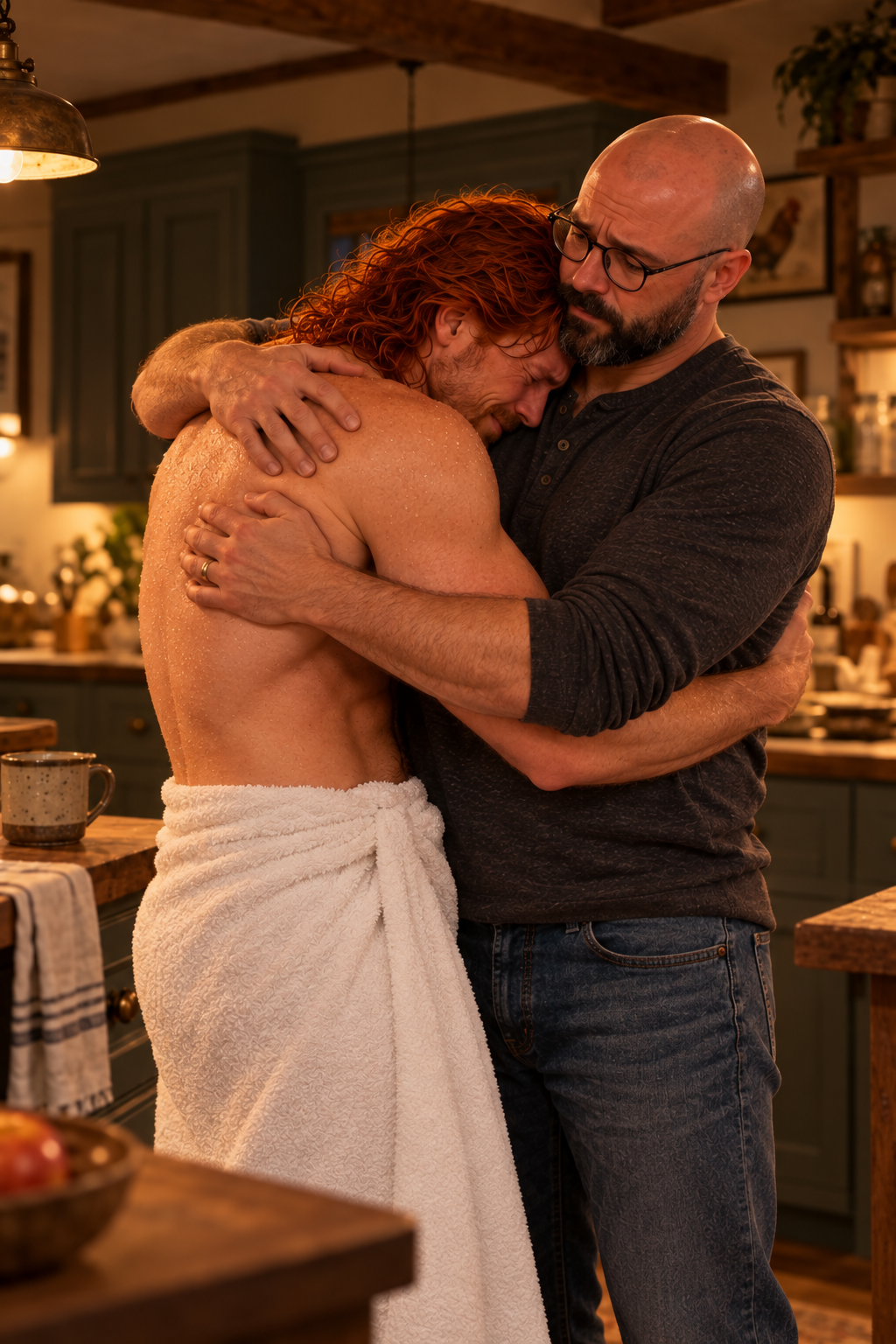 I crossed the kitchen and held him. I did it before I could think too much about it. His arms stayed down at first, stiff at his sides, as if he had forgotten he could reach for me. Then he made a small, broken sound and folded into my chest.
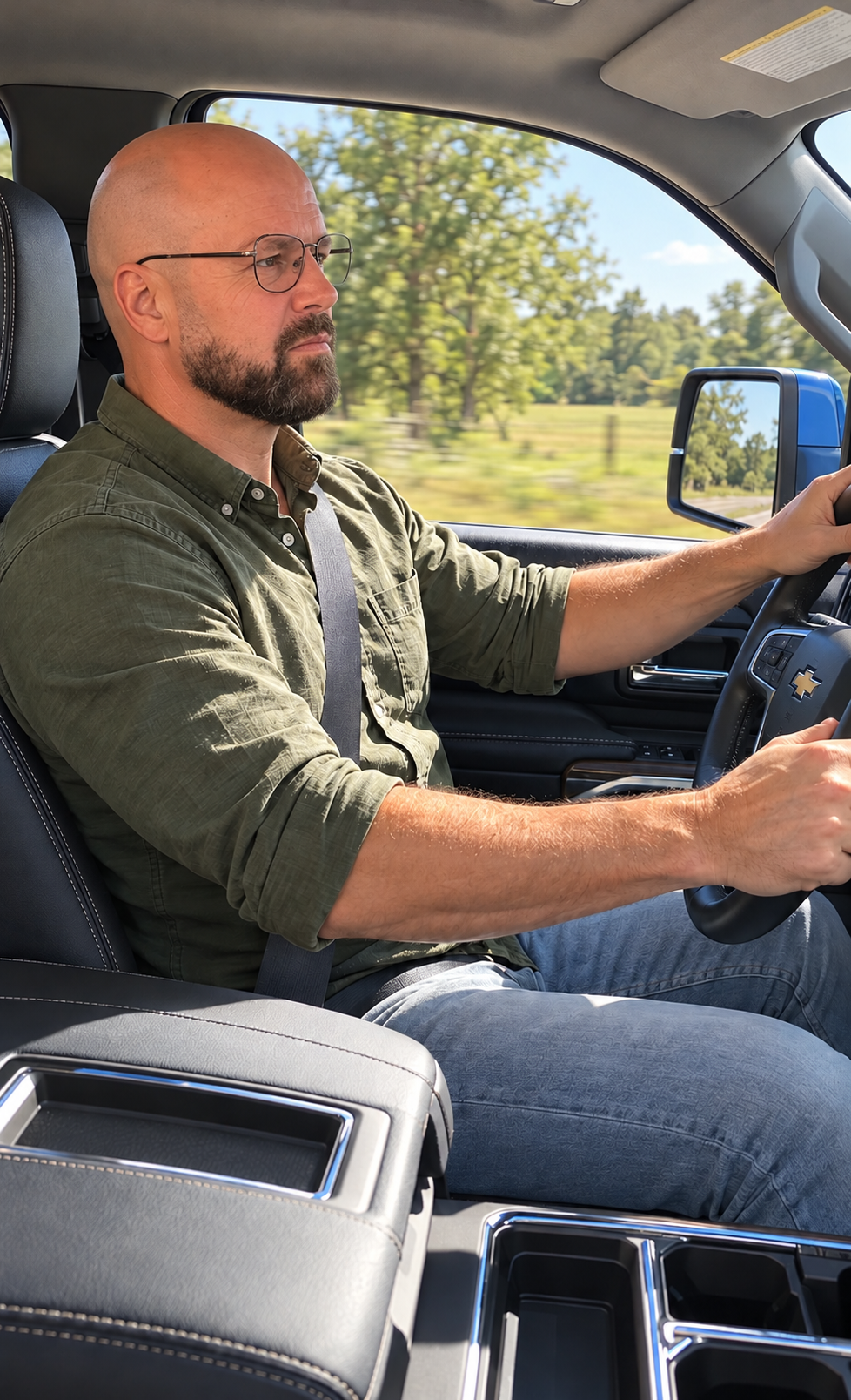 The next morning, I drove to Daniel’s house.
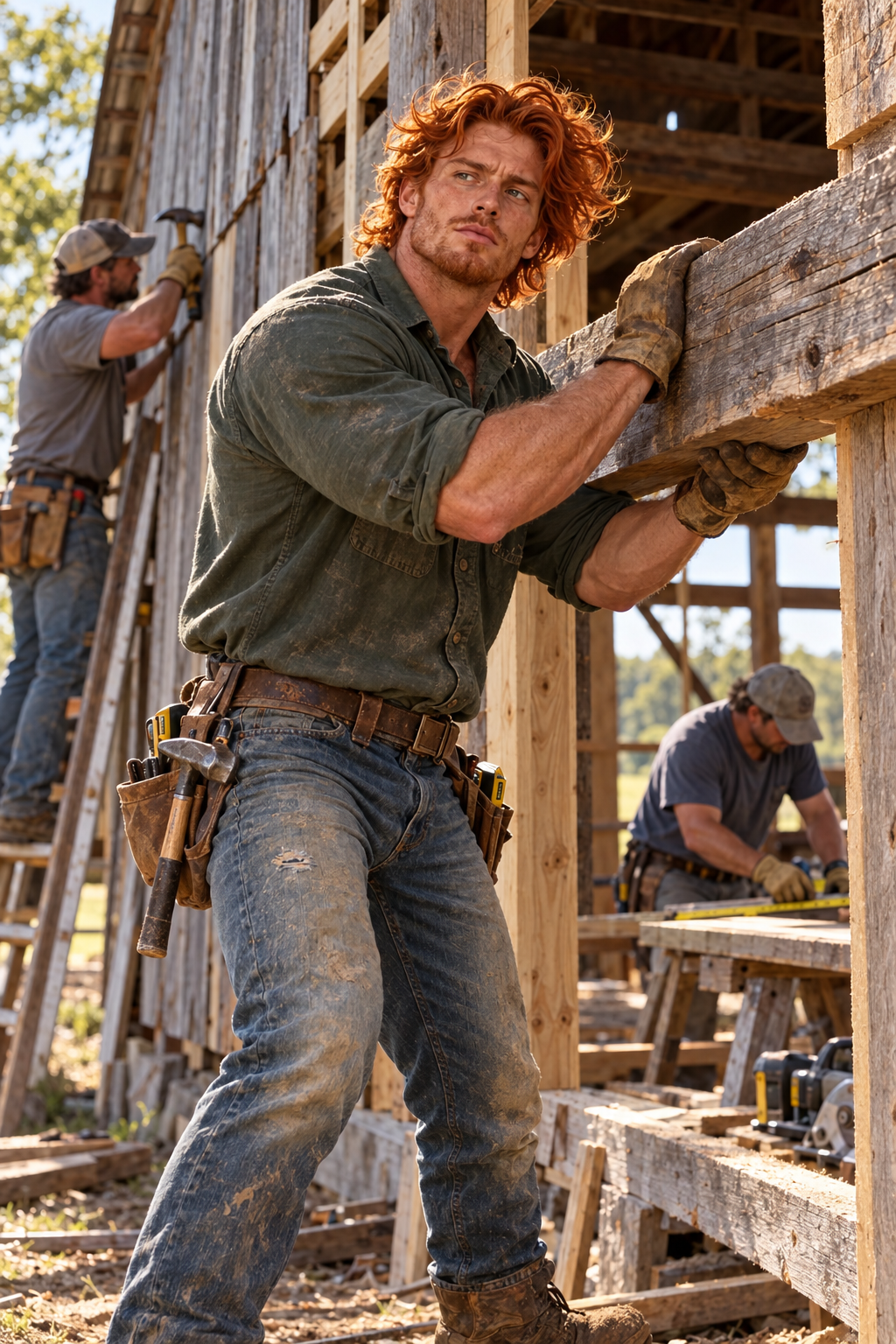 By the next week he had found other work. His uncle put him in touch with a local restoration crew, and he started helping them repair an old farmhouse outside town. The work was honest, the people were decent, and nobody put their hands on him without asking. He did not talk about Daniel. When he did, he spoke of what happened plainly, then let the subject go when he was ready. He did not need to be defined by the worst thing someone else had done to him.
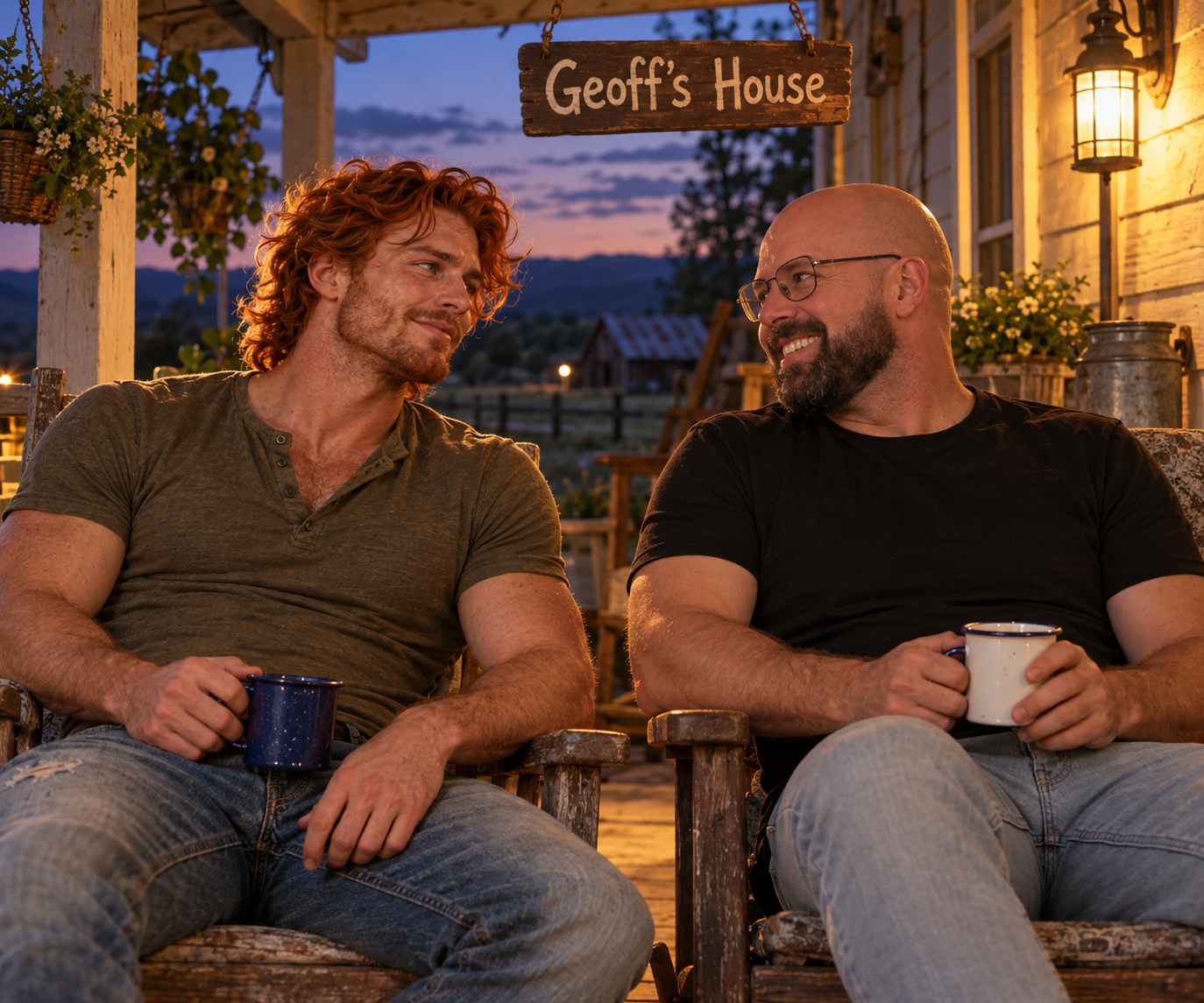 One night, while we were sitting on the porch and the first mosquitoes of spring were treating us like a buffet, Joe said, “I’ve been thinking about something.”
 Then the waiter brought out a dessert tray, and on the tray was one of those covered dishes with a silver dome. The waiter lifted the dome, and underneath sat a plastic shrimp, bright pink and ridiculous, with a small velvet ring box balanced in its claws.
 Joe stood up, and the couple at the next table stopped talking. He did not get down on one knee. He looked at me and said, “Geoff Bailey, I love you. I want to spend my life with you, including the ordinary parts, the difficult parts, and the parts where you pretend you don’t like being fussed over. Will you marry me?”
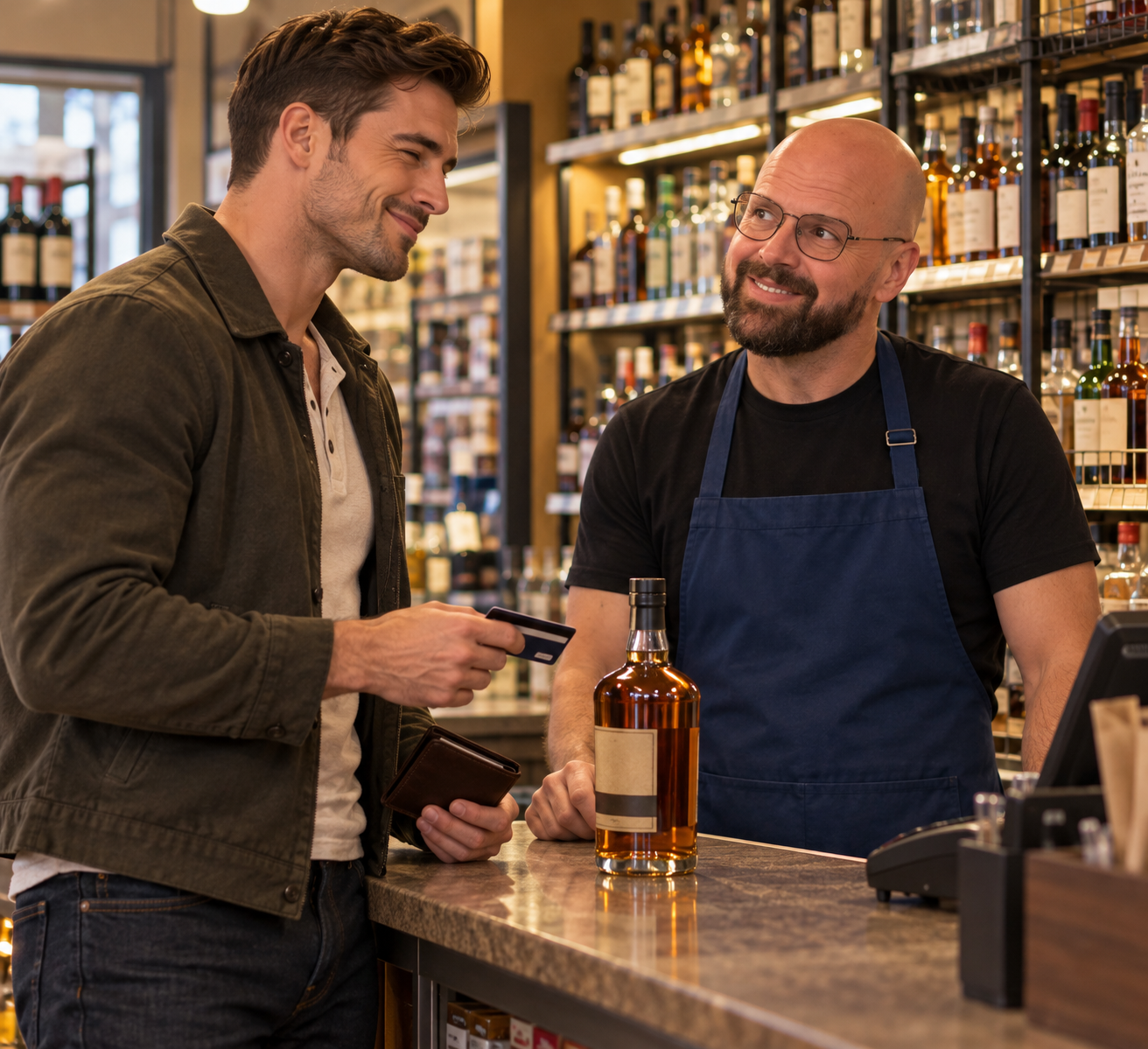 Six months before the wedding, a man named Ethan started coming into the store.
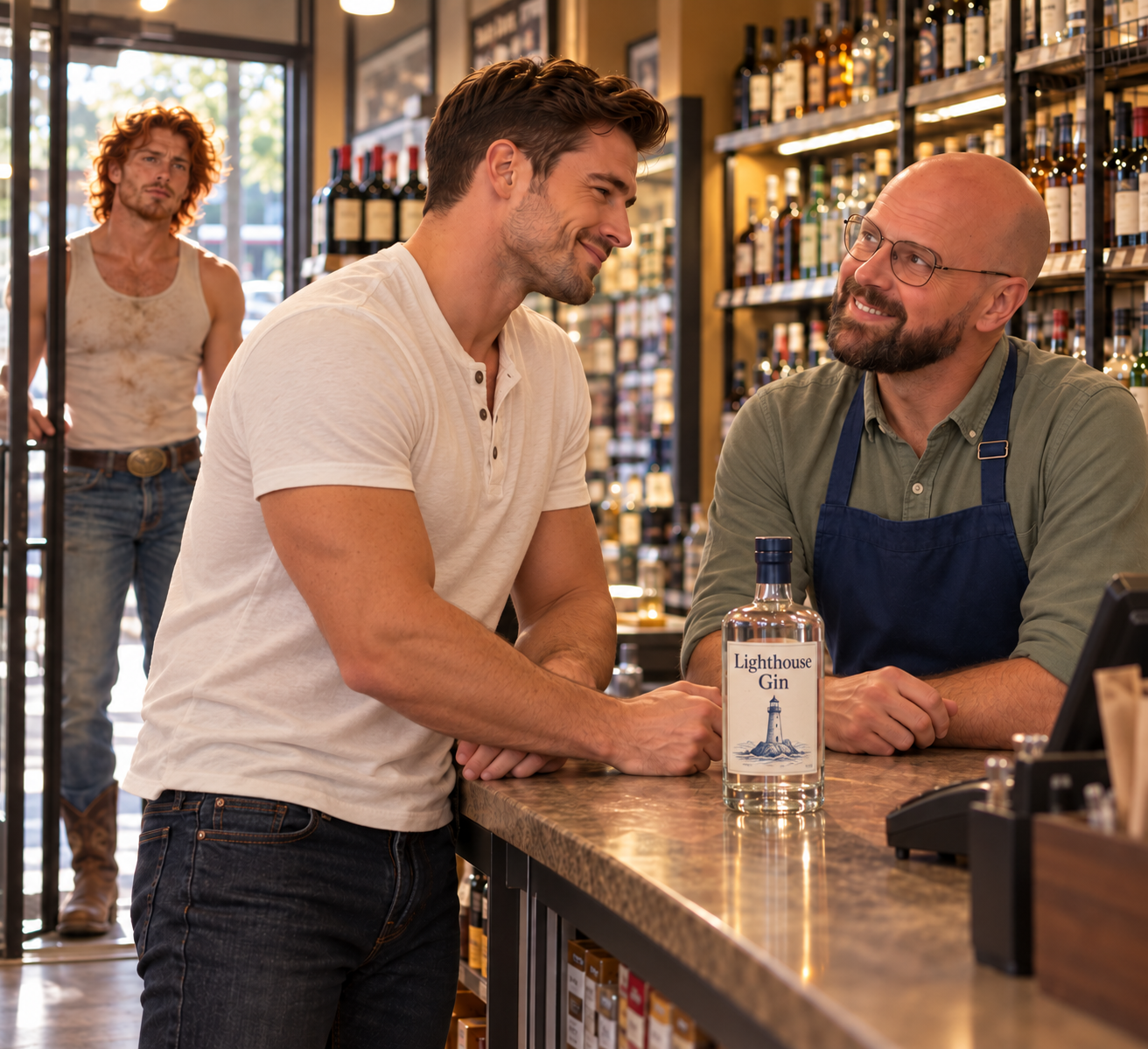 Then Joe came into the store.
 That evening we ate supper at the kitchen table. We talked about a delivery and a broken hinge on the chicken coop. We did not talk about the wedding. I wanted to ask whether we should call the venue. I did not. I wanted to ask him if he still wanted me. I did not. I went to bed early. He came in later and lay down on his side of the bed. I could hear him breathing. I could not tell if he was asleep.
 The day before we left for Scotland, I stood in the kitchen looking at the calendar. The date circled in red was the wedding. It had seemed far away for so long that seeing it there felt like seeing a mountain move.
 We flew to Scotland two days later. The trip was long and uncomfortable, and I slept badly, and Joe slept with his mouth open. At one point the man in the seat across the aisle dropped his headphones and they slid under Joe’s seat. Joe tried to retrieve them without waking me, which would have been a kind gesture if he had not elbowed my ribs four times.
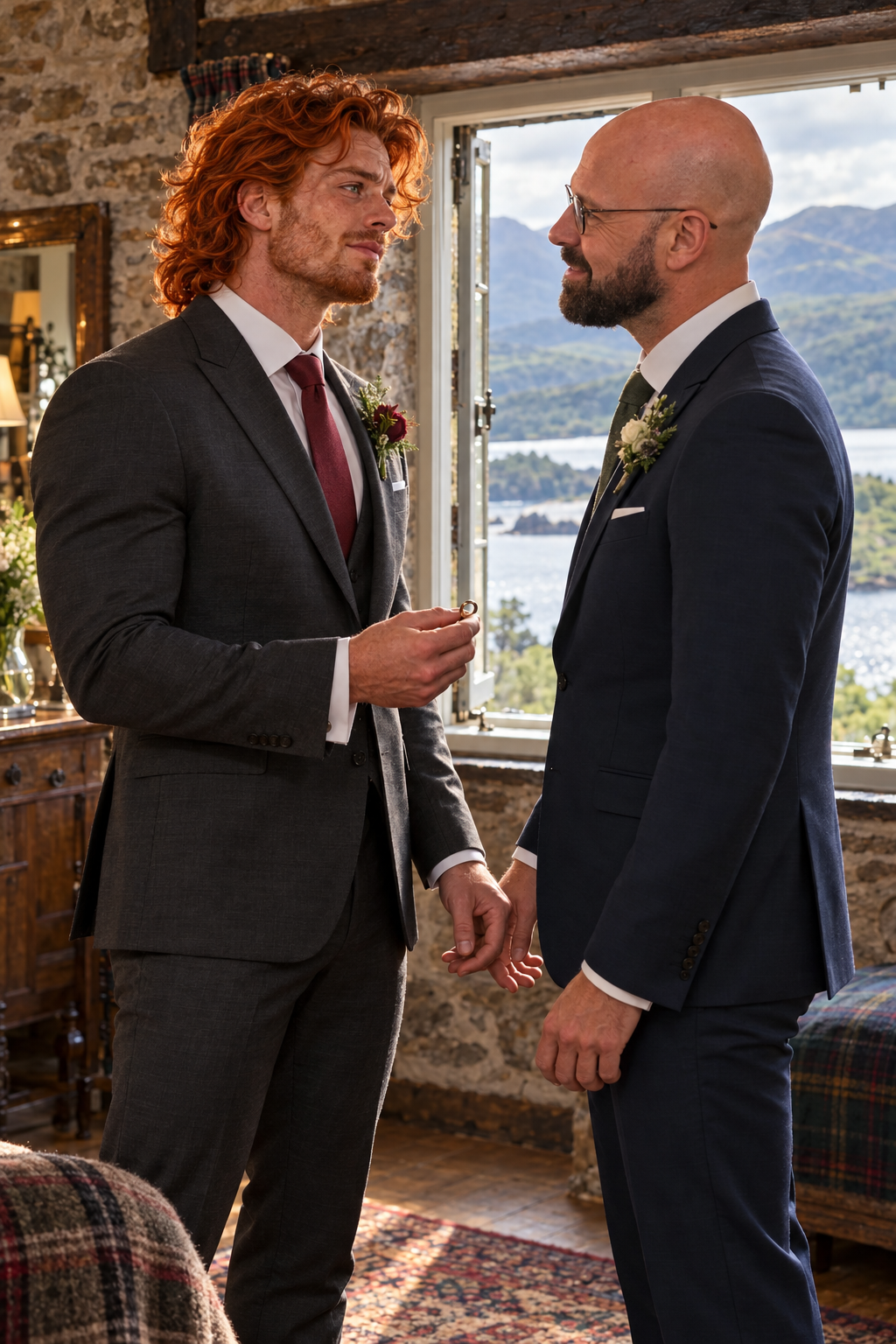 Joe had insisted we wear suits that were comfortable enough to move in. When I saw him before the ceremony, he was standing in the little room with the windows open toward the loch. We had agreed to meet before the guests arrived. I had seen him dressed up before, but this was different. The ring was in his hand. His eyes were shining. I chose a dark navy suit with a white shirt and a green tie. Joe wore charcoal with a deep red tie that made his hair look even brighter. He had left his hair loose, and he looked like himself. He looked like the man I had loved in the store before I knew how dangerous that could be. He looked like the man I had forgiven. He looked like the man who had kept choosing me.
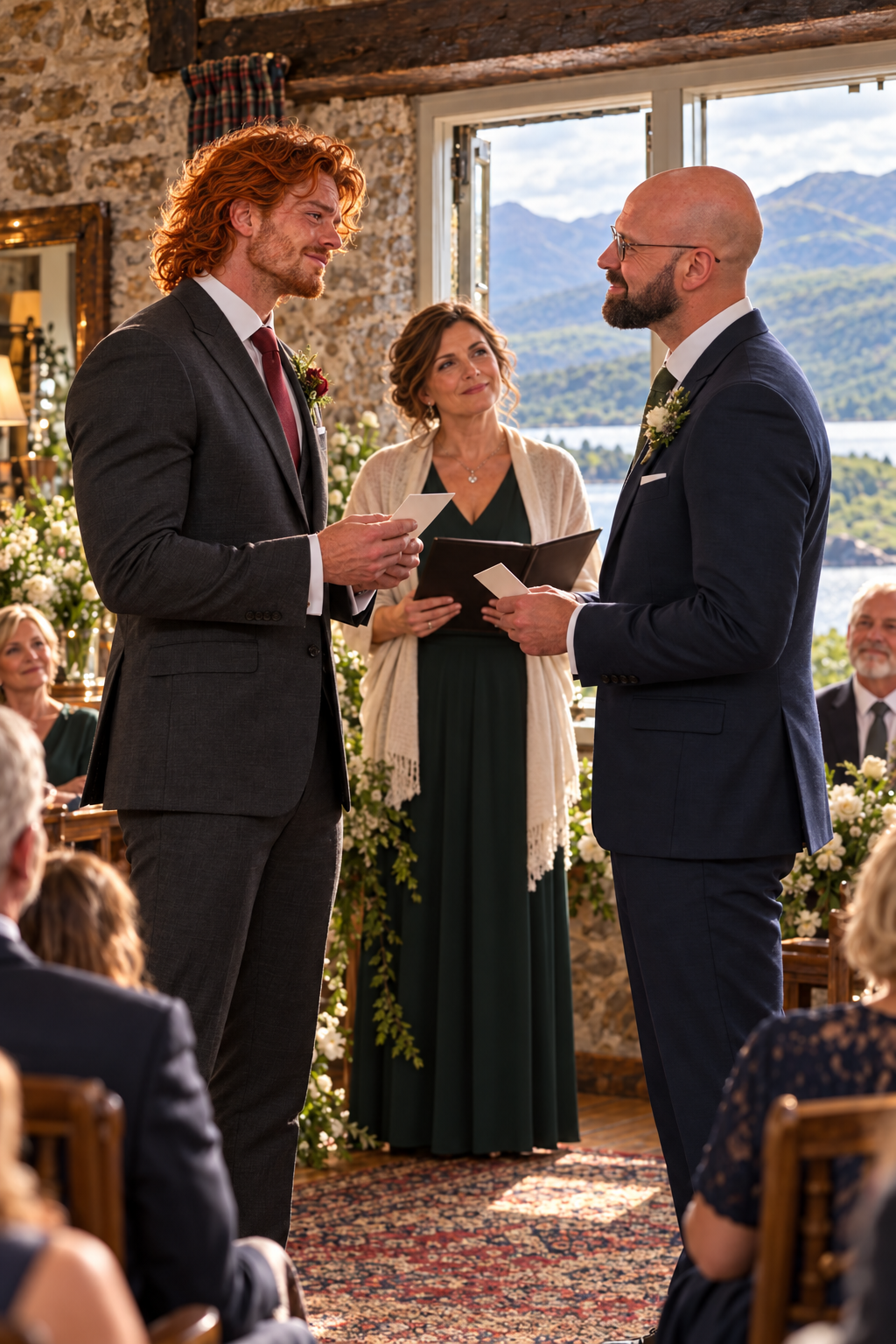 Then the officiant began. The ceremony was short. We had not wanted a long list of readings or a procession of relatives. There were a few words from the officiant about partnership, choice, and the life people build through ordinary acts of care. Joe and I had written our own vows. I had written mine in a notebook and rewritten it several times, which was not surprising. I can turn a three-sentence thought into a twelve-page negotiation with myself.
